Rome and Jerusalem (1862)
Page 79 • Click to zoom
Page 79 of 264
59
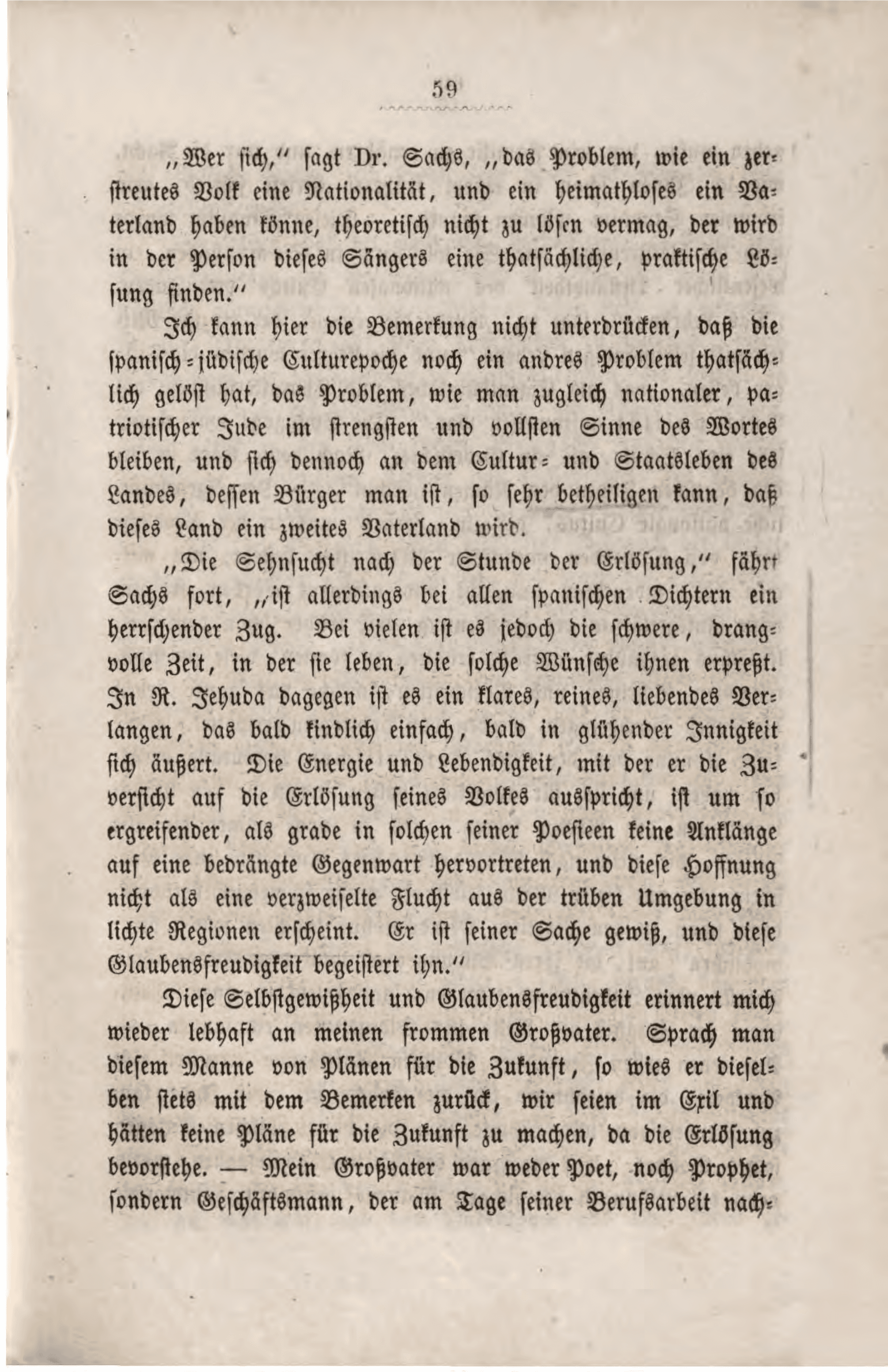
"Whoever," says Dr. Sachs, "is theoretically unable to solve the problem of how a scattered people can have a nationality, and a homeless people a fatherland, will find in the person of this singer a factual, practical solution."
I cannot suppress the remark here that the Spanish-Jewish cultural epoch has in fact solved another problem: the problem of how one can remain a national, patriotic Jew in the strictest and fullest sense of the word, and yet participate so greatly in the cultural and state life of the country of which one is a citizen, that this country becomes a second fatherland.
"The longing for the hour of redemption," Sachs continues, "is indeed a dominant trait in all Spanish poets. For many, however, it is the difficult, oppressive time in which they live that extorts such wishes from them. In R. Jehuda, on the other hand, it is a clear, pure, loving desire, which expresses itself sometimes with childlike simplicity, sometimes with glowing intimacy. The energy and liveliness with which he expresses his confidence in the redemption of his people is all the more moving because precisely in such of his poems no allusions to a troubled present emerge, and this hope does not appear as a desperate flight from gloomy surroundings into bright regions. He is certain of his cause, and this joyfulness of faith inspires him."
This self-assurance and joyfulness of faith reminds me vividly again of my pious grandfather. If one spoke to this man of plans for the future, he always dismissed them with the remark that we were in exile and should make no plans for the future, as the redemption was at hand. — My grandfather was neither a poet nor a prophet, but a businessman, who during the day after his professional work—
Show Original German Text
59 „Wer ſich,“ ſagt Dr. Sachs, „das Problem, wie ein zerstreutes Volk eine Nationalität, und ein heimathloſes ein Vaterland haben könne, theoretisch nicht zu löſen vermag, der wird in der Perſon dieſes Sängers eine thatſächliche, praktische Löſung finden.“ Ich kann hier die Bemerkung nicht unterdrücken, daß die spanisch-jüdische Culturepoche noch ein andres Problem thatſächlich gelöst hat, das Problem, wie man zugleich nationaler, patnotischer Jude im strengsten und vollsten Sinne des Wortes bleiben, und ſich dennoch an dem Cultur- und Staatsleben des Landes, deſſen Bürger man ist, ſo ſehr betheiligen kann, daß dieſes Land ein zweites Vaterland wird. „Die Sehnsucht nach der Stunde der Erlöſung,“ fährt Sachs fort, „ist allerdings bei allen spanischen Dichtem ein herrschender Zug. Bei vielen ist es jedoch die schwere, drangvolle Zeit, in der ſie leben, die ſolche Wünsche ihnen erpreßt. In R. Jehuda dagegen ist es ein klares, reines, liebendes Verlangen, das bald kindlich einfach, bald in glühender Innigkeit ſich äußert. Die Energie und Lebendigkeit, mit der er die Zuverſicht auf die Erlöſung ſeines Volkes ausspncht, ist um ſo ergreiſender, als grade in ſolchen ſeiner Poeſieen keine Anklänge auf eine bedrängte Gegenwart hervortreten, und dieſe Hoffnung nicht als eine verzweifelte Flucht aus der trüben Umgebung in lichte Regionen erscheint. Er ist ſeiner Sache gewiß, und dieſe Glaubensfreudigkeit begeistert ihn.“ Dieſe Selbstgewißheit und Glaubensfreudigkeit ennnert mich wieder lebhaft an meinen frommen Großvater. Sprach man dieſem Manne von Plänen für die Zukunft, ſo wies er dieſelben stets mit dem Bemerken zurück, wir ſeien im Eil und hätten keine Pläne für die Zukunft zu machen, da die Erlöſung bevorstehe. — Mein Großvater war weder Poet, noch Prophet, ſondem Geschäftsmann, der am Tage ſeiner Berufsarbeit nach-