Rome and Jerusalem (1862)
Page 61 • Click to zoom
Page 61 of 264
41
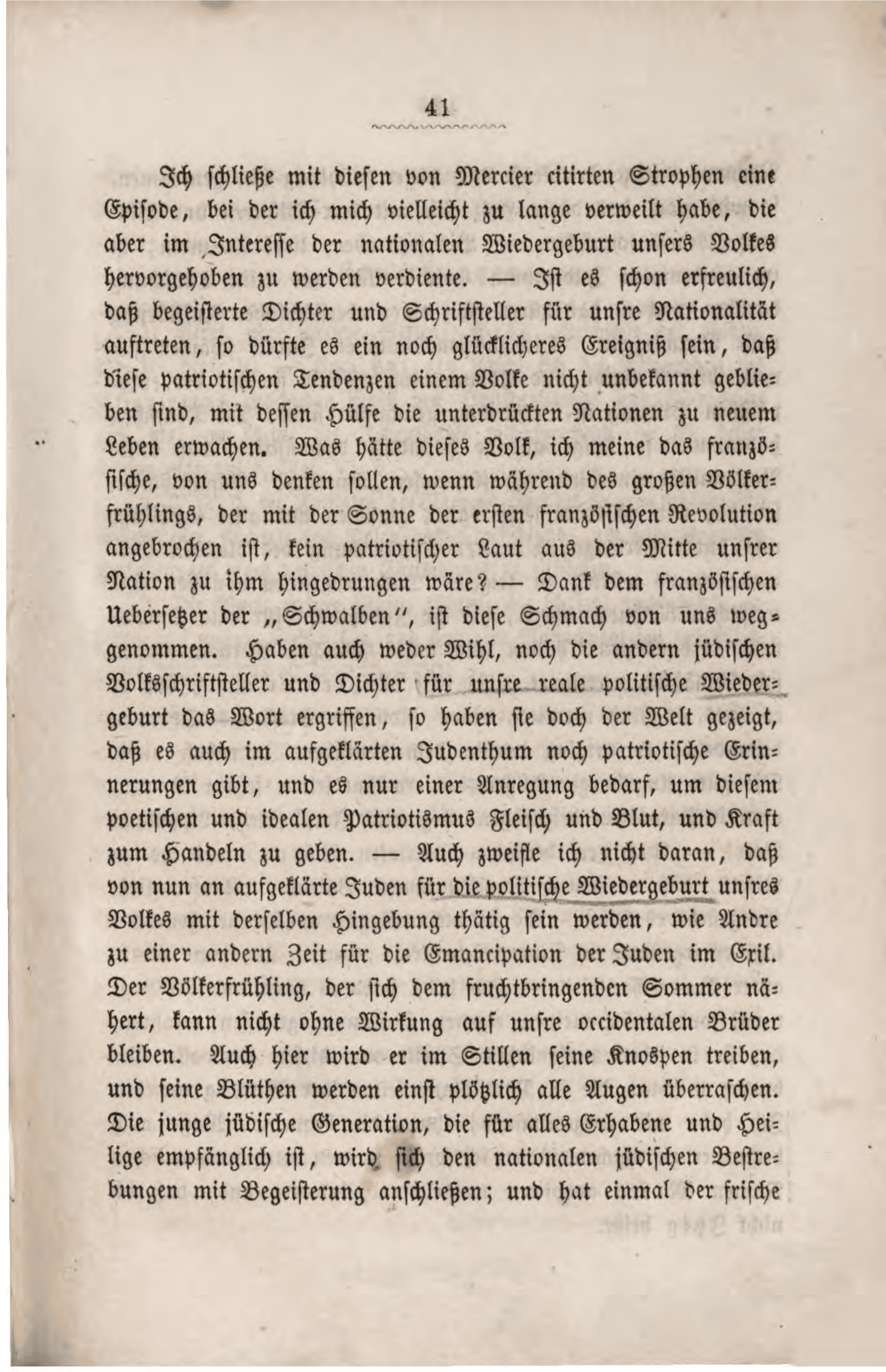
I conclude with these stanzas cited by Mercier an episode, on which I have perhaps dwelled too long, but which deserved to be highlighted in the interest of the national rebirth of our people. — While it is already gratifying that enthusiastic poets and writers stand up for our nationality, it may be an even happier event that these patriotic tendencies have not remained unknown to a people with whose help the oppressed nations are awakening to new life. What would this people, I mean the French, have thought of us if, during the great Spring of Nations which dawned with the sun of the first French Revolution, no patriotic sound from the midst of our nation had reached them? — Thanks to the French translator of the “Swallows,” this disgrace has been taken from us. Although neither Wihl nor the other Jewish folk writers and poets have spoken up for our real political rebirth, they have nevertheless shown the world that patriotic memories still exist even in enlightened Jewry, and that only an impulse is needed to give this poetic and ideal patriotism flesh and blood, and strength to act. — I also do not doubt that from now on enlightened Jews will be active for the political rebirth of our people with the same devotion as others were at another time for the emancipation of the Jews in exile. The Spring of Nations, which is approaching the fruitful summer, cannot remain without effect on our occidental brothers. Here too it will quietly put forth its buds, and its blossoms will one day suddenly surprise all eyes. The young Jewish generation, which is receptive to all that is sublime and holy, will join the national Jewish aspirations with enthusiasm; and once the fresh
Show Original German Text
# 41 Ich schlieſſe mit dieſen von Mercier citirten Strophen eine Episode, bei der ich mich vielleicht zu lange verweilt habe, die aber im Intereſſe der nationalen Wiedergeburt unſers Volkes hervorgehoben zu werden verdiente. — Ist es schon erfreulich, daß begeisterte Dichter und Schnftsteller für unſre Nationalität auftreten, ſo dürfte es ein noch glücklicheres Ereigniß ſeyn, daß dieſe patnotischen Tendenzen einem Volke nicht unbekannt geblieben ſind, mit deſſen Hülfe die unterdrückten Nationen zu neuem Leben erwachen. Was hätte dieſes Volk, ich meine das franzöſische, von uns denken ſollen, wenn während des großen Völkerfrühlings, der mit der Sonne der ersten franzöſischen Revolution angebrochen ist, kein patnotischer Laut aus der Mitte unſrer Nation zu ihm hingedrungen wäre? — Dank dem franzöſischen Ueberſetzer der „Schwalben“, ist dieſe Schmach von uns weggenommen. Haben auch weder Wißl, noch die andem jüdischen Volksschnftsteller und Dichter für unſre reale politische Wiedergeburt das Wort ergnffen, ſo haben ſie doch der Welt gezeigt, daß es auch im aufgeklärten Judenthum noch patnotische Ennnerungen gibt, und es nur einer Anregung bedarf, um dieſem poetischen und idealen Patnotismus Fleisch und Blut, und Kraft zum Handeln zu geben. — Auch zweifle ich nicht daran, daß von nun an aufgeklärte Juden für die politische Wiedergeburt unſres Volkes mit derſelben Hingebung thätig ſeyn werden, wie Andre zu einer andem Zeit für die Emancipation der Juden im Erst. Der Völkerfrühling, der ſich dem fruchtbnngenden Sommer nähert, kann nicht ohne Wirkung auf unſre occidentalen Brüder bleiben. Auch hier wird er im Stillen ſeine Knospen treiben, und ſeine Blüthen werden einst plötzlich alle Augen überraschen. Die junge jüdische Generation, die für alles Erhabene und Heilige empfänglich ist, wird ſich den nationalen jüdischen Bestrebungen mit Begeisterung anschließen; und hat einmal der fnsche