The Racial Problem (1912)
Page 464 • Click to zoom
Page 464 of 568
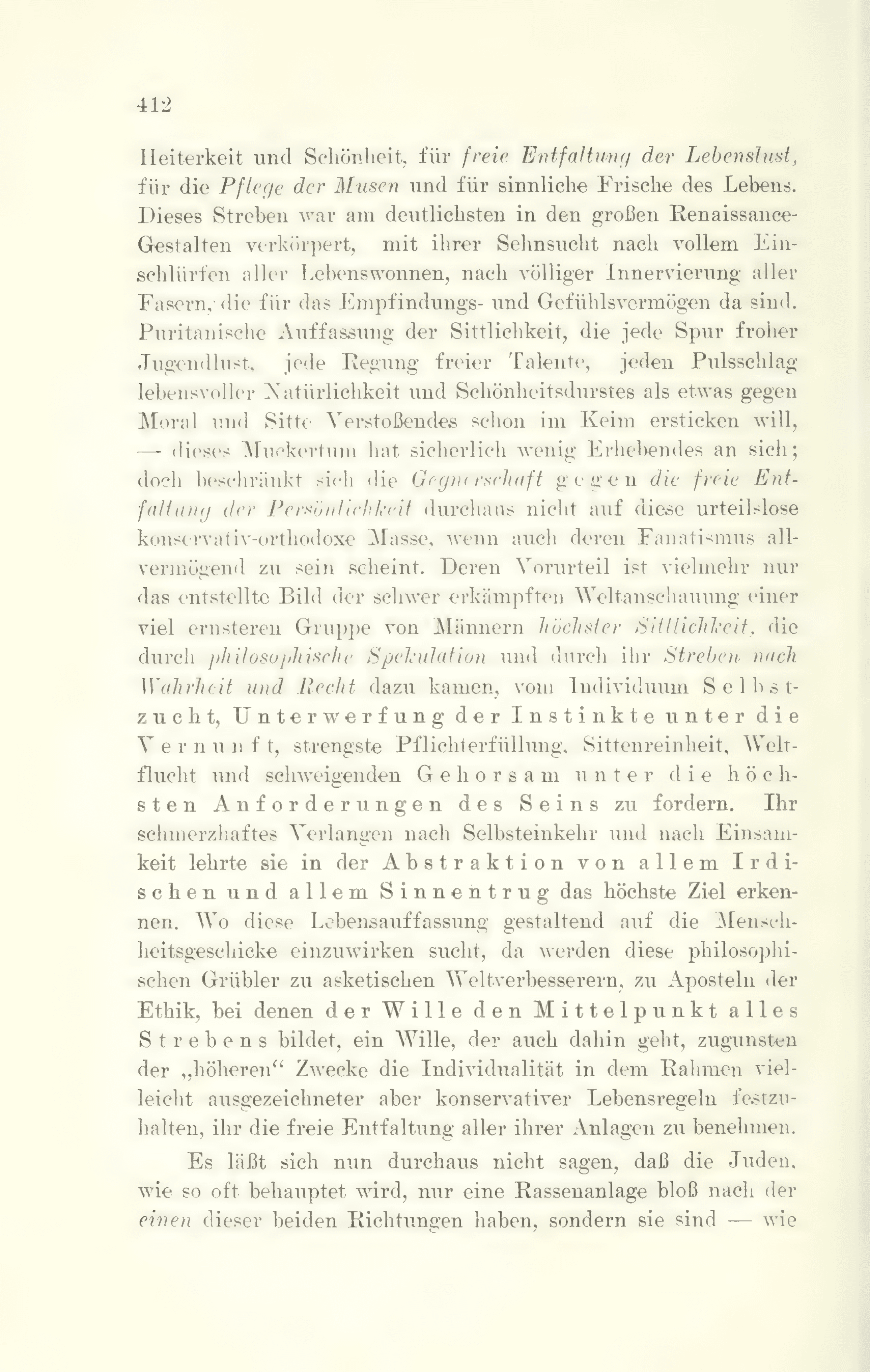
412 cheerfulness and beauty, for the free unfolding of the lust for life, for the cultivation of the Muses and for the sensual freshness of life. This aspiration was most clearly embodied in the great Renaissance figures, with their longing for the full ab- sorption of all of life's pleasures, for the complete innervation of all fibers that exist for the capacity for sensation and feeling. The Puritan conception of morality, which seeks to nip every trace of cheerful youthful joy, every stirring of free talents, every pulse-beat of vibrant naturalness and thirst for beauty in the bud as something that offends against morals and custom — this cant certainly has little that is uplifting about it; yet the opposition to the free development of the personality is by no means limited to this indiscriminate conservative-orthodox mass, even if its fanaticism seems to be all-powerful. Their judgment is rather only the distorted image of the hard-won worldview of a much more serious group of men of the highest morality, who, through philosophical speculation and their striving for truth and justice, came to demand from the individual self- discipline, submission of instincts to reason, the strictest fulfillment of duty, purity of morals, flight from the world, and silent obedience to the high- est demands of being. Their painful longing for introspection and for soli- tude taught them to recognize the highest goal in the abstraction from all earthly things and all sensory illusion. Where this conception of life seeks to have a formative influence on the destinies of mankind, these philosophi- cal brooders become ascetic world-improvers, apostles of ethics, for whom the will forms the center of all striving, a will that also aims, in favor of 'higher' purposes, to hold the individuality fast within the framework of perhaps excellent but conservative rules of life, to deprive it of the free development of all its dispositions. It can now by no means be said that the Jews, as is so often claimed, have a racial disposition only in one of these two directions, but rather they are — as
Show Original German Text
412 Heiterkeit und Schönheit, für freie Entfaltung der Lebenslust, für die Pflege der Musen und für sinnliche Fnsche des Lebens. Dieses Streben war am deutlichsten in den großen Renaissance- Gestalten verkörpert, mit ihrer Sehnsucht nach vollem Ein- schlüpfen aller Lebenswonnen, nach völliger Innervierung aller Fasem, die für das Empfindungs- und Gefühlsvermögen da sind. Puntanische Auffassung der Sittlichkeit, die jede Spur froher Jugendlust, jede Regung freier Talente, jeden Pulsschlag lebensvoller Natürlichkeit und Schönheitsdurstes als etwas gegen Moral und Sitte Verstoßendes schon im Keim ersticken will, — dieses Muckertum hat sicherlich wenig Erhebendes an sich; doch beschränkt ſich die Gegnerschaft gegen die freie Ent- faltung der Persönlichkeit durchaus nicht auf diese urteilslose konſervativ-orthdoxe Maſſe, wenn auch deren Fanatisnus all- vermögend zu sein scheint. Deren Urteil ist vielmehr nur das entstellte Bild der schwer erkämpften Weltanschauung einer viel emsteren Gruppe von Männem höchster Sittlichkeit, die durch philoſophische Spekulation und durch ihr Streben nach Wahrheit und Recht dazu kamen, vom Individuum Selbst- zucht, Unterwerfung der Instinkte unter die Vemunft, strengste Pflichterfüllung, Sittenreinheit, Welt- flucht und schweigenden Gehorſam unter die höch- sten Anforderungen des Seins zu fordem. Ihr schmerzhaftes Verlangen nach Selbsteinkehr und nach Einſam- keit lehrte ſie in der Abstraktion von allem Irdi- schen und allem Sinnentrug das höchste Ziel erken- nen. Wo dieſe Lebensauffaſſung gestaltend auf die Mensch- heitsgeschicke einzuwirken ſucht, da werden dieſe philoſophi- schen Grübler zu aſketischen Weltverbesserem, zu Aposteln der Ethik, bei denen der Wille den Mittelpunkt alles Strebens bildet, ein Wille, der auch dahin geht, zugunsten der „höheren“ Zwecke die Individualität in dem Rahmen viel- leicht ausgezeichneter aber konſervativer Lebensregeln festzu- halten, ihr die freie Entfaltung aller ihrer Anlagen zu benehmen. Es läßt ſich nun durchaus nicht ſagen, daß die Juden, wie ſo oft behauptet wird, nur eine Raſſenanlage bloß nach der einen dieſer beiden Richtungen haben, ſondem ſie ſind — wie