The Racial Problem (1912)
Page 410 • Click to zoom
Page 410 of 568
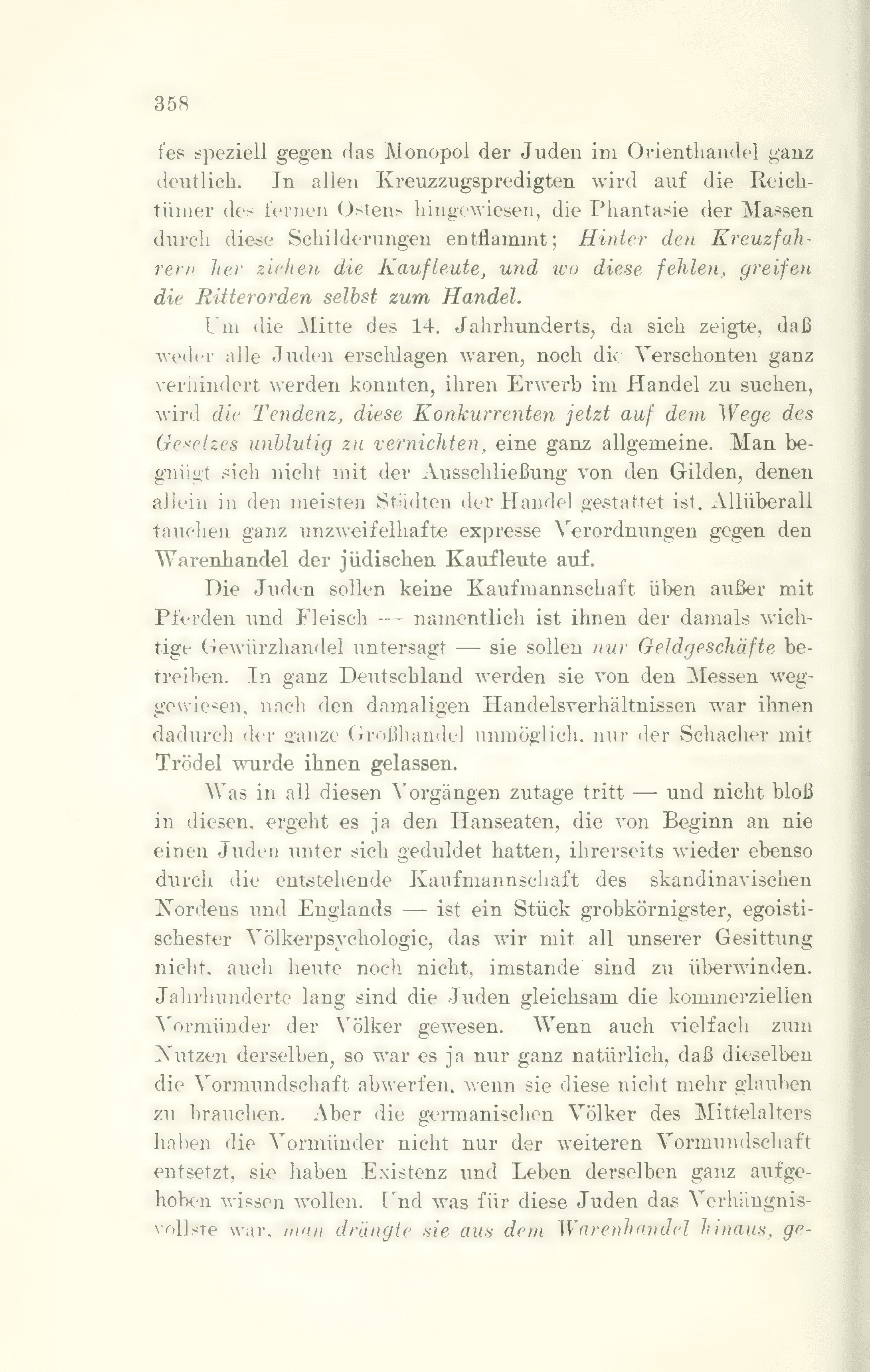
358 gle specifically against the monopoly of the Jews in the Orient trade is quite clear. In all the crusade sermons, the rich- es of the distant East are pointed out, the imagination of the masses inflamed by these descriptions; behind the crusad- ers follow the merchants, and where these are absent, the knightly orders themselves take up trade.
Around the middle of the 14th century, when it became clear that neither had all Jews been slain, nor could the spared ones be completely prevented from seeking their livelihood in trade, the tendency to now annihilate these competitors bloodlessly by way of the law becomes quite general. They are not content with exclusion from the guilds, which alone in most cities are permitted to trade. Everywhere, unmistakable express ordinances against the goods trade of Jewish merchants appear.
The Jews shall not practice commerce except with horses and meat—in particular, the spice trade, important at that time, is forbidden to them—they shall only conduct money business. Throughout Germany they are barred from the fairs; under the trade conditions of the time, this made all wholesale trade impossible for them, only haggling with secondhand goods was left to them.
What comes to light in all these processes—and not only in these, for the Hanseatics, who from the beginning never tolerated a Jew among them, in turn fare just the same at the hands of the emerging merchant class of the Scandinavian North and England—is a piece of the most coarse-grained, most egoistical folk psychology, which we, with all our civilization, are not able, even today, to overcome.
For centuries, the Jews have been, as it were, the commercial guardians of the peoples. Although often for their benefit, it was only quite natural that they should throw off the guardianship when they believed they no longer needed it. But the Germanic peoples of the Middle Ages not only removed the guardians from further guardianship, they wanted their very existence and life to be completely abolished. And what was most fateful for these Jews, they were pushed out of the trade in goods, fo-
Show Original German Text
358 ſes speziell gegen das Monopol der Juden im Onenthandel ganz deutlich. In allen Kreuzzugspredigten wird auf die Reich- tümer des femen Ostens hingewieſen, die Phantaſie der Maſſen durch dieſe Schilderungen entflammt; Hinter den Kreuzfah- rem her ziehen die Kaufleute, und wo dieſe fehlen, greifen die Ritterorden ſelbst zum Handel. Um die Mitte des 14. Jahrhunderts, da ſich zeigte, daß weder alle Juden erschlagen waren, noch die Verschonten ganz verhindert werden konnten, ihren Erwerb im Handel zu ſuchen, wird die Tendenz, dieſe Konkurrenten jetzt auf dem Wege des Geſetzes unblutig zu vemichten, eine ganz allgemeine. Man be- gnügt ſich nicht mit der Ausschließung von den Gilden, denen allein in den meisten Städten der Handel gestattet ist. Allüberall tauchen ganz unzweifelhafte expreſſe Verordnungen gegen den Warenhandel der jüdischen Kaufleute auf. Die Juden ſollen keine Kaufmannschaft üben außer mit Pferden und Fleisch — namentlich ist ihnen der damals wich- tige Gewürzhandel unterſagt — ſie ſollen nur Geldgeschäfte be- treiben. In ganz Deutschland werden ſie von den Meſſen weg- gewieſen, nach den damaligen Handelsverhältniſſen war ihnen dadurch der ganze Großhandel unmöglich, nur der Schacher mit Trödel wurde ihnen gelaſſen. Was in all dieſen Vorgängen zutage tntt — und nicht bloß in dieſen, ergeht es ja den Hanſeaten, die von Beginn an nie einen Juden unter ſich geduldet hatten, ihrerſeits wieder ebenſo durch die entstehende Kaufmannschaft des ſkandinavischen Nordens und Englands — ist ein Stück grobkömigster, egoisti- schester Völkerpſychologie, das wir mit all unſerer Geſittung nicht, auch heute noch nicht, imstande ſind zu überwinden. Jahrhunderte lang ſind die Juden gleichſam die kommerziellen Vormünder der Völker geweſen. Wenn auch vielfach zum Nutzen derſelben, ſo war es ja nur ganz natürlich, daß dieſelben die Vormundschaft abwerfen, wenn ſie dieſe nicht mehr glauben zu brauchen. Aber die germanischen Völker des Mittelalters haben die Vormünder nicht nur der weiteren Vormundschaft entſetzt, ſie haben Existenz und Leben derſelben ganz aufge- hoben wiſſen wollen. Und was für dieſe Juden das Verhängnis- vollste war, man drängte ſie aus dem Warenhandel hinaus, ge-