The Doctrine of Beitar
Page 94 • Click to zoom
Page 94 of 155
- 89 -
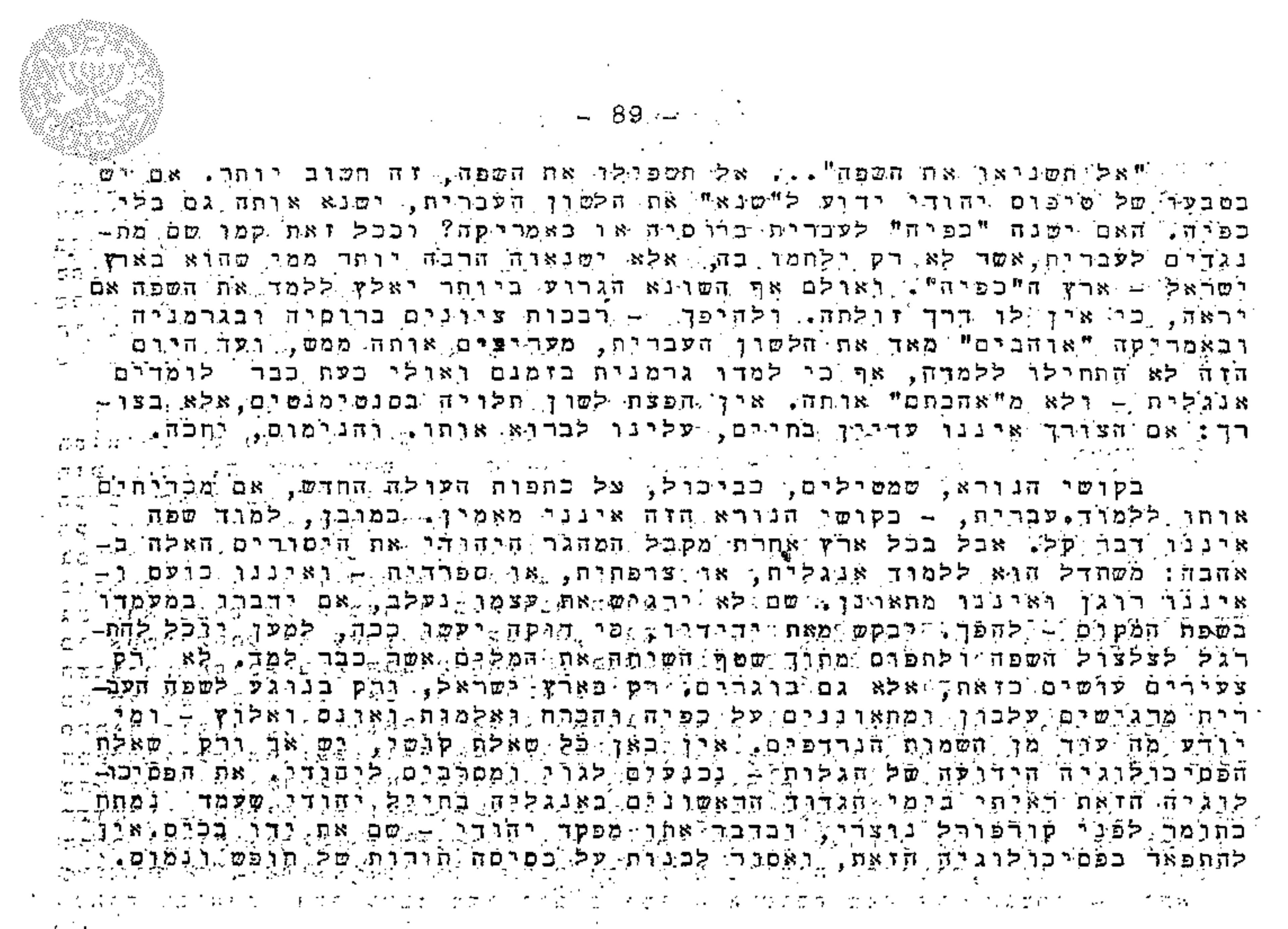
"Do not hate the language," do not dismiss the language, it is tasteless. If a certain type of Jew is known to "hate" the Hebrew language, he will hate it even without coercion. Is there "coercion" for Hebrew in Lithuania or in America? And yet, opponents of Hebrew arose there, who not only fought against it, but hated it much more than is the case in the Land of Israel - the land of "coercion." However, even the worst hater will be forced to learn the language if he sees that he has no other way, and vice versa.
Tens of thousands of Zionists in Russia, Germany, and America "love" the Hebrew language very much, they truly admire it, and for the most part have not begun to learn it, even though they learned German in their time and perhaps are now already learning English - and not out of "love" for it. The desire for a language does not depend on sentiments, but on need: if the need does not yet exist, we must create it, and German can wait.
As for the terrible difficulty they supposedly impose on the new pioneer immigrant if they force him to learn Hebrew - I do not believe in this terrible difficulty. Of course, learning a language is not an easy thing. But in every other country, the Jewish immigrant accepts these tribulations with love: he strives to learn English, or French, or Spanish - and he is not angry, nor does he grumble, nor complain. There, he will not feel insulted if his status is established in the local language - on the contrary, he will easily receive honor if he improves his speech, so that he can become accustomed to the language and make a living from it. And this has been learned not only by worthy single youths, but also by adults. Only in the Land of Israel does an adult Jew feel insulted and complain about coercion regarding the Hebrew language, with sighing and widow-like laments, and so on, and who knows what other emotional baggage of this kind. There is no wonder here at all. The typical psychology of the Diaspora—this flawed psyche—enters the threshing floor and attaches itself to its foundation. And this I have shown in my great journal, regarding those who come speaking broken English. He is happy to boast before a Christian professor, but when a fellow Jew speaks with him, he becomes sullen. He does not boast of this psychology, and one must not mistake it for a spiritual devotion of the heart and soul.
Show Original Hebrew Text
- 89 - "אל תשנאו את השפה", אל תסלקו את השפה, זה חסר וחסד בטחון מיוחד. ידוע שנא את הלשון העברית, ונשא אותה גם כלפי כפיה. האם ישנה "כפיה" לעברית כהיום או באמריקה? וככל זאת קמו שם מת- נגדים לעברית, אשר לא רק נלחמו בה, אלא נשאוה הרבה יותר ממה שהוא בארץ ישראל - ארץ ה"כפיה". ואולם אף השונא הגרוע ביותר יאלץ ללמד את השפה אם יראה, כי אין לו דרך זולתו, ולהיפך. - רבבות ציונים ברוסיה ובגרמניה ובאמריקה "אוהבים" מאד את הלשון העברית, מעריצים אותה ממש, ועל ידם הזה לא התחילו ללמדה, אף כי למדו בזמנם בזמנם ואולי כבר למדום אנגלית - ולא מ"אחבתם" אותה. א"כ חפץ לשון תלויה בסיבות נפשיות, אלא בתוע- לת: אם הצורך איננו עדיף ואין בחרים, עלינו לברוא אותו, והגורם, יחידה. בקושי הנורא, שמטילים כביכול, על בחפזה הפולה החדש, אם מוכרחים אותו ללמוד עברית, - כקושי הנורא הזה איננו מאמין. כמובן, ללמוד שפה איננו דבר קל בכל בכל ארץ אחרת מקבל המהגר היהודי את הייסורים האלה כי אהבה: משתדל הוא ללמוד אנגלית, או גרמנית, או ספרדית - וארזננו כולם ר- איננו רוגן ואיננו מתאונן, שם לא תרבה את קצבם, נעלם, אם יתברך במקומו בשפת המקום - להפך, בקצמן יקבל יבדו. בטוחה יקבל כסף, לסבון יקבל לחם- רגל לצלוח השפה ולקבלם מתוך שפות הצומת מקבל. אלה כבר למד, לא רק צעירים פזים כאלו, אלא גם בוגרים: רק בארץ ישראל, יהודי בוגר לשפה העב- רית מרגישים, עלבון ומתאוננים על כפיהם והאלמנות ואלונם ואלוך - ומי יודע מה מן השפה והספרות כזה. אין כאן שולם קלמן. גם אין רק פלא הספרותה בלוגיה הדיגה של הגלות, נכנסים לגרן ונספחים ליסודו, את הפסקה קלה. וזאת הראתי ביומן הגדול, מסמכים באנגלית בחודש. יחד עם נפחד להתפאר לפני פורופגנדה נוצרית, ובדבר אתו מסכן יחרוג -- שם את נהגו בהם, איננו מתפאר במסרולגיכיה הזאת, ואסור לכלול עם כסירות הרוח, מן הנפש והנשמה.