The Doctrine of Beitar
Page 95 • Click to zoom
Page 95 of 155
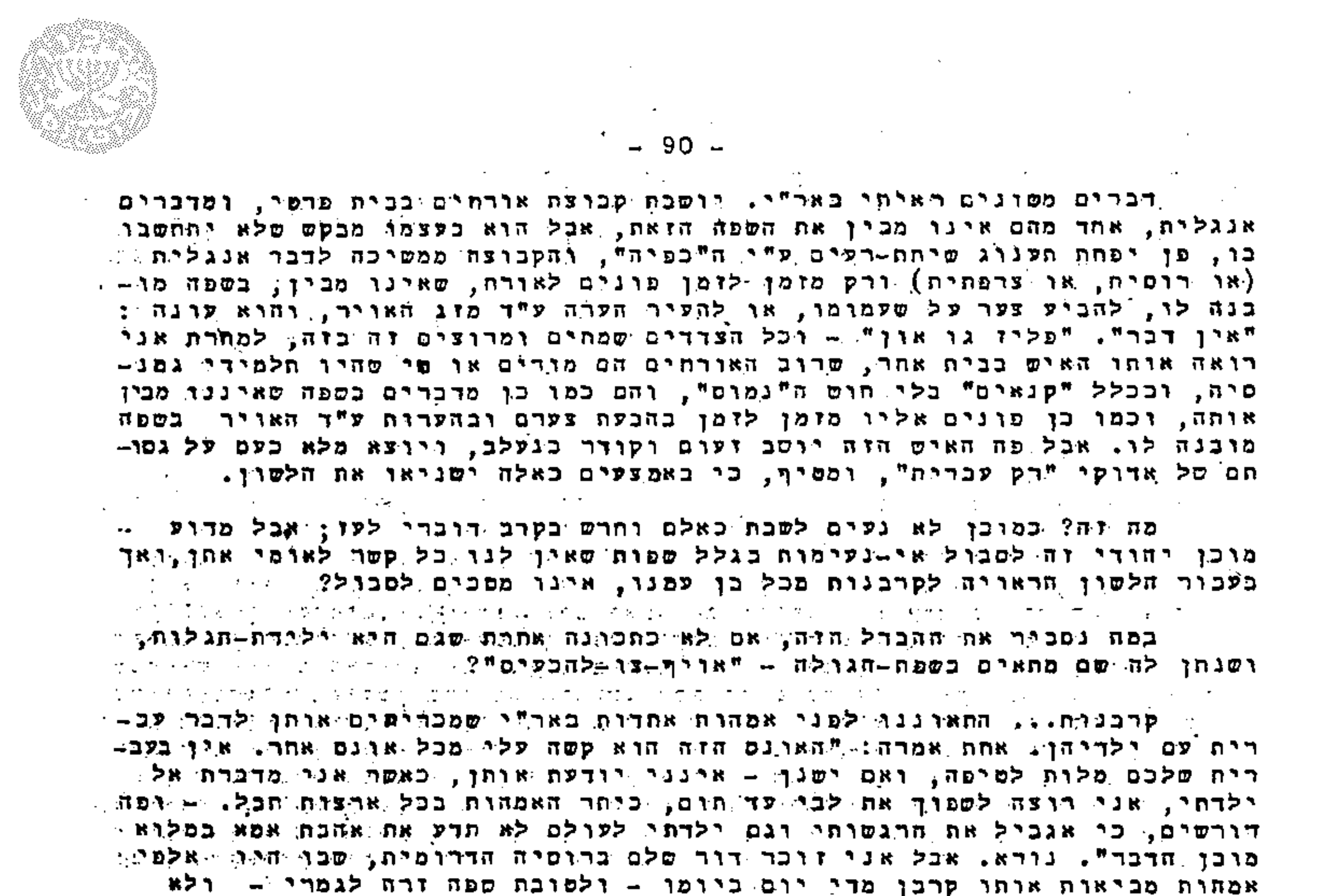
I have seen strange things in Eretz Yisrael. A group of guests is sitting in a private home, speaking English. One of them does not understand this language, but he himself has waived any consideration for him, lest the "command" interrupt the pleasure of their friendly chat, and the group continues to speak English (or Russian, or French) and only from time to time do they turn to the guest, who does not understand, in a language he understands, to express sorrow for his muteness, or to make a comment about the weather, and he answers: "It's nothing," "Please go on." – and all sides are happy and satisfied with one another. The next day I see that same man in another house, where most of the guests are teachers or were students of the gymnasium, and are generally "zealots" without a sense of "politeness," and they too are speaking a language he does not understand, and they too turn to him from time to time with expressions of sorrow and with comments about the weather in a language he understands. But here this man sits gloomy and grim in his world, and leaves full of anger at the rudeness of the fanatics of "only Hebrew," and adds, that by such means they will make the language hateful.
What is this? Of course, it is not pleasant to sit like a mute and deaf person among speakers of a foreign tongue; but why this unique phenomenon: to suffer discomfort for the sake of strangers with whom we have no national connection, and only for the sake of the language worthy of sacrifices from every son of our people, we do not agree to suffer?
How can we explain this difference, if not by a certain trait that is also a product of the Exile, and which was given a protest name in the language of the Diaspora – "Originality-to-spite"?
Sacrifices...
Some mothers in Eretz Yisrael complained to me that they are being forced to speak Hebrew with their children. One said: "This coercion is harder on me than any other coercion. How are there words of endearment in your Hebrew, and if there are – I do not know them. When I speak to my daughter, I want to pour out my heart completely, as is the custom of mothers in all the lands of the world. - And what is demanded, that I should limit my feelings so that my child will never know a mother's love in the full sense of the word." Terrible. But I remember a whole generation in Southern Russia, in which thousands of Hebrew mothers made a sacrifice day in and day out – for the benefit of a foreign language for their sons – and not...
Show Original Hebrew Text
- 90 דברים משונים באר"י. יוסף קבוצת אורחים כבית פרסי, ומדברים אנגלית, אחד מהם אינו מבין את השפה הזאת, אבל הוא בעצמו סלק מאוד יתחשבו בו, פן יפתח תערוג שיתח-רף ע"י ה"פקודה", והקבוצה ממשיכה לדבר אנגלית. (או רוסית, או צרפתית) ורק מזמן לזמן פונים לאורח, שאינו מבין, בשפה מו- בנה לו, י"להביע צער על שפתומו, או להעיד העדה ע"י מוד האויר, והוא עונה: "אין דבר", "פליי גו אוף". וכל הצדדים שמחים ומרוצים זה בזה, למרות זאת רואה אותו האיש כברח, שרוב האורחים הם מורים או שהם שמרי המדיני גמ- ורים, ובכלל "קנאי" בלי חס ה"נימוס", והם כמו כן מדברים בשפה שאיננו מבין אותה, וכמו כן פונים אליו מזמן לזמן בהבעת צער וקדרות י"עד האויר בשפה מובנה לו. אבל פה האיש הזה ירוד וקודר בעולמו, ויוצא מכל עם על גסו- ת חס על אדוקי "רק עבריה", ומוסיף, כי באמצעים כאלה ישניאו את הלשון. מה זה? כמובן לא נקום לשבח כאדם וחרש בקרב דוברי לשון; אבל מדוע ייחודי זה: לסבול י"א-ננימוחת בגלל פמזון שאין לנו. כל קשר לאומי אחד, ורק בעבור הלשון הראויה לקרבנות מכל בני עמנו, איננו מסכים לסבול? בטח נסבול את ההבל הזה, אם לא כתכונה אחת שם היא ל"הברת-תגלות" ושנתן לה שם מחאים בשפה-הגולה - "אוריג-דו -להכפיס?" קרבנות... החאונו לפני אשה אחת באר. שסברתם : אותן לדבר עב- רית עם ילדיהם. אחת אשה אמרה: "האונס הזה הוא קשה עלי מכל אונס אחד. איך בעב- רית סכלת פלוה למשוה, ואם ישנו – איננו יודעת אותן, כאשר אני מדברת אל ילדתי, אני רוצה לספוג את לבי. הדואג חס, ביותר האמהות בכל ארצות הגולה. - יפה דברים, כי אגביל את חרבוחתו רק ״לדם״ לעולם לא תדעי את אהבת אמא בסלוא מובן הדבר". נורא. אבל אני זוכר דור שלם ברוסיה הדרומית; שכר הנין אלסם- אמהות מבריאות ארוך קדח מדי יום ביומו – ולסבות שפה זרה לבורד – י"א