The Doctrine of Beitar
Page 88 • Click to zoom
Page 88 of 155
83
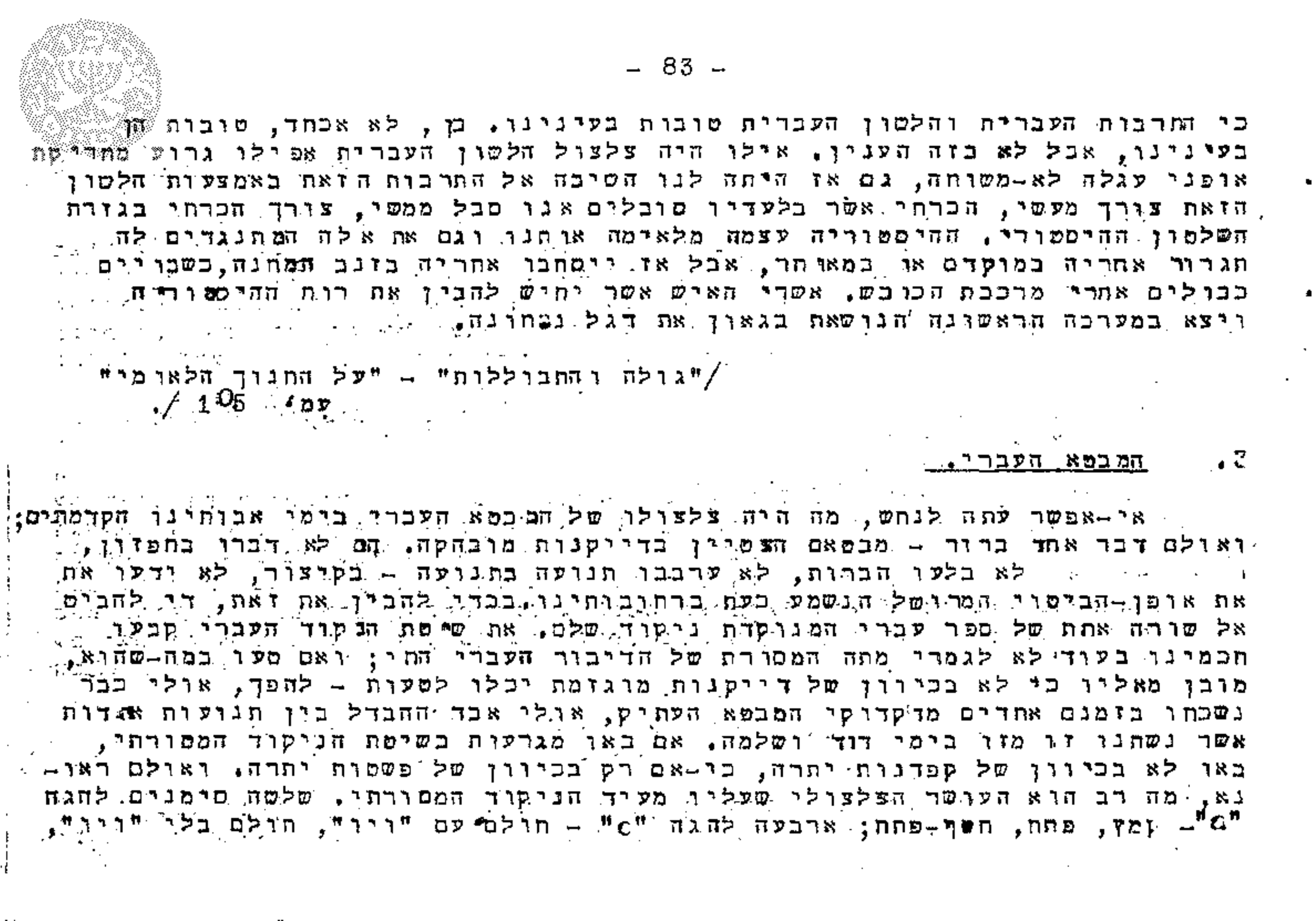
For Hebrew culture and the Hebrew language are valuable assets of ours. Indeed, I do not deny they are valuable assets, but that is not the point. Even if the sound of the Hebrew language were worse than the creaking of an unoiled wagon wheel, even then our need for this culture, by means of this language, would be a practical and essential one. Without it we suffer real affliction, an essential need within the framework of historical dominion. History itself compels us and also those who oppose it. Sooner or later, they will be bound to follow it, but then they will be dragged at the tail of the camp, like captives bound behind the conqueror's chariot, whereas the man who hastens to understand the spirit of history will go forth in the first, exalted campaign, proudly carrying the banner of its victory.
"Exile and Assimilation" - "On National Education" p. 105.
The Hebrew Accent
A - It is impossible now to guess what the sound of the Hebrew accent was in the days of our ancient forefathers; however, one thing is clear—their excellent and distinctly precise pronunciation. They did not speak hastily, they did not swallow syllables, they did not mix one vowel with another—in short, they did not know the sloppy manner of expression heard now in our streets. To understand this, it is enough to look at a single line of a Hebrew book with full vocalization.
When our Sages established the standards of spoken Hebrew, the tradition of living spoken Hebrew had not yet completely died; and if they erred in some respect, it is self-evident that they would have tended towards noticeable precision, at the very least. But to the contrary, perhaps some of the intricacies of the ancient accent had already been forgotten in their time; perhaps the distinction was lost between certain vowels that had been preserved separately in the days of David and Solomon. If flaws entered the traditional vocalization system, they came not from a direction of excessive pedantry, but rather only from a direction of excessive simplicity. But see, what is the spirit of the general principle to which the traditional vocalization attests. Three signs for the vowel "a"—Kamatz, Patah, Hataf-Patah; four for the vowel "o"—Holam with a "vav", Holam without a "vav",...
Show Original Hebrew Text
- 83 כי התרבות העברית והלשון העברית בקינינו, כן , לא אבדו, טובות הן בקינינו , אבל לא בזה הענין. אילו היה צלצול הלשון העברית אפילו פרוץ מחציתה אופני עגלה לא־מפתח , גם אז היתה לנו הסיבה אל התרבות הזאת באמצעות הלשון הזאת צורך מעשי, הכרחי. אשר בלעדיו סובלים אנו סבל ממשי , צורך הכרחי בגדולת השלטון ההיסטורי , ההיסטוריה עצמה מאליה אנו וגם את אלה המתנגדים לה . תחגור אחריה כמוקדס או במאוחר, אבל אז ישיחסו אחריה בזנב ומחנה ,כשם וייס כבולים אחרי מרכבת הכובש, אשר האיש אשר יחפש להבין את רוח ההיסטוריה. ו יצא במערכה הראשונה הנפלאה בגאון את דגל נצחונה . -"גואלה והתבוללות"- / 1 %105 מ. # המבטא העברי א - אי־אפשר עתה לנחש , מה היה צלצולן של המבטא העברי . בימי אבותינו הקדמונים, לא דברו בפתרון , ואולם דבר אחד מובהק בדיקרונות מובהקה . זו רבו והלשון העברית, לא ערכו תנועה בתנועה – בקיצור , לא ידעו את אופן־הביטוי המיולש ה, בשם ברובהבגרובינו, בדרך שהכינו . זאת , רב לחביו אל שורה אחת של ספר עברי המנוקדת ניקוד שלם , אם שפת הדבור העברי . קביו , חכמינו בעודו לא למדו תחת המסורת של הדיבור העברי היו: ו אם עפו במה־מאוחר מובן מאליו כי בא בכיון של דיוקנות מרגשת יכלו לפחות – לחשוף , אולי כבר נשכחו בזמנם אחרים מדיקדוקי המבטא הפתיח , אולי אבד ההבדל בין תנועות אדות אשר נשתמרו מזה דמוי רוד ושלמה , אם באו מגרסות בשיטת הניקוד המסורתי , באו או בכיוון של פקדונות יותרה , כראם קם בכיוון של פשסות יתרה . ואולם ראו-נא , מה הוא הניסוד הבללויפ שללוין מיד הניקוד המסורתי . שלמה סימנים לנגח - ומן , פחת , חפח־פחת ; ארבעה להגה – חולסם ע ם "יויז" , חולסם בלי "יויז"