The Doctrine of Beitar
Page 89 • Click to zoom
Page 89 of 155
- 84 -
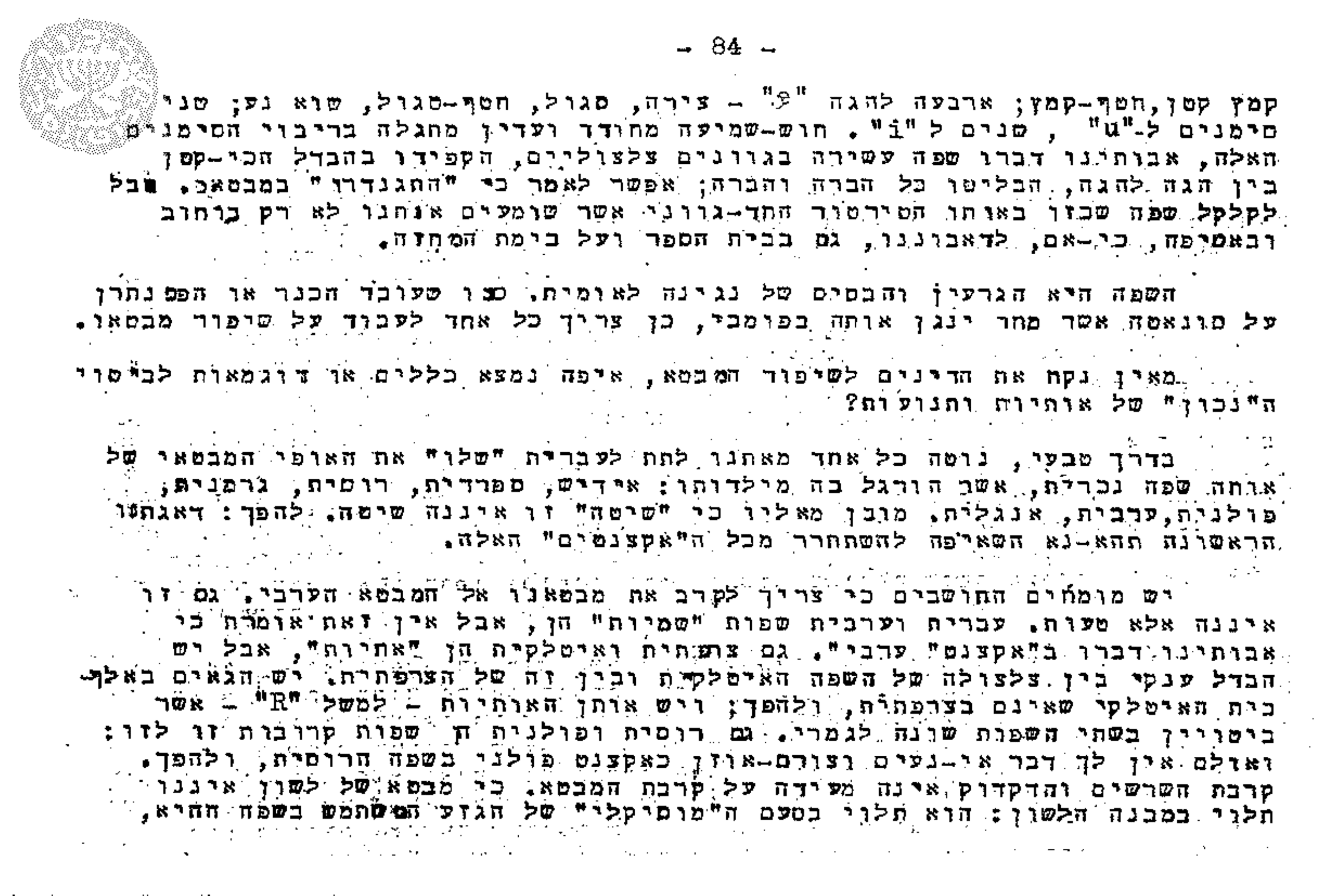
Kamatz katan, Hataf-kamatz; four for the "o" sound—Tzeire, Segol, Hataf-segol, Shva na; two signs for "u". A special and fine sense of hearing demanded this multiplicity of signs. Our forefathers spoke a language rich in guttural sonorities, they were meticulous about the finest distinction between one sound and another, they emphasized each and every syllable; one could say that we "sang" in our pronunciation. But not to a corruption of the language like this, in that mono-guttural castration that we hear not only on the street and in assembly, but also, to our sorrow, in school and on the theater stage.
The language is the core and basis of the national treasury, and whoever believes so must also defend its integrity on the one hand, and protect it in his polemics on the other; and thus, each person must work on improving their pronunciation.
From where shall we take what is needed to improve pronunciation, where will we find rules, or examples, for the "correct" articulation of letters and vowels?
Naturally, each one of us tries to give "his" Hebrew the accentual character of that foreign language to which he has been accustomed since childhood: Yiddish, Spanish, Russian, German, Polish, Arabic, English. It is self-evident that this "method" is no method, on the contrary: our first concern must be to purify and free ourselves from all these "accents".
There are experts who believe that we should bring our pronunciation closer to the Arabic pronunciation. This too is nothing but a mistake. Hebrew and Arabic are "sister" languages, but such "sisterhood" does not mean that our forefathers spoke with an Arabic "accent". French and Italian are also "sisters", but there is a huge difference between the sound of the Italian language and that of the French; there are sounds in the Italian alphabet that are not in French, and vice versa; and there are the same letters—for example "z"—whose pronunciation in the two languages is completely different. Russian and Polish are also languages close to one another; and yet, there is nothing as unpleasant and jarring to the ear as a Polish accent in the Russian language, and vice versa. Proximity of roots and grammar does not attest to proximity of pronunciation, because the pronunciation of an organic language depends on the structure of the tongue; it depends on the "systemological" taste of the race that uses that language.
Show Original Hebrew Text
- 84 - קמץ קטן, חטף-קמץ; - צירה, סגול, חטף-סגול, מלא נק' שנ' סימנים ל"ו". - חוס-שמיפה מיוחד ועדין מחלה ברבוי הסימנים האלה, אבותינו דברו שפה עשירה בגרוניים צלצוליים, הקפידו בהבדל בין-קן בין הגה להגה, הבליטו כל הברה והברה; אפשר לאמר כי "התנגדנו" במבטאנו, אבל לקלקול שפה כאין באותו הסירוס החד-גרוני אשר שומעים אנחנו דק ברחוב ובאספה, כי-אם, לדאבוננו, גם בבית הספר ועל כרמת המחינה. השפה היא הגרעין והבסיס של גניזה לאומית, וכן סבור כל חבר אל הסף הנדחף על מונאסה אחר מחו גירגן אותה בפולמבי, כן צריך כל אחד לעבוד קל סיפור מבסאו. מאין לקח את הרדינו לסיפור המבסא, איפה נמצא כללים. או דוגמאות לביסוי ה"נכון" של אותיות ותנועות? בדרך טבעי, נוסה כל אחד מאתנו לתת לעבריה "שלו" את האופי המבסאי של אותה שפה נפרדת, אשב הורגל בה מילדותו: אידיש, ספרדית, רוסית, גרמנית, פולנית, ערבית, אנגלית, מובן מאליו כי "שיטה" זו איננה שיטה, להפך: דאחתו הראשונה תהא-נא והטליפה והשתחרר מכל ה"קצנסיס" האלה. יש מומחים הסוברים כי צריך לקרב את מבטאנו אל המבטא הערבי. גם זו איננה אלא טעות, עברית וערבית שפות "אחיות" הן, אבל אין "אחווה" כזו אבותינו: דברו ב"אקצנט" ערבי. גם בתחיתן ואיטלקית חן "אחירה", אבל הם הבדל ענין בין. לקלילה של השפה האיטלקית ובין זה של הצרפתית, יש הגאים באלף בית האיטלקי שאינם בצרפתית, ולהפך: ורש אותך האותיות - למשל "ז"א" - אשר ביוסרין בשתי השמנה שונה לגמרי. גם רוסית ופולנית חן שפות קרובות זו לזו: ודאדלם אין לך דבר איך-נודם וצורם-אודן נאקצנט פולני בשטה הרחובה, ולהפך. קרבת השרשים והדקדוק, אינה מלידה על קרבת המבטא, כי מבטא של לשון ארגנו תלוי במבנה הלשון: הוא תלוי בסעם ה"סיתמולגי" של הגדוי בשפחת הדיא.