The Doctrine of Beitar
Page 87 • Click to zoom
Page 87 of 155
- 82 -
2. The Hebrew Language
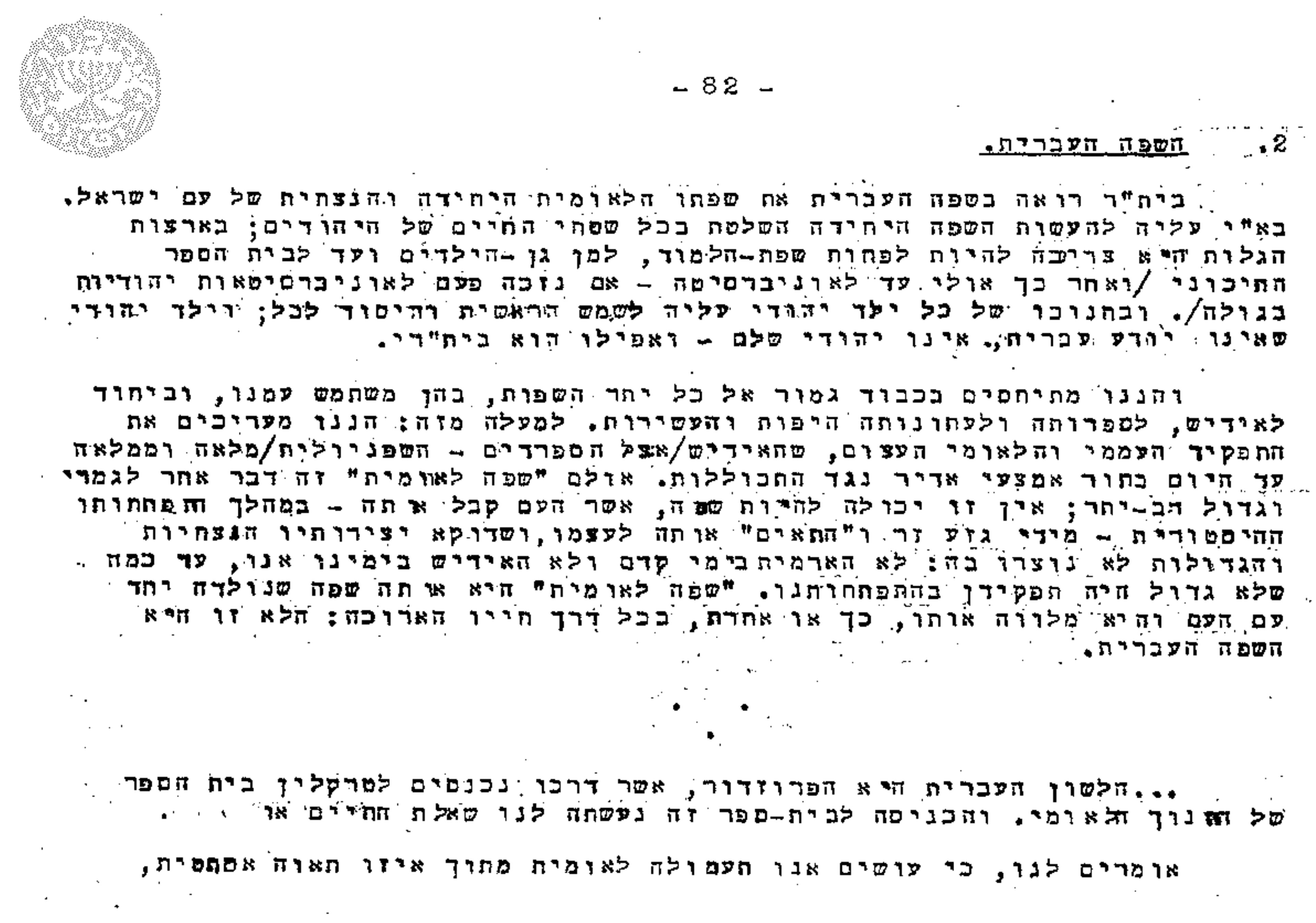
Betar sees the Hebrew language as the language of the revival and permanence of the people of Israel. In the Land of Israel, it must become the sole and dominant language in all areas of the Jews' lives; in the lands of the diaspora it must be at least the language of instruction, from kindergarten to high school, and then perhaps, to the university—if we are ever worthy of a Jewish university in the diaspora. And in the education of every Jewish child, it must take the first and foundational place for all; a Jewish child who does not know Hebrew is not a complete Jew—even if he is a member of Betar.
And we relate with complete respect to all other languages that our people uses, and especially to Yiddish, to its beautiful and rich literature and creativity. Moreover: we appreciate the immense folk and national role that Yiddish literature filled and continues to fill to this day as a powerful means against assimilation. However, a national language is something else entirely, great and very unique; it cannot be a language which the people received—in the course of its historical development—from the hands of fate and "adapted" to itself, and in which its eternal and great works were not created: not Aramaic in ancient times nor Yiddish in our own day, no matter how great their role in its development was. A national language is only a language that was created together with the people and it accompanies it, one way or another, throughout its long path of life: for that is the Hebrew language.
...The Hebrew tongue is the corridor, through which one enters the great hall of the school of national education. And the entrance to this school is for us a question of life or death. And let them not tell us that we are engaged in this toil out of some aestheticism,
Show Original Hebrew Text
- 82 - ## השפה העברית. .2 ביח"ר רואה את השפה העברית, את שפת החיים וההנצחה של העם ישראל, בא"י, עליה להתפשט הסללה היחידה מכל שטחי החיים של היהדות: בארצות הגלות היא צריכה להיות שפת-הלימוד, למן גן-הילדים ועד לבית הספר התיכוני, / ואחר כך אולי, עד לאוניברסיטה – אם נזכה פעם לאוניברסיטה יהודית בגולה/, ובמובנו של כל ילד יהודי שלם מן הראה היסוד לכל; ילד יהודי שאינו יודע עברית, אינו יהודי שלם - ואפילו הוא ביה"ח. והננו מתיחסים בכבוד גמור אל כל יתר השפות, בהן משתמש עמנו, וביחוד לאידיש, לספרותה ולפוריותה היפות והעשירות. למעלה מזה: הננו מעריכים את התפקיד העצמי והלאומי העצום, שהאידיש/אש הספרויות/מלאה וממלאה עד היום בתור אמצעי אדיר נגד ההתבוללות. אולם "שפה לאומית" זה דבר אחר לגמרי וגדול מיוחד, אין זו יכולה להיות עמ"ש, אשר העם קבל את – במהלך התפתחותו ההיסטורית – מידי גזר דין "התאים" אותו לעצמו, ושדווקא יצירותיו הנצחיות והגדולות לא נוצרו בה: לא הארמית בימי קדם ולא האידיש בימינו אנו, עד כמה שלא גדול היה תפקידן בהתפתחותו. "שפה לאומית" היא א תּ שה העם שמוצלחה יחד עם העם והיא ממורה אותו, כך או אחרת, בכל דרך חייו הארוכה: הלא זו היא השפה העברית. ...הלשון העברית היא הפרוזדור, אשר דרכו נכנסים לטרקלין בית הספר של חינוך לאומי. והכניסה לבית-ספר זה נפתחה לנו שאלת החיים או אומרים לנו, כי עושים אנו העמלות מתוך איזה אשחרית,