The Doctrine of Beitar
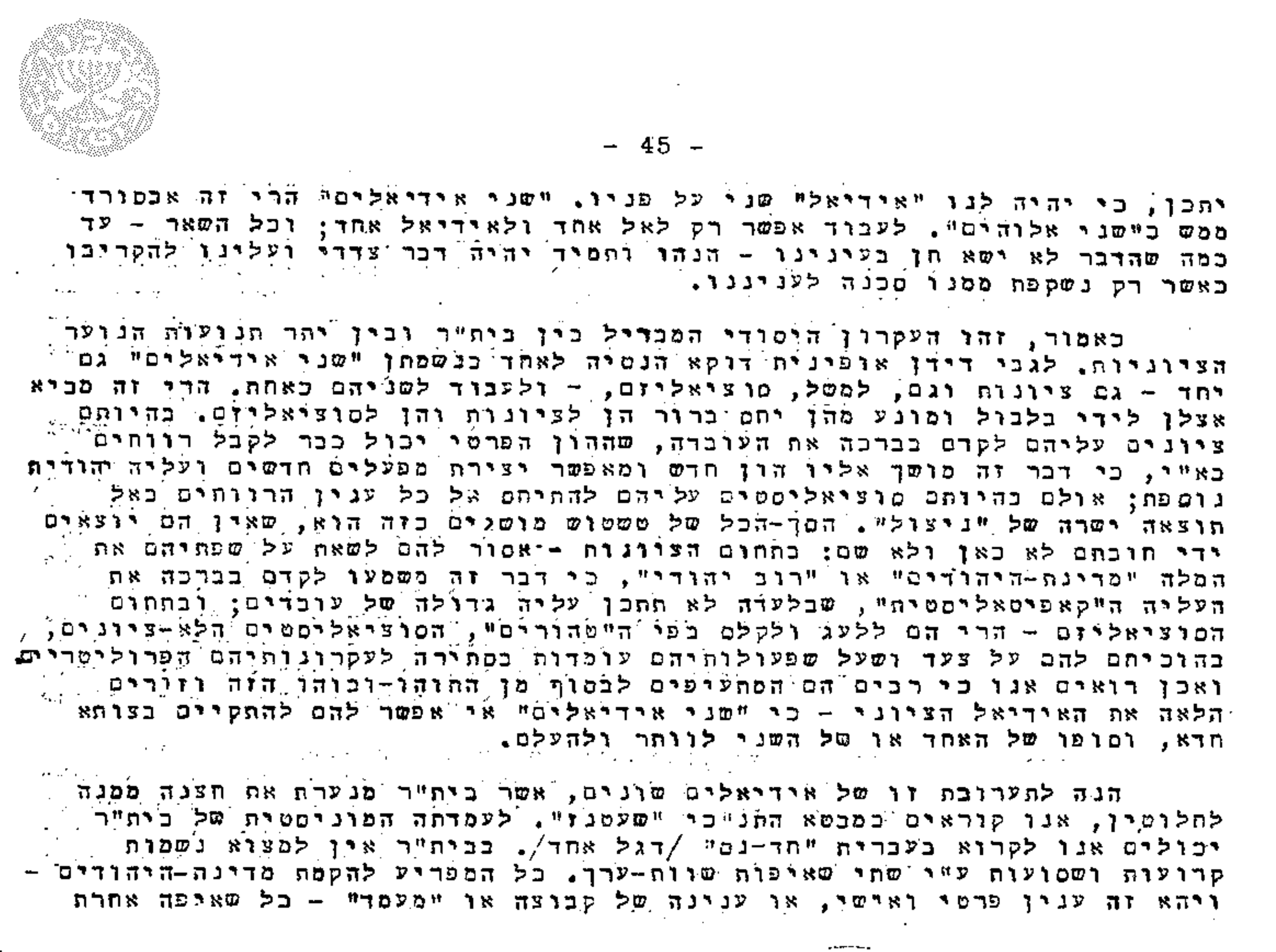
Page 51 • Click to zoom
Page 51 of 155
- 45 -
It is possible that we may have a second "idealism" on its face. "Two idealisms" is truly absurd, just as the name implies! One can work for only one God and one ideal, and all the rest—however much it may displease us—is absolutely a secondary matter, and we must sacrifice it whenever a danger to our cause arises.
As mentioned, this is the fundamental principle that distinguishes Betar from other Zionist youth movements. For them, the tendency is fashionable to unite, in their words, "two idealisms" together—both Zionism and, for example, Socialism—and to work for both as one. This leads them to confusion and prevents them from having a clear attitude towards both Zionism and Socialism. As Zionists, they must welcome the fact that private capital can already earn profits in Eretz Yisrael, because this attracts new capital and enables the creation of new enterprises and additional Jewish immigration (Aliyah); but as Zionist Socialists, they must regard the whole matter of profits as a direct result of "exploitation." The sum total of their simple game is this: they do not fulfill their duty either here or there: in the realm of Zionism—they are forbidden to utter the words "Jewish State" or "Jewish majority," because this means welcoming the "capitalist" Aliyah, without which a large immigration of workers is not possible; and in the realm of Socialism—they are an object of ridicule and scorn before the "Hashomerim," the non-Zionist socialists, by proving to them at every turn that their actions contradict their proletarian principles. And indeed we see that many of them eventually recoil from this chaos, and cast away the Zionist ideal—because "two idealisms" cannot coexist, and one or the other must eventually give way and disappear.
This mixture of different ideals, from which Betar completely dissociates itself, we call, in the foreign parlance, "class-based." In contrast, Betar's famous position can be called in Hebrew "Had-Nes" (One Banner). In short, in Betar one does not find souls torn and split by two aspirations of equal value. Anything that interferes with the establishment of a Jewish State—be it a private and personal matter, or the interest of a group or a "class"—any other aspiration
Show Original Hebrew Text
- 45 - מתכן, כי יהיה לנו "אידיאליסם" שני על מנוח. "ישנו אידיאליסם" הרי זה אבסורדי ממש כשמו כן הוא! לעבוד אפשר רק באחד ולאידיאל אחד, וכל השאר – עד כמה שהדבר לא ישא חן בעינינו – הנהו לחתיר יהיה דבר צדדי ועליינו להקריבו כאשר רק נשקפת סכנה לענייננו. כאמור, זהו העיקרון היסודי המבדיל בין ביה"ד ובין יתר תנועות הנוער הציוניות. לגבי דידן, אופנתיות דוקא הנטיה לאחר כשלמון "שני אידיאליס" גם יחד – גם ציונות וגם, למשל, סוציאליזם – ולבזבז למניזם כאחד. הרי זה מביא אצלן לידי בלבול ומונע מהן יחס ברור הן לציונות והן לסוציאליזם. בהיותם ציונים עליהם לקדם בברכה את העבודה, שהמון הפרוז וכולל כבר לקבל רווחים; בא"י, כי דבר זה מוסך אליון הרוח ומאפשר יצירת מפעילים חדשים ועליה הויד"ג רופאה; אולם כציונים סוציאליסטים עליהם להתייחס אל כל ענין הרווחים כלן משום שהס-כל של משלם פוסטם מזה הוא, שאין הם ויוצאים משום שהס"כל של "מדינה-היהודיס". אך לא כן ולא שפוז בתחום הציונות –"אדום" – יאסור להם למצוא על שפתיהם את המלה "מדינה-היהודית" או "רוב יהודי", כי דבר זה משמעו לקדם בברכה את העליה ה"קאפיטאליסטית", שמבליע לה חשון עליה גדולה של עובדים; ובתחום הסוציאליזם – הרי הם ללצג ולקלל בפני "השמורים", הסוציאליסטים הלא-ציוניים, בהוכיחם להם על צער ופעל שפעולותיהם עומדות בסתירה לעיקרונותיהם הפרוליטריים ואכן רואים אנו כי רבים הם המסתייגים למסף מן ההוות-וכהנה. הנה וזורים הלאה את האידיאל הציוני – כי "שני אידיאליס" אי אפשר להם להתקיים כבסחא חדא, וסופו של האחד או של השני לוותר ולהעלם. הנה לתערובת זו של אידיאליס תונים, ישר בית"ר מנדח את חצנה ממנה לתלמודו, אנו קוראים כמסחא ההונכי "מעמדי", לעמרתה המפורסמת של ביה"ר יכולים אנו לקרוא בעברית "חד-נס". בכל אחד, בביתר אין למצוא נטות קרועות ופשוטות עשיי שתי סאיפות שווה-ערך. כל הספריב להתקף מדינה-יהודית- ויהא זה ענין פרטי ואישי, או ענינה של קבוצה או "מעמדי" – כל שאיפה אחרת