The Doctrine of Beitar
Page 42 • Click to zoom
Page 42 of 155
- 36 -
.12
A National Sport for a Nation
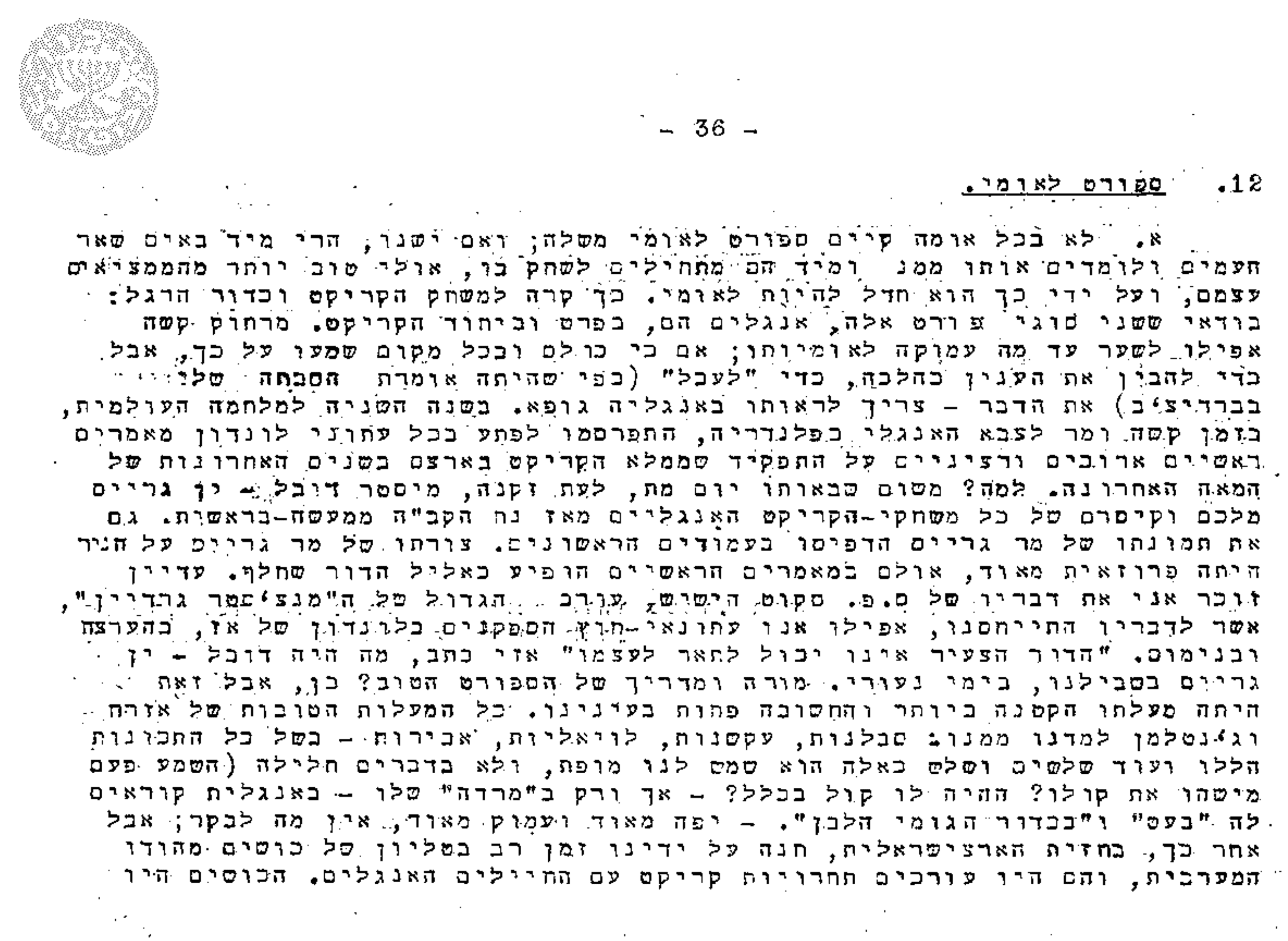
A. Not every nation has its own national sport; and if it does, the other nations immediately come and learn it from it, and they immediately begin to play it, perhaps better than its own inventors, and thereby it ceases to be national. This is what happened to the game of cricket and to football: Certainly these two types of sport are English, particularly and especially cricket. From afar it is difficult to even fathom how deep its nationalism is; although it is so wherever it is, but to understand the matter properly, to "digest" it (as my grandmother in Berdichev would say) – one must see it in England itself. In the second year of the World War, during a hard and bitter time for the English army in Flanders, long and serious feature articles were suddenly published in the London newspapers about the role that cricket played in their country in the last years of the last century. Why? Because on that very day, Mr. W. G. Grace, the king and emperor of all English cricket games since the Holy One, Blessed be He, rested from his work of creation, died at a ripe old age. They also printed Mr. Grace's picture on the front pages. Mr. Grace's appearance on paper was very prosaic, but in the feature articles he appeared as an idol of the bygone generation. I still remember the words of C. P. Scott, the great editor of the "Manchester Guardian," whose words we, even we skeptical amateur-journalists in the London of that time, treated with admiration and humility. "The younger generation cannot imagine," he then wrote, "what Dr. Grace was in our circles, in our youth. A teacher and guide of good sport? Yes, but that was the smallest and least important of his virtues. All the good virtues of a citizen and a gentleman we learned from him, such as patience, persistence, liberalism, chivalry – for all these qualities and thirty-six more like them he was a model for us, and not in words, heaven forbid. (Did anyone ever hear his voice? Did he have a voice at all? – Only in his "implement" – in English they call it a "bat" and "the white ball".) But afterwards, in the name of internationalism, a great wickedness befell our friends in the sound of Negroes from the West Indies, and they would hold cricket competitions with the English soldiers. The Negroes were
Show Original Hebrew Text
- 36 - .12 **א.** לא לכל אדם קוים ספורט לאומי, ואם ישנו, הרי מיד באים שאר העמים ולומדים אותו ממנו ומיד הם מתחילים לשחק בו, אולי טוב יותר מממציאי עצמם, ועל ידי כך הוא חדל להיות לאומי, כך קרה למשחק הקריקט וכדור הרגל: בודאי שנוי סוגי צ' פרט אלה, אנגלים הם, בפרט וביחוד הקריקט. מרחוק קשה אפילו לשער עד מה עמקה לאומיותו; אם כי כרסו ובכל מקום שהן כך, אבל בדרך להבין את הענין כהלכה, כדי "לעכל" (כפי שהיתה אומרת הסבתה שלי: בברדיצ'ב) את הדבר – צריך לראותו באנגליה גופא. בשנה השניה למלחמת העולמית, בזמן קשה ומר לצבא האנגלי בפלנדריה, התפרסמו כך בעתוני לונדון מאמרים ראשיים ארוכים ורציניים על התפקיד שממלא הקריקט בארץ בשנים האחרונות של המאה האחרונה. למה? משום שבאותו יום ממש, לעת זקנה, מיוסר זקן בן גריוס מלכם וקיסרם על כל משחקי-הקריקט האנגליים מאז נה הקב"ה ממעמקי-בראשית. גם את תמונתו של מר גריוס הודפסו בעמודים הראשונים. צורתו של מר גריוס על העיר היתה פרוזאית מאוד, אולם במאמרים הראשיים הופיע כאליל הדור חלוף. עדיין זוכר אני את דבריו של ס.פ. סקוט, המשמש, קורא, הנדר"ב מ"המנצ'סטר גרדיאן", אשר לדבריו התייחסות, אפילו אנו קמנו אל-חח-מסקפיים בלונדון של אין, בהצעה ובימוס. "הדור הצעיר אינו יכול לתאר לעצמו" אז כתב, מה היה דובר ין גרזם בסביבתו, בימי נעורינו, מורה ומדריך של הספורט הטוב? כן, אבל זאת - היתה מלחמה קטנה ביותה וחהםהובה בתוך ענינינו, כל המעלות הטובות של אדם ונשלחון לממנו ממוג סבלנות, עקשנות, ליברליות, אבזרנות – בשל כל התכונות הללו ולשם ששלטום ולשם כאלה הוא שנס לנו מרפש, ולא בדברים חלילה (השמע פעם מישהו מה קורלו? היתה לו קול בכלל? – רק ב"מדרגה" שלו – באנגלית קוראים לה "נעס" ו"כבדור הורם הלבין". – יפה מאוד ועמוק מאוד, אין מה לבקר; אבל אחר כך, מתירו האינטרנציונליזם, חנה על ידידנו זקן רב בסליון כל כוסים מהדס המופרט, והם היו עורכים חריפות קריאות עם החיילים האנגלים. הכוסים היו