The Doctrine of Beitar
Page 127 • Click to zoom
Page 127 of 155
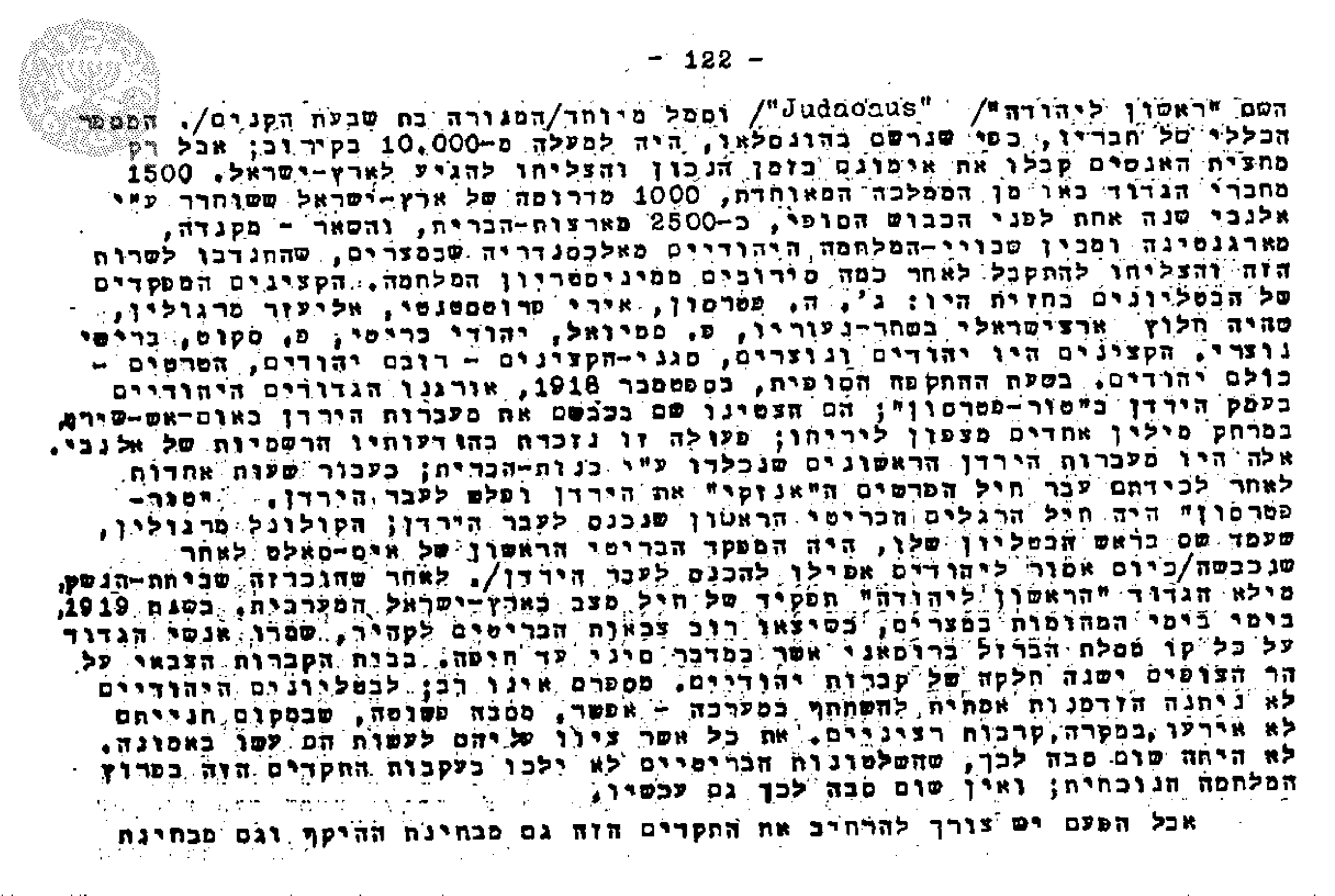
The name "First of Judah" / "Judaeans" and a special/recruited staff, a force of seven branches.
All its members, as recorded in the registers, were over 10,000 in Canada; but only half of the men received their training in time and succeeded in reaching the Land of Israel. 1500 members of the battalion were recruited from the United Kingdom, 1000 from the south of the Land of Israel that was liberated by Allenby one year before the final conquest, about 2500 from the United States, and the rest - from Canada, from Argentina, and from among the war-acquainted, Jews from Alexandria in Egypt, who volunteered for this service and succeeded in being accepted after several rejections from the Ministry of War. The commanding officers of the battalions in the headquarters were: J. H. Patterson, an Irish Protestant; Eliezer Margolin, who was a pioneer in the Land of Israel in his youth; M. Samuel, a British Jew; D. Scott, a British, etc. The officers were Jews and Christians, the non-commissioned officers - mostly Jews, the privates all Jews.
During the Syrian attack, in September 1918, the Jewish battalions were organized in the Jordan Valley as "Patterson's Force," and they distinguished themselves in the capture of one of the Jordan fords at Umm esh-Shert, a few miles north of the Jordan Valley. This action was mentioned in the special notations in Allenby's reports. These were the first Jordan fords to be conquered by the Allied forces; a few hours later, after their capture, the "Anzac" cavalry corps crossed the Jordan and cleared a path to Transjordan. "Patterson's Force" was the first British infantry force to enter Transjordan; Colonel Margolin, who stood there at the head of his battalions, was the first commander of East-Adams, indicating it had been conquered/surrendered. Jews were forbidden even to enter Transjordan after the armistice was declared. The "First of Judah" battalion fulfilled the role of a garrison force within the occupation forces.
At the end of 1919, the battalion was disbanded and its members were discharged from the army. During the days of the riots in Egypt, the men of the battalion would tell of all their military Passover days in the desert. To this day, they are gathered in the cemeteries in Cairo, and on Mount Scopus there is a plot of Jewish graves. Their number is not great; the Jewish battalions were not given a real opportunity to participate in battles. It is possible that where they fought, not many battles occurred, by chance. All that they were commanded to do, they did faithfully. There was no reason why the British recruits should not follow in the footsteps of the pioneers. There was no reason then, and there is no reason for it now either.
But this time there is also a need to broaden the front, both in terms of force and in terms of...
Show Original Hebrew Text
122 - השם "רָאשוֹן לִיהודָה" / "Judaoaus" וסגל אספקה/הספקה בת שבעת הקניסו, הכללי כל חבריו, כפי שנרשם בנהולם, היו למעלה מ-10,000 בקניה; אבל רק מחצית האנשים קבלו את אימונם בזמן הנכון והצליחו להגיע לארץ-ישראל. 1500 מחברי הגדוד גרו מן המפלכה האחרת, 1000 מתוכה של ארץ-ישראל ששוחרר ע"י אלנבי שנה אחת לפני הכיבוש הסופי, 2500-כארצות-הברית, והשאר - מקנדה, מצרפת, אנגליה. וכמבן, לאחר המלחמה, היהודים מצרפת והם שהתנדבו לשרות הזה והצליחו להתקבל בהכנס שירותם מהמפקדה המלחמה. הקצינים המפקדים על הגדודים במטות היו: ג'. ה., פטרסון, אירי, פרופ' אליעזר מרגולין, שהיה חלוק ארצישראלי בסהר-נעזר. וכן ד' סקוט, בריטי. וכו'. הקצינים היו יהודים ונוצרים, סגני-הקצינים - רובם יהודים, הפרטים כולם יהודים, בשעת ההתקפה הסורית, בספטמבר 1918, אורגנו הגדודים היהודים במסגרת הירדן כ"ממזר-פטרון" והצטיינו הם בכיבוש אחת מעבורות הירדן כאס-שמש. במרחק מילין אחדים, מעמון, לירדן. פעולה זו נזכרה בתשומת לב הרשימות של אלנבי. אלה היו סברות הירדן הראשונות שנסדרו ע"י ועדת-הברית, כשעוד שהו אחריה לאחר לכידתם עבר חיל הפרסים ה"אנזק" את הירדן ופלס למעבר הירדן. "פטרון- פטרון" היה חיל הרגלים הבריטי הראשי שנכנס לעבר הירדן לקולונל מרגולין, שעמד שם בראש המחנה שלו. היה המפקד הראשי של א"ק-אדמס לאמר שישבה וקירוס אסור ליהודים אפילו להכנס לעבר הירדן, לאחר שהחברה שבוית-הנשק מיס הגדוד "הראשון ליהודה" תפקיד של חיל צבאי ובהסדר כולל מערכה. בסוף-1919 בויס היו תמותות בשורותם וסול וביכו כמנהג הבריטים לקבורה. ואולם, אנשי הגדוד על כל ירקולח הכולל באר-שבע אף במדבר, כינוס עד היום: בבתי הקברות בבאר ועל רמז זה יפה חלוק של קברות היהודים. מספרם אינו רב, לגדודים היהודים לא היתה הזדמנות אמיתית להשתתף בקרבות, אפשר, אפשר ממש, שבמקדם. חנוכות לא אירעו, במקרה, קרבות רבים, את כל אשר צילם עם זה לשמוע שם באספה. לא היתה שום סיבה לכך שהמלחמה הנוכחית לא ילכו בעקבות החקירה. שום סיבה המלחמה הנוכחית ואין שום סיבה לכך גם עכשיו. אבל הפעם הם גם צריך להרחיב את החקירה הזו גם מבחינה ההדוק וגם מבחינה וגם מבחינה