The Antisemitic Catechism (1893)
Page 211 • Click to zoom
Page 211 of 436
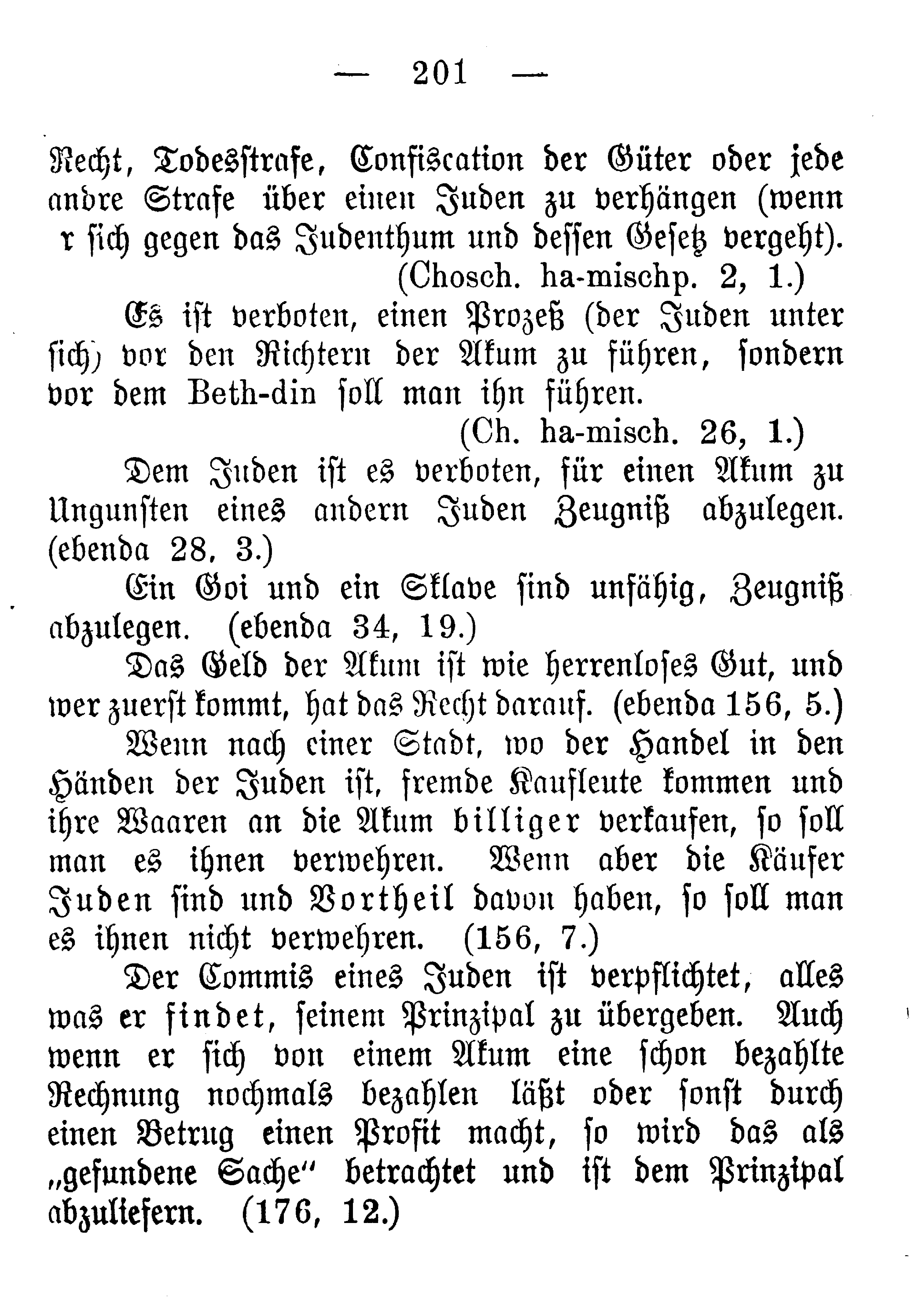
Right to impose the death penalty, confiscation of goods, or any other punishment on a Jew (if he sins against Judaism and its law). (Chosch. ha-mischp. 2, 1.)
It is forbidden to conduct a lawsuit (of Jews among themselves) before the judges of the Akum; instead, it shall be conducted before the Beth-din. (Ch. ha-misch. 26, 1.)
A Jew is forbidden to bear witness for an Akum to the detriment of another Jew. (ibid. 28, 3.)
A Goy and a slave are incapable of bearing witness. (ibid. 34, 19.)
The money of the Akum is like ownerless property, and whoever comes first has the right to it. (ibid. 156, 5.)
If foreign merchants come to a city where trade is in the hands of the Jews and sell their goods to the Akum more cheaply, they shall be prevented from doing so. But if the buyers are Jews and benefit from it, they shall not be prevented. (156, 7.)
The clerk of a Jew is obligated to hand over everything he finds to his principal. Even if he gets an already paid bill paid again by an Akum or otherwise makes a profit through a fraud, this is considered a "found object" and must be delivered to the principal. (176, 12.)
Show Original German Text
— 201 — Recht, Todesstrafe, Confiscation der Güter oder jede andre Strafe über einen Juden zu verhängen (wenn r sich gegen das Judenthum und dessen Gesetz vergeht). (Chosch. ha-mischp. 2, 1.) Es ist verboten, einen Prozeß (der Juden unter sich) vor den Richtem der Akum zu führen, sondem vor dem Beth-din soll man ihn führen. (Ch. ha-misch. 26, 1.) Dem Juden ist es verboten, für einen Akum zu Ungunsten eines andem Juden Zeugniß abzulegen. (ebenda 28, 3.) Ein Goi und ein Sklave sind unfähig, Zeugniß abzulegen. (ebenda 34, 19.) Das Geld der Akum ist wie herrenloses Gut, und wer zuerst kommt, hat das Recht darauf. (ebenda 156, 5.) Wenn nach einer Stadt, wo der Handel in den Händen der Juden ist, fremde Kaufleute kommen und ihre Waaren an die Akum billiger verkaufen, so soll man es ihnen verwehren. Wenn aber die Käufer Juden sind und Vortheil davon haben, so soll man es ihnen nicht verwehren. (156, 7.) Der Commis eines Juden ist verpflichtet, alles was er findet, seinem Pnnzipal zu übergeben. Auch wenn er sich von einem Akum eine schon bezahlte Rechnung nochmals bezahlen läßt oder sonst durch einen Betrug einen Profit macht, so wird das als „gefundene Sache“ betrachtet und ist dem Pnnzipal abzuliefem. (176, 12.)