The Antisemitic Catechism (1893)
Page 145 • Click to zoom
Page 145 of 436
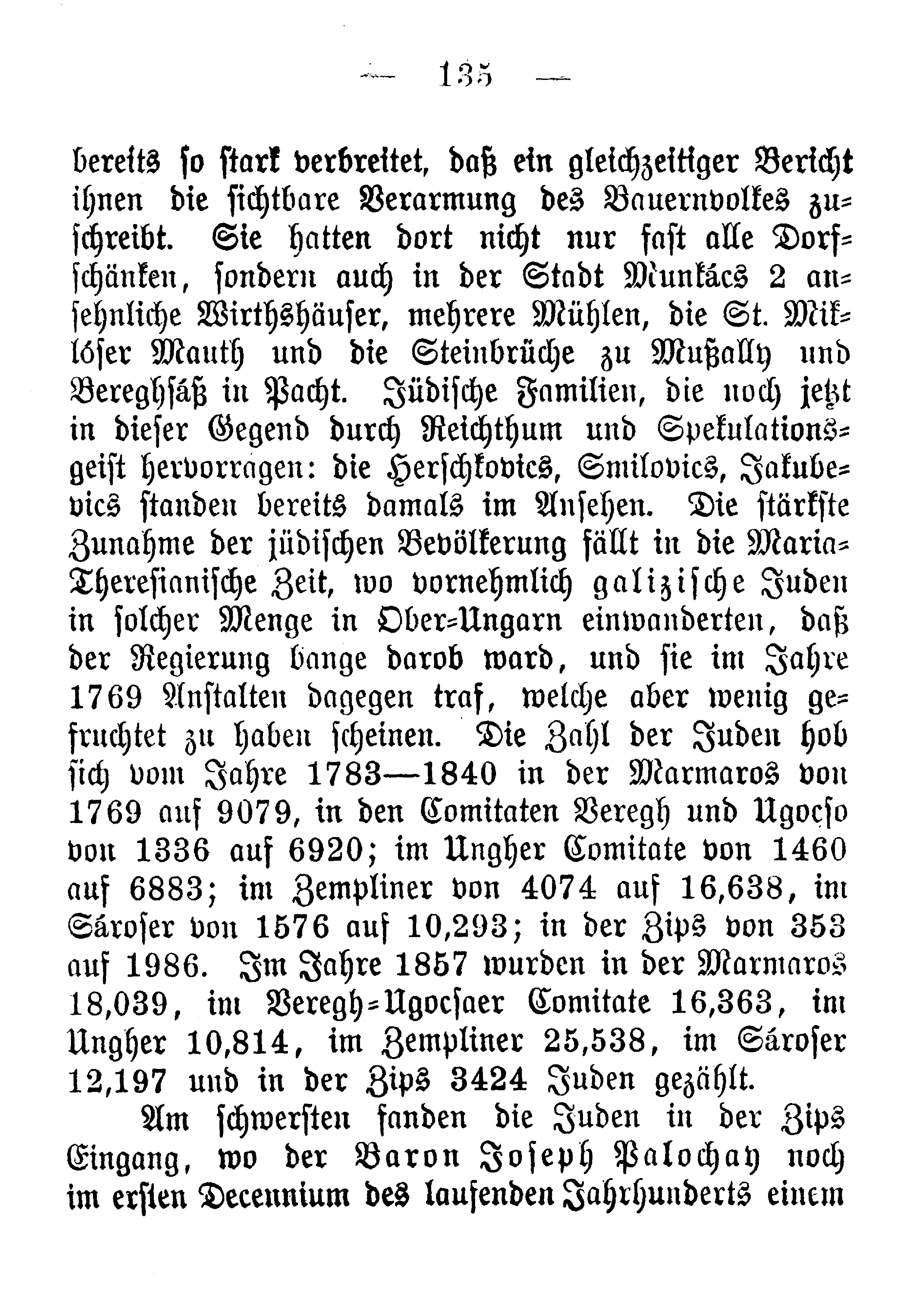
were already so widespread that a contemporary report attributes the visible impoverishment of the peasant folk to them. They held leases there not only on almost all village taverns, but also in the town of Munkács on 2 respectable inns, several mills, the St. Miklós toll, and the quarries at Muzsally and Bereghsaß. Jewish families, who even now stand out in this region for their wealth and speculative spirit: the Herschkovics, Smilovics, Jakubevics were already held in high regard at that time. The strongest increase in the Jewish population falls in the Maria- Theresian era, when mainly Galician Jews immigrated to Upper Hungary in such numbers that the government became alarmed, and in the year 1769 it took measures against it, which, however, seem to have borne little fruit. The number of Jews rose from the year 1783–1840 in Marmaros from 1769 to 9079, in the counties of Beregh and Ugocsa from 1336 to 6920; in the Ungher Comitat from 1460 to 6883; in the Zempliner from 4074 to 16,638, in the Sároser from 1576 to 10,293; in the Zips from 353 to 1986. In the year 1857, in Marmaros 18,039, in the Beregh-Ugocsa county 16,363, in the Ungher 10,814, in the Zempliner 25,538, in the Sároser 12,197, and in the Zips 3424 Jews were counted.
The Jews found it most difficult to gain entry into the Zips, where Baron Joseph Palochay, even in the first decade of the current century, to a
Show Original German Text
135 bereits so stark verbreitet, daß ein gleichzeitiger Bencht ihnen die ſichtbare Verarmung des Bauemvolkes zuschreibt. Sie hatten dort nicht nur fast alle Dorfschänken, ſondem auch in der Stadt Munkács 2 anſehnliche Wirthshäuſer, mehrere Mühlen, die St. Miklóſer Mauth und die Steinbrüche zu Muzsally und Bereghsaß in Pacht. Jüdische Familien, die noch jetzt in dieſer Gegend durch Reichthum und Spekulationsgeist hervorragten: die Herschkovics, Smilovics, Jakubevics standen bereits damals im Anſehen. Die stärkste Zunahme der jüdischen Bevölkerung fällt in die ManaThereſianische Zeit, wo vomehmlich galizische Juden in ſolcher Menge in Ober-Ungam einwanderten, daß der Regierung bange darob ward, und ſie im Jahre 1769 Anstalten dagegen traf, welche aber wenig gefruchtet zu haben scheinen. Die Zahl der Juden hob ſich vom Jahre 1783–1840 in der Marmaros von 1769 auf 9079, in den Comitaten Beregh und Ugocſa von 1336 auf 6920; im Ungher Comitate von 1460 auf 6883; im Zempliner von 4074 auf 16,638, im Sároſer von 1576 auf 10,293; in der Zipſ von 353 auf 1986. Im Jahre 1857 wurden in der Marmaros 18,039, im Beregh-Ugocſaer Comitate 16,363, im Ungher 10,814, im Zempliner 25,538, im Sároſer 12,197 und in der Zipſ 3424 Juden gezählt. Am schwersten fanden die Juden in der Zipſ Eingang, wo der Baron Joſeph Palochay noch im ersten Decennium des lauſenden Jahrhunderts einem