Rome and Jerusalem (1862)
Page 52 • Click to zoom
Page 52 of 264
Sixth Letter.
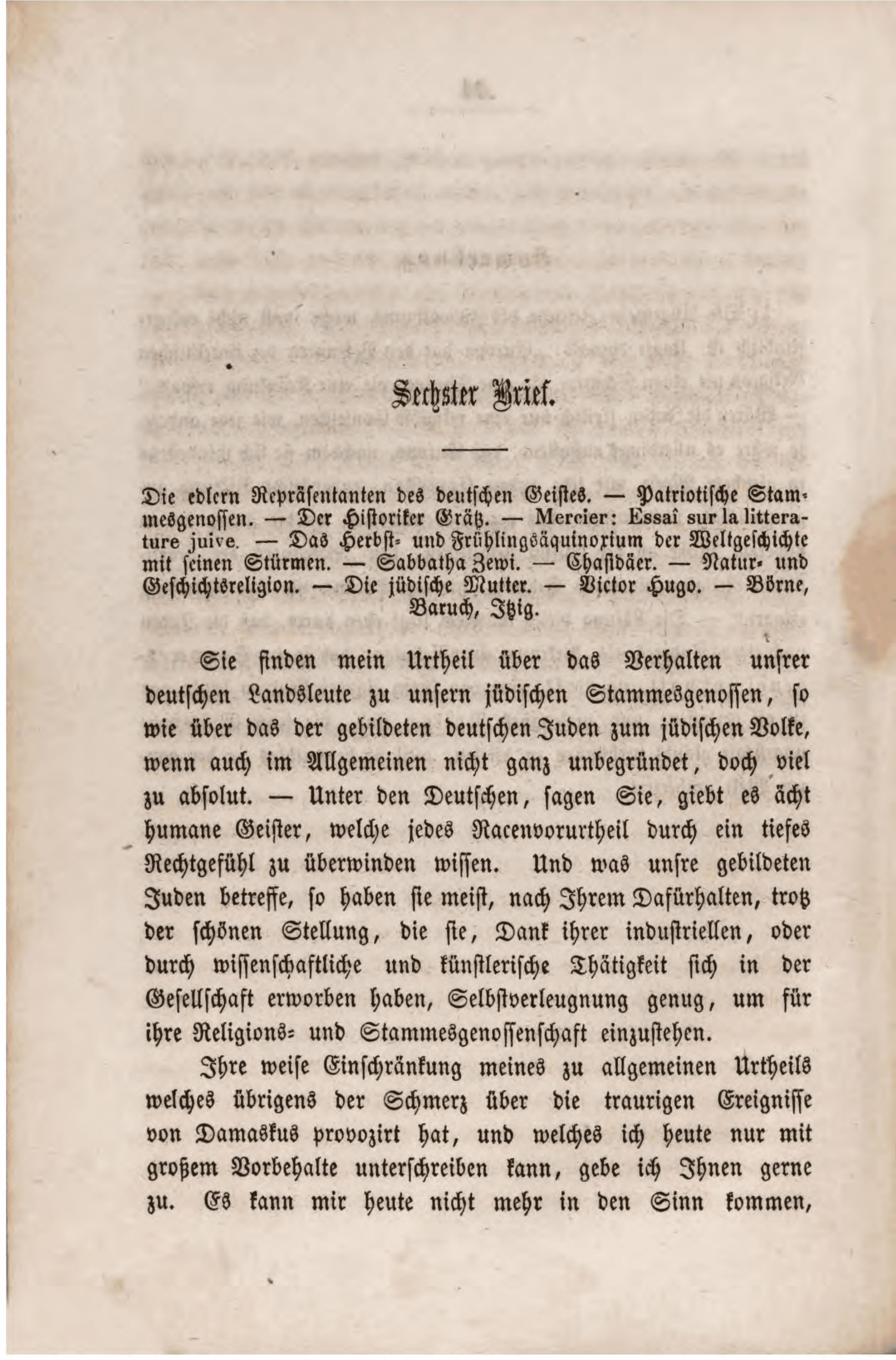
The noble representatives of the German spirit. — Patriotic kinsmen. — The historian Grätz. — Mercier's Essai sur la littérature juive. — The autumn and spring equinox of world history with its storms. — Sabbatai Zevi. — Spiritual—, Nature-, and History-Religion. — The Jewish mother. — Victor Hugo. — Börne, Baruch, Itzig.
You find my judgment on the conduct of our German countrymen toward our Jewish kinsmen, as well as on that of the educated German Jews toward the Jewish people, to be far too absolute, though in general not entirely unfounded. — Among the Germans, you say, there are truly humane spirits who know how to overcome every racial prejudice through a deep sense of justice. And as for our educated Jews, they mostly have, in your opinion, despite the fine position they have acquired in society thanks to their industrial, or through scientific and artistic activity, enough self-denial to stand up for their religious and tribal community.
I readily concede to you your wise qualification of my overly general judgment, which, by the way, was provoked by the sorrow over the tragic events of Damascus, and which I can endorse today only with great reservation. It would no longer occur to me today,
Show Original German Text
16. # Sechster Bnef. --- Die edlem Repräſentanten des deutschen Geistes. — Patnotische Stammeßgenoſſen. — Der Histonker Gräß. — Merciers Eſſaî ſur la litterature juive. — Das Herbst- und Frühlingsäquinoctium der Weltgeschichte mit ſeinen Stürmen. — Sabbatha Zewi. — Geistlicher — Natur- und Geschichtsreligion. — Die jüdische Mutter. — Victor Hugo. — Böme, Baruch, Iſig. Sie finden mein Urtheil über das Verhalten unsrer deutschen Landsleute zu unſem jüdischen Stammeßgenoſſen, ſo wie über das der gebildeten deutschen Juden zum jüdischen Volke, wenn auch im Allgemeinen nicht ganz unbegründet, doch viel zu abſolut. — Unter den Deutschen, ſagen Sie, giebt es ächt humane Geister, welche jedes Racenvorurtheil durch ein tiefes Rechtsgefühl zu überwinden wiſſen. Und was unſre gebildeten Juden betreffe, ſo haben ſie meist, nach ihrem Dafürhalten, trotz der schönen Stellung, die ſie, Dank ihrer industnellen, oder durch wiſſenschaftliche und künstlensche Thätigkeit ſich in der Geſellschaft erworben haben, Selbstverleugnung genug, um für ihre Religions- und Stammeßgenoſſenschaft einzustehen. Ihre weiſe Einschränkung meines zu allgemeinen Urtheils welches übngens der Schmerz über die traungen Ereigniſſe von Damaskus provozirt hat, und welches ich heute nur mit großem Vorbehalte unterschreiben kann, gebe ich Ihnen geme zu. Es kann mir heute nicht mehr in den Sinn kommen,