National Judaism
Page 37 • Click to zoom
Page 37 of 52
— 33 —
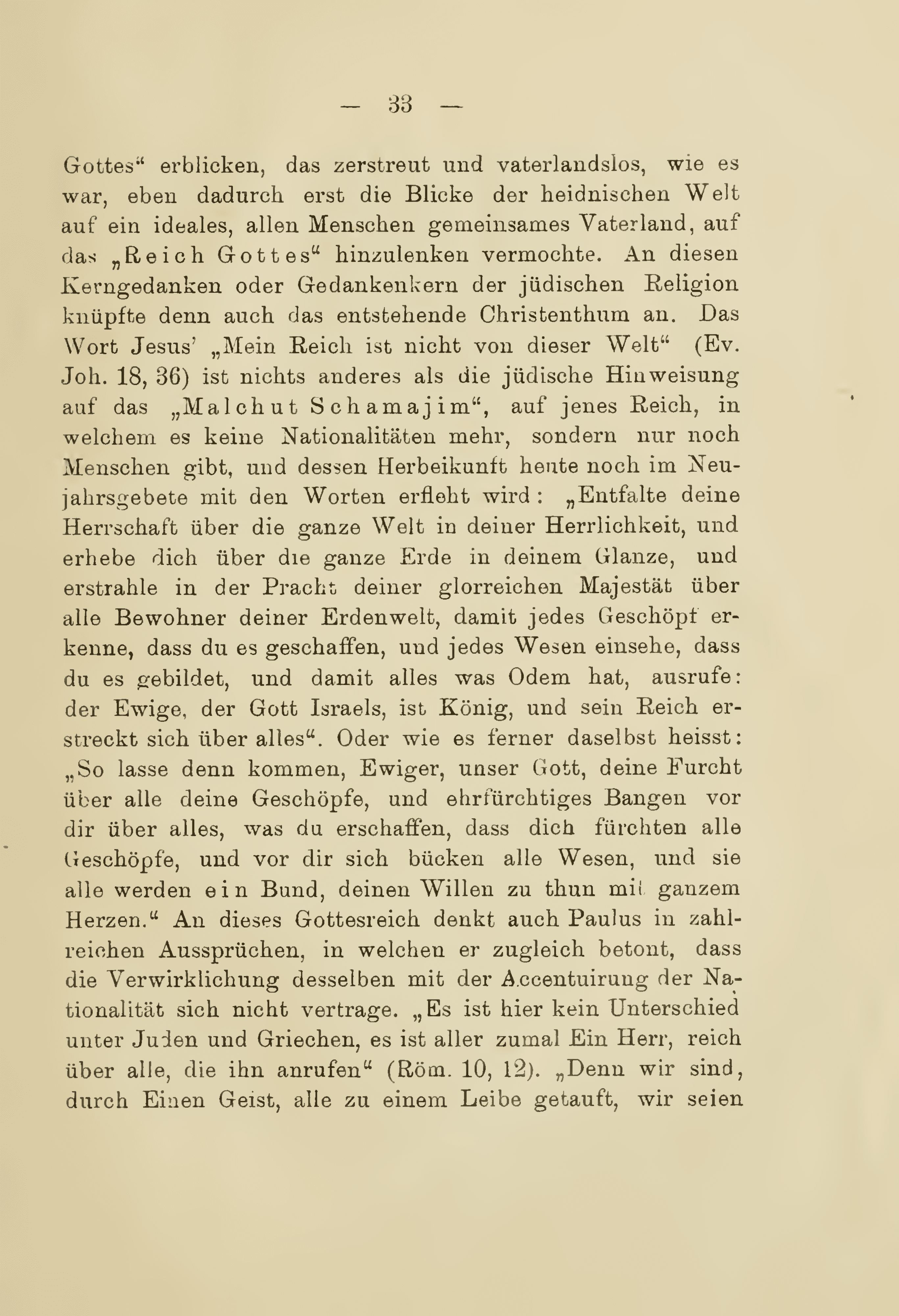
of God," which, being scattered and without a fatherland, was for that very reason able to direct the gaze of the pagan world toward an ideal fatherland common to all people, toward the "Kingdom of God." Emerging Christianity also linked itself to these core ideas or seminal thoughts of the Jewish religion. The words of Jesus, "My kingdom is not of this world" (Gospel of John 18:36), are nothing other than the Jewish reference to the "Malchut Shamayim," to that kingdom in which there are no more nationalities, but only human beings, and whose advent is still implored today in the New Year's prayer with the words: "Unfold your dominion over the whole world in your glory, and rise up over all the earth in your splendor, and shine forth in the magnificence of your glorious majesty over all inhabitants of your earthly world, so that every creature may know that you have created it, and every being may understand that you have formed it, and so that everything that has breath may exclaim: the Eternal, the God of Israel, is King, and his kingdom extends over all." Or as it further says there: "So let your fear, Eternal, our God, come upon all your creatures, and reverent awe of you upon all that you have created, that all creatures may fear you, and all beings may bow down before you, and that they may all become one union to do your will with a whole heart."
Paul also thinks of this Kingdom of God in numerous statements, in which he simultaneously emphasizes that its realization is not compatible with an emphasis on nationality. "For there is no difference between Jew and Greek: for the same Lord over all is rich unto all that call upon him" (Rom. 10:12). "For by one Spirit are we all baptized into one body, whether we be...
Show Original German Text
- 33 - Gottes“ erblicken, das zerstreut und vaterlandslos, wie es war, eben dadurch erst die Blicke der heidnischen Welt auf ein ideales, allen Menschen gemeinſames Vaterland, auf das „Reich Gottes“ hinzulenken vermochte. An diesen Kemgedanken oder Gedankenkem der jüdischen Religion knüpfte denn auch das entstehende Chnstenthum an. Das Wort Jesus' „Mein Reich ist nicht von dieser Welt“ (Ev. Joh. 18, 36) ist nichts anderes als die jüdische Hinweiſung auf das „Malchut Schamajim“, auf jenes Reich, in welchem es keine Nationalitäten mehr, ſondem nur noch Menschen gibt, und deſſen Herbeikunft heute noch im Neu- jahrsgebete mit den Worten erſleht wird: „Entfalte deine Herrschaft über die ganze Welt in deiner Herrlichkeit, und erhebe dich über die ganze Erde in deinem Glanze, und erstrahle in der Pracht deiner glorreichen Majestät über alle Bewohner deiner Erdenwelt, damit jedes Geschöpf er- kenne, dass du es geschaffen, und jedes Weſen einsehre, dass du es gebildet, und damit alles was Odem hat, ausrufe: der Ewige, der Gott Israels, ist König, und ſein Reich er- streckt ſich über alles“. Oder wie es femer daſelbst heisst: „So laſſe denn kommen, Ewiger, unſer Gott, deine Furcht über alle deine Geschöpfe, und ehrfürchtiges Bangen vor dir über alles, was du erschaffen, dass dich fürchten alle Geschöpfe, und vor dir ſich bücken alle Weſen, und ſie alle werden ein Bund, deinen Willen zu thun mit ganzem Herzen.“ An dieſes Gottesreich denkt auch Paulus in zahl- reichen Aussprüchen, in welchen er zugleich betont, dass die Verwirklichung deſſelben mit der Accentuirung der Na- tionalität ſich nicht vertrage. „Es ist hier kein Unterschied unter Juden und Gnechen, es ist aller zumal Ein Herr, reich über alle, die ihn anrufen“ (Röm. 10, 12). „Denn wir ſind, durch Einen Geist, alle zu einem Leibe getauft, wir ſeien