The Doctrine of Beitar
Page 57 • Click to zoom
Page 57 of 155
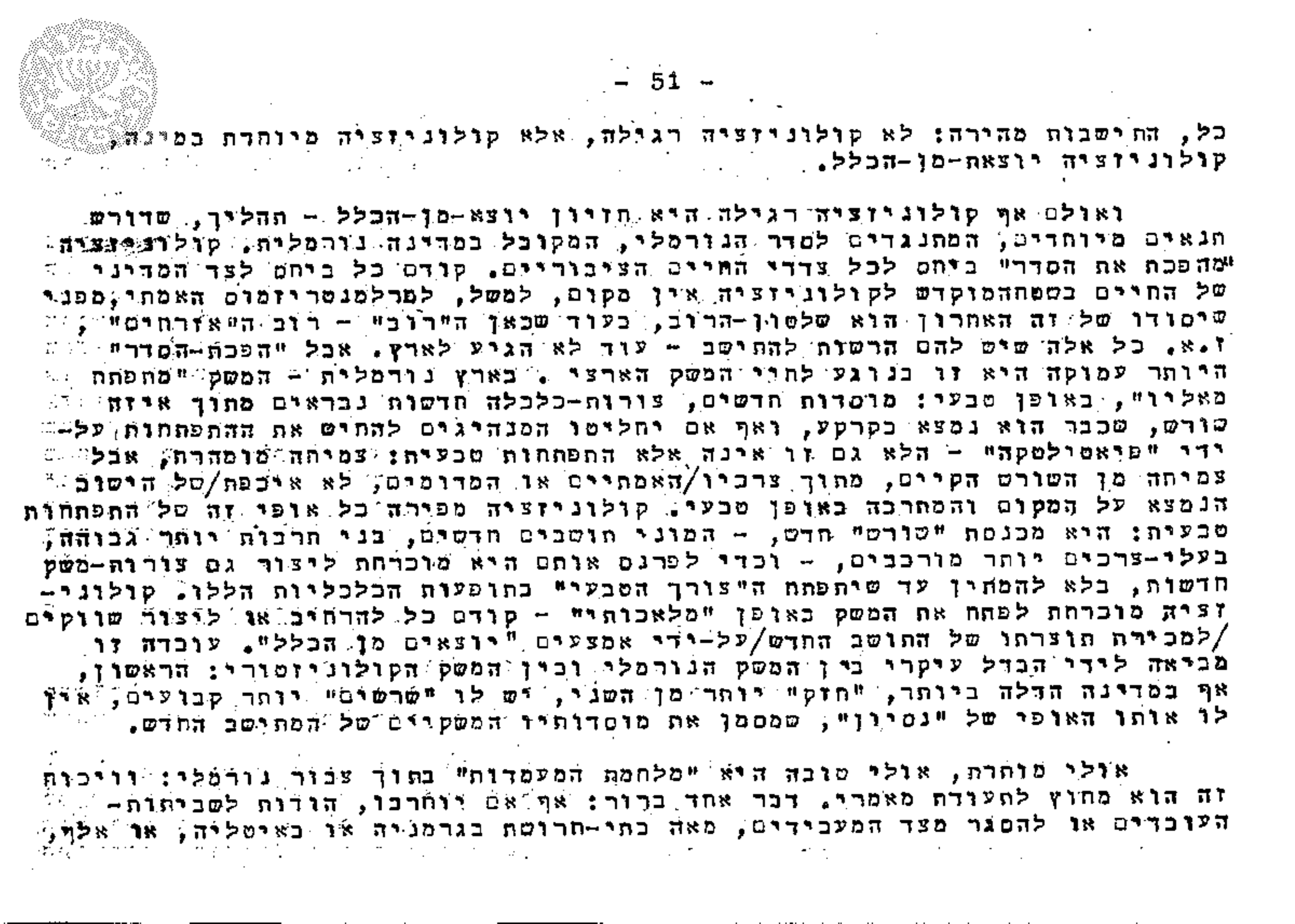
- 51 -
Every settlement, by its nature, is unique.
- Not a regular colonization, but an exceptional colonization.
However, even regular colonization is an exceptional phenomenon—a process that requires special conditions, which oppose the normal order accepted in countries. Colonization overturns the order with respect to all aspects of public life, first of all with respect to the political order of life in the settled territories. In colonization there is no place, for example, for true parliamentarism, because the foundation of the latter is the rule of the majority, whereas here the "majority"—the majority of the "citizens," i.e., all those who have permission to settle—has not yet arrived in the land. But the more profound "overturning of the order" is the one concerning the economic life of the land. In a normal country, the economy "develops on its own," in a natural way: new institutions, a new economy are created from some legacy that is already present in the ground. And even if the inhabitants decided to begin their development through "cooperation"—this is also nothing but a natural development; a planned growth, but a growth from the existing root, out of its real or imagined needs. It doesn't matter—it is all the element that is present on the ground and multiplies naturally. Colonization contradicts this entire mode of passive development. It convenes new "orders"—the new settlers, people of a higher culture, with more complex needs—and in order to provide for them, it is forced to also create new forms of economy, without regard for the development of the general, natural economic "phenomena." Colonization is forced to develop the economy in an "artificial" manner—first of all, to expand or create markets for the sale of the new resident's produce. And by "exceptional" means, this fact brings about a principal difference between the colonizing economy and the natural economy. The first, even in the poorest country, is "stronger" than the second; it has a more stable "character," it does not have that "experimental" nature that marks the economic institutions of the new settler.
Perhaps the "class war" within a normal crucible is necessary, perhaps it is good: this debate is outside the scope of our article. One thing is clear: even if a hundred factories in Germany or Italy were to be destroyed, due to workers' strikes or lockouts by employers; or even
Show Original Hebrew Text
- 51 - כל, התשובות מהיח' קולוניזציה רגילה, אלא קולוניזציה מיוחדת במינה. - קולוניזציה יוצאת-מן-הכלל. ואולם אף קולוניזציה רגילה, היא חדשון יוצא-מן-הכלל – תהליך, שרבים תנאים מיוחדים, המתנגדים לסדר הגרמני, המקובל במדינות. קולוניזציה יפחית את הסדריו ביחס לכל צדדי החיים הציבוריים, קודם כל ביחס לסדר המדיני, של החיים במסתחמקים לקולוניזציה אין מקום, למשל, לפרלמנטריות אמתי, מפני סימוריד של זה הארץ הוא שלטון-היחיד, בעוד שאין ה"רובו" – רוב ה"ארץ" כאן, כל אלה שייט לדם הרשאה לחשוב – עוד לא הגיע לארץ. אבל ה"הפכה-הסדר". היותר עמוקה הוא זו בנוגע לחיי המשק בארץ. בארץ נורמלית – המשק "ממלאה מאליו", כאופן טבעי: מוסדות חדשים, כלכלה-כלכלה חדמה נבראים מתוך איזה מורש, שכבר הוא נמצא בקרקע, ואף אם החליטו המהיגרים להתחיל את התפתחותם על- ידי "קואופולצקה" – הלא גם זו אינה אלה התפתחות טבעית; במפתה סמורחת, אבל צמיחה מן השורש הקיים, מתוך צרכיו/האמתיים או המדומים; לא איכפת/כל היסוד הנמצא על המקום והמתרבה באופן טבעי. קולוניזציה ספירה כל אופן זה של התפתחות סבירית היא מכנסת "סודריוס" חדש – המנוג הוסבו הדברים, בני תרבות יותר גבוהה, בקלות-צרכים יותר מורכבים – וכדי לפרש אותם הוא מורחת ליצוג גם צורות-משק חדשות, בלא להתחשב עד שירווית ה"מבני" הסביריות כוללות הכלליות, קולו- ניזציה מוכרחה לפתח את המשק כאופן "סוציאדתי" – קודם כל להרחיב-אן ליצור שווקים למכירה תוצרתן של התושב החדש, ועל-ידי אמצעים "מוצארם מן הכלל" כוכבה זו מביאה לידי הבדל עקירי בין המשק הקולוניזיי ובין המשק הקולוניזייטורי הראשון, אף במדינה הדלה ביותר, "חזקה" יותר מן השוני, וש לו "פרסיזם" יותר קבועים, אין לו אותו האופי של "נסיריון", שמסמך את מוסדותיו המשק"ם של המהיסב החדש. אולי מוחרת, אולי סוכה היא "מלחמת המוסדות" בתוך בכור נורמלי: ויוידת זה הוא מחוץ לחמיצרת מאמרו, דבר אחד ברור: אף בחורבן, המרות לסבירוד היוכרים או להסגר מצד המעבידים, מאה כתי-חרוסת בגרמניה או באיטליה; או אף