Page 5 • Click to zoom
Page 5 of 155
D. Foreword
/On the Development of the Beitarist Ideology/
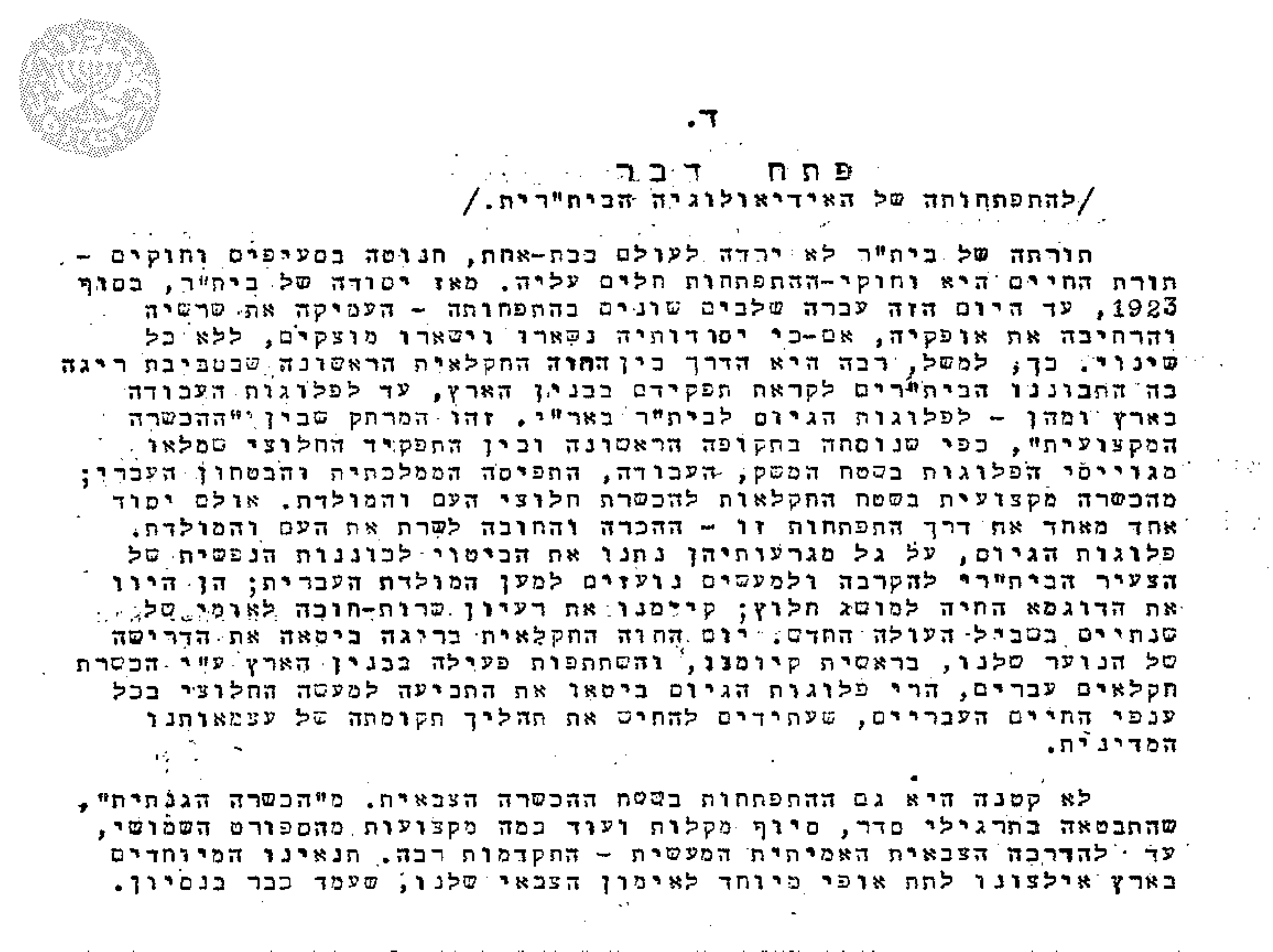
The doctrine of Beitar could never be created all at once, embalmed in clauses and laws. It is a living doctrine, and the laws of development apply to it. Since its founding at the end of 1923, until this day, it has undergone various stages in its development – it deepened its roots and broadened its horizons, although its foundations have remained and will remain solid, without any change. Thus, for example, the path is long from the paltry agricultural farm, where the Beitarist movement cultivated and educated its members for their role in building the Land, to the labor platoons in the Land, and from them – to the mobilization platoons for Beitar in the Land. This is the distance between "professional training," as formulated in the first period, and the all-encompassing, total role of platoon mobilization in the village economy, for labor, state-level immigration, and Hebrew security; from professional training in the field of agriculture to the training of the pioneers of the nation and the homeland. Yet one foundation unites this path of development – the recognition and the duty to serve the nation and the homeland.
The mobilization platoons, for all their shortcomings, gave expression to the spiritual intentions of the young Beitarist for sacrifice and devotion for the sake of the Hebrew homeland; they were the living example of the concept of 'pioneer'; they brought closer the idea of national compulsory service, of officialdom, in the new immigrant houses; and if the agricultural farm in Riga expressed the pursuit of our youth, at the beginning of our existence, and the active development in building the Land through the training of Hebrew farmers, then the mobilization platoons expressed the demand for the pioneering enterprise in all branches of Hebrew life, which are destined to hasten the process of the revival of our political independence.
The development in the military sphere is also not small. "Defensive training," which was expressed in drill exercises, reconnaissance, sport, and use [of weapons], and several other subjects from the technical framework, up to the real, practical military expansion – a great advancement. The special conditions in the Land forced us to give a special character to our military training, which has already stood the test.
Show Original Hebrew Text
.ד **פתח דבר** /להתפתחותה של האידיאולוגיה הביח"רית/ מולדת של ביח"ר לא יכלה לעולם כבת-אחת, חנוטה בסעיפים וחוקים. תורת החיים היא וחוקר-ההתפתחות חלים עליה, מאז יסודה של ביח"ר, בסוף 1923, עד היום הזה עברה שלבים שונים בהתפתחותה – המעיקה את שרשיה והרחיבה את אופקיה, אם-כי יסודותיה נשארו וישארו מוצקים, ללא כל שינוי. כך, למשל, רבה היא הדרך מן החקלאות האפסית, שטיפחה רגילה בה המבוגרת הביח"רית לקראת תפקידם בבנין הארץ, עד לפלוגות העבודה בארץ ומהן – לפלוגות הגיוס לביח"ר בארץ". זהו המרחק שבין "ההכשרה המקצועית", כפי שנוסחה בתקופה הראשונה ובין התפקיד הלדכי טטלאו מגיוסי פלוגות במשק הפסח, לעבודה, ההפיסה הממלכתית והבטחון העברי; מהכשרה מקצועית בפסח החקלאית להכשרת חלוצי העם והמולדת. ואלם יסוד אחד מאחד את דרך התפתחות זו – הכרה והתחובה לשרת את העם והמולדת. פלוגות הגיוס, על כל מגרעותיהן נתנו את הביטוי לכוונות הנפשיות של הצעיר הביח"רי להקרבה ולמסעוס ונתנדם למען המולדת העברית; הן היוו את הדרגא החיה למוסג חלוץ; קירבנו את רעיון שרות-חובה לאומי, של פחתד"מ. בבצ"ל העולה החדש; ויסו החדה החקלאית בריגה ביטאה את הרדיפה על הנוער שלנו, בראשית קיומונו, וההתפתחות פעילה בבנין הארץ ע"י הפרם חקלאים עבריים, הרי פלוגות הגיוס ביססו את התוכנית למפסה החלוצי בכל ענפי החיים העבריים, שעתידים להחזיר את תהליך תרומתו של עכשואתנו המדינה. לא קטנה היא גם ההתפתחות בשטח הצבאיח. "ההכשרה הגנתית", שהתבטאה בדרגילגי סדר, סיורף ספקות ועוד כמה מקצועות מחסרם הטטשי, עד להרחבה הצבאית האמיתית המעשית - התקדמות רבה. הגאוני המיוחדים בארץ אילולנו לחת אופי מיוחד לאיזמן הצבאי שלנו, שטר כבר בנסיונו.