The Doctrine of Beitar
Page 45 • Click to zoom
Page 45 of 155
39 -
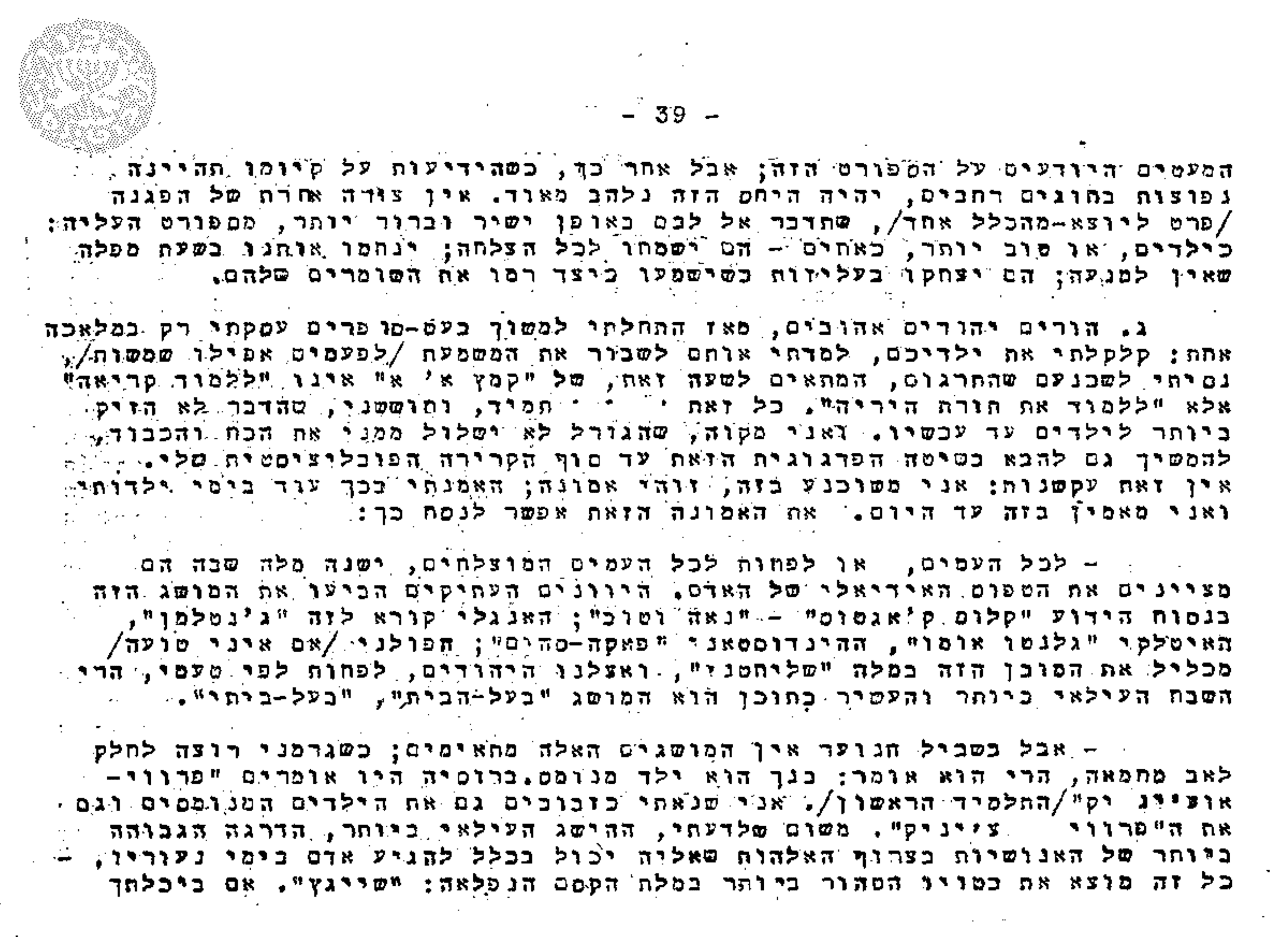
When the news of its existence becomes widespread in broad circles, this attitude will be very enthusiastic. There is no other form of demonstration / except for one exception, that will connect to their hearts in a more direct and clear way, than the tradition of the Aliyah: as children, or better yet, as friends—they will rejoice at every success; and they will comfort us in the hour of defeat from which there is no escape: they will laugh with glee when they tell how they tricked their guards.
C. Dear Jewish parents, since I began to wield a writer's pen I have been engaged in only one craft: I corrupted the youth; I tried to make them refuse to tolerate discipline / even though it was handed down, I tried to convince them that the appropriate translation for this time of "kamatz aleph o aleph" is not "to learn reading" but rather "to learn the doctrine of shooting"; all this always, and I am convinced that the matter has not harmed the children in the slightest until now. And I hope that fate will not take from me the strength and the honor to continue in the future with this pedagogical method until the end of my political career.
This is not stubbornness; I am convinced of this, and it is a belief; I believed in this even in my childhood days and I believe in it to this day. This belief can be formulated thus:
-
All peoples, or at least all successful peoples, have a word by which they denote the ideal type of person. The ancient Greeks knew this concept in the famous formulation "kalos k'agathos"—"beautiful and good"; the Englishman calls it "gentleman," the Italian "gentiluomo," the Hindustani "pukka sahib"; the Pole, if I am not mistaken, includes this meaning in the word "szlachcic," and among us Jews, at least according to my books, the highest praise is, of course, the concept of "Ba'al ha-Bayit" [master of the house].
-
But for the youth, these concepts are not suitable; when a German wants to give a father a compliment, he says: the son is a polite child. In Russia they would say "pervyy uchenik"/"the first student"/; I have hated since my youth both the polite children and the "pervyy" themselves. Because in my opinion, the most supreme concept, the highest degree of humanity combined with divinity that a person can possibly reach in his youth, all this has found its expression in the purest concept within the magic and wonder: "yoshev" [sitter/scholar]. If you are able...
Show Original Hebrew Text
39 - המעטים הידועים על הספורט הזה; אבל אחר כך, כשהידיעות על קיומו ההיינה נפוצות בחוגים רחבים, יהיה היחס הזה נלהב מאוד. אין צורה אחרת של הפגנה / פרט ליוצ'א-מהכלל אחד, שתחבר אל לבם באופן ישר וברור יותר, ממסורט הפעולה: כילדים, או טוב יותר, כחברים – הם ישמחו לכל הצלחה; ונתנו אותנו בשעת ספלה שאין למנוסה: הם יצחקו בעליזות כשיספרו כיצד רסו את השומרים שלהם. ג. ההורים יהודים אהובים, מאד התחילו למשוך בספרם רק עסקתי רק במלאכה אחת; קלקלתי את המרדף, לסרח אותם לסבור את המשמעת / לפיסול אמילו סמסוה, נסיון לשכנעם שהתרגמו, המתיא לשעה זאת, של "קמץ א' או אינו ייללמה. קריאה" אלא ייללמוד את חורה הירידה"; כל זאת תמיד, ומושפע, שהדבר לא היה ביותר לילדים עד עכשיו. ואני מקוה, שהגודל לא יסולל ממני את הכח והכבוד, להמשיך גם להבא כשיטה הפדגוגית הזאת עד סוף הקרירה הפוליטית שלי. אין זאת עקשנות; אני משוכנע בזה, וזוהי אמונה; האמנתי בכך עוד בימי ילדותי ואני מאמין בזה עד היום. את האמונה הזאת אפשר לנסח כך: - לכל העמים, או לפחות לכל העמים המצליחים, ישנה מלה שבה הם מציינים את הספורט האידיאלי של האדם, היוונים העתיקים הכינו את המושג הזה בנוסח הידוע "קלסק י'אגנסוס" – ינאה ושולם" האנגלי קורא לזה "ג'נטלמן" האיטלקי "ג'נטלו אומני", ההינדוסטאני "פאקה-סה-יס"; הפולני / אם אינני טועה, מכלול את הסוכן הזה במלה "שלחוסנו", ואצלנו היהודים, לפחות לפי ספרו, הרי הסבה העילאי בייחוד כמובן הוא המושג "בעל-הביתי". - אבל כשביל הגופר אין המושגים האלה מתאימים; כמגרמני רוצה לחלק לאב מחמאה, הרי הוא אומר: בגן הוא ילך בנורמט. ברוסיה היו אומרים "פרוורו- אוצניג יק"/"התלמיד הראשון"/; אני שנאתי כזכותכם גם את הילדים המנוגזים וגם את ה"פרוורוי" עצמם. משום שלדעתי, ההושג העילאי בייחוד, הדרגה הגבוהה ביותר של האנושות בצרוף האלהות שאליה יכול בכלל להגיע אדם בימי נעוריו, כל זה מצא את כסויו במורג ביותר בפתח הקסם הפליאה: "יושיב". אם ביכלתך"