The Doctrine of Beitar
Page 39 • Click to zoom
Page 39 of 155
-33-
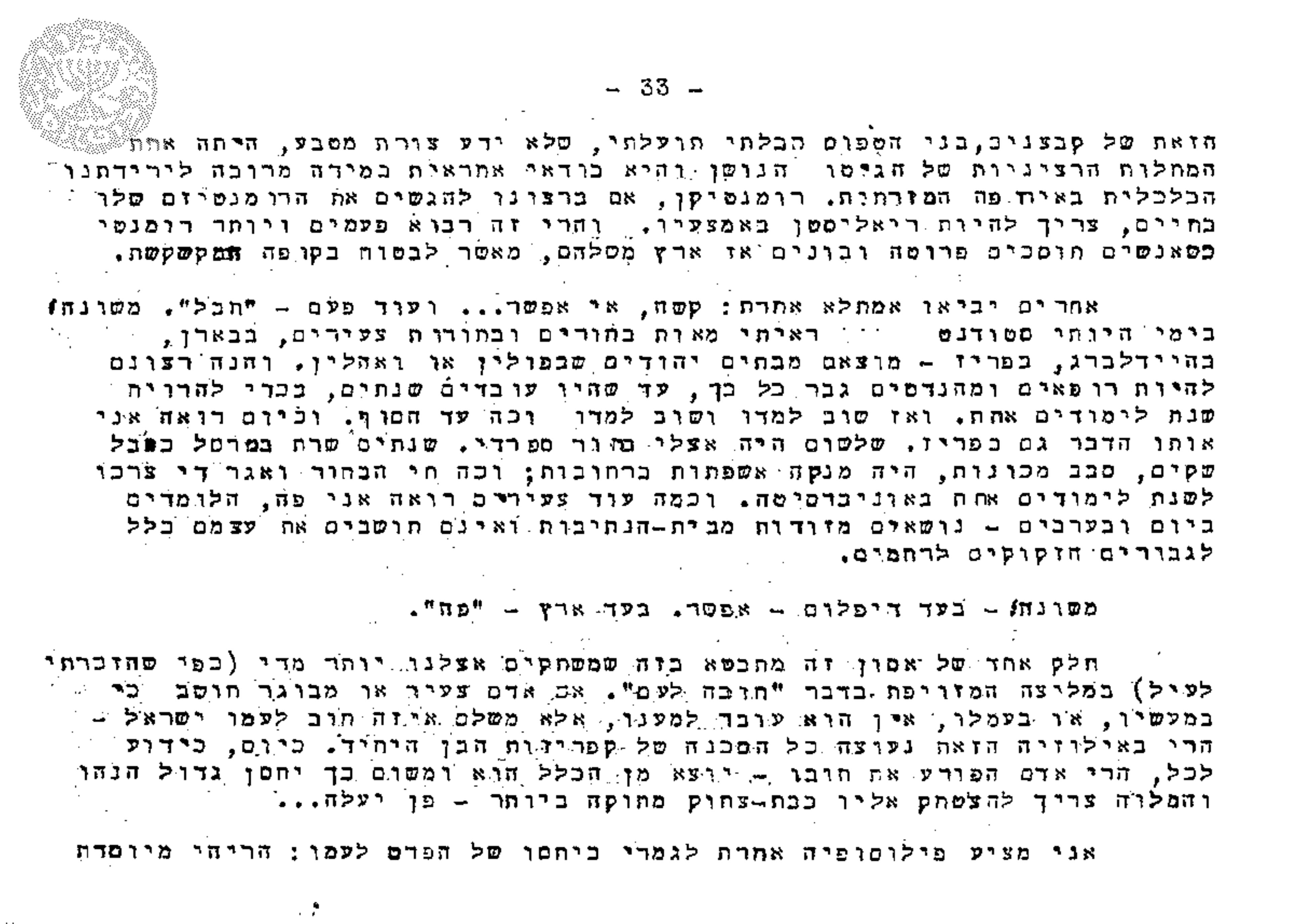
The un-diligent man of small coin, who does not know the form of a currency, was one of the rational maladies of the common type. And he is apparently largely responsible for our economic decline here in this Eastern land. A romantic, if he wishes to realize his romanticism in life, must be a realist in his means. And it is ten thousand times more romantic when people save a penny and then build some kingdom, than to trust in a leap from the diving board.
Then comes the temptation: Hard, impossible... And again "foolishness," strange.
In my student days I saw hundreds of young men and women, in Baden, in Heidelberg, in Berlin—originating from Jewish homes in villages or tents, and their desire to become doctors and engineers was so great that they would do menial labor to earn a single year of study. And so they learned well and finished well. And so on until the end. And today I see the same thing in Paris as well, where just yesterday I had a Spanish acquaintance. For two years he served in Marseille in all sorts of clerical jobs, operated machinery, cleaned garbage in the streets; and thus the young man lived and saved enough for his needs for one year of study at the university. And how many more young people I see here, who study by day and in the evenings carry suitcases from the train station and do not consider themselves heroes in need of pity at all.
Strange—for a diploma—it is possible. For a land—"hard."
One part of this disaster is expressed among us in a playful way. Too much (as I mentioned above) in the modern rhetoric concerning "duty to the people." If a young or old person thinks that in the factory, or in the laboratory, he is not working for himself but is paying some debt to his people Israel—then in this ideology the entire danger of the Jewish son's capriciousness is seen as revered. Today, as is known to all, a person who repays his debt is an exception, and for that reason he is a great nobleman, and admiration must be stuck to him with the strongest writ and law—lest he disappear.
I propose a completely different philosophy regarding the relationship of the individual to his people: It is based
Show Original Hebrew Text
-33- בני הפרוס הבלתי חרוץ , סלא ידע צורת מטע המחלות הרציוניות של הגיסו . והרי הוא כדאי אמראות במידה הכלכלית בארץ המודרחנת, רומנטיקן, אם ברצונו להגשים את המרומדים מלו, ברוך, מריח ריאליסטן באמצרין . והרי זה רבוא פעמים יותר רומנטי, כשקנאים חוסכים פרוטה ובוניס ים אזו ממלחה, מאשר לבטוח בקו מהמקפשה. אחר יבוא אמדלא תפתא: קשה, אי אפשר... ועוד פעם "תבלל", משונה. בימי היותי סטודנט ראיתי מאה בחורים ובחורות צעירים, בבארון בהיידלברג, בפרור – מוצאם מבחים יהודים מכפרין או ואהלין, וחנה רצונם להיות רופאים ומהנדסים גבר כל כך, עד שהיו עובדים שחורים, בכדי להרויח שנת לימודים אחת. ואז טוב למדו וטוב לגמרו . ובה עד הסוף. וביום רואה אני אותך הדבר גם בפררו, שלרס היתה אצלו מוגר ספרודי. שתים שרת במרסל בכל פקים, סבב מכונה, היה מנקה אשפתות ברחובות ; ובה חי הבחור ואגר די צרפו לשנות לימודים אחת באוניברסיטה . וכמה עוד צעירים רואה אני פה, הלומדים ביום ובערכים – נושאים מודוחות מבית הנחיבות ואינם חושבים את עצמם כלל לגבורים הזקוקים לרחמים. משונה – בעד דיפלוס – אפשר. בעד־ארץ – "פה". חלק אחד של אסון זה מתבטא בצורה משחקים אצלנו. יותר מדי (כפר שהזכרתי לעיל) במליצה המודרנית בדבר "חובה לעס"י. אם אדם צעיר או מבוגר חוסב כי במפעל, או בבמרון, אין הוא עובר למען, אלא משלם איזה חוב לעמו ישראל – הרי באידיאליה נראה נגרעת כל הסכנה של קרדיות הבן היהוד. כיום, כידוע לכל, הרי אדם הפורש את חובו – יוצא מן הכלל הוא ומשום כך יחסון גדל הנהו וההפלרה צריך להצחקק אליו בכתח־וחוק מוחזק ביותר – פן יעלמה. אני מציע פילוסופיה אחרת לגמרי ביהם של הפרס לעמו: הריחה מיוסרת