The Doctrine of Beitar
Page 32 • Click to zoom
Page 32 of 155
- 26 -
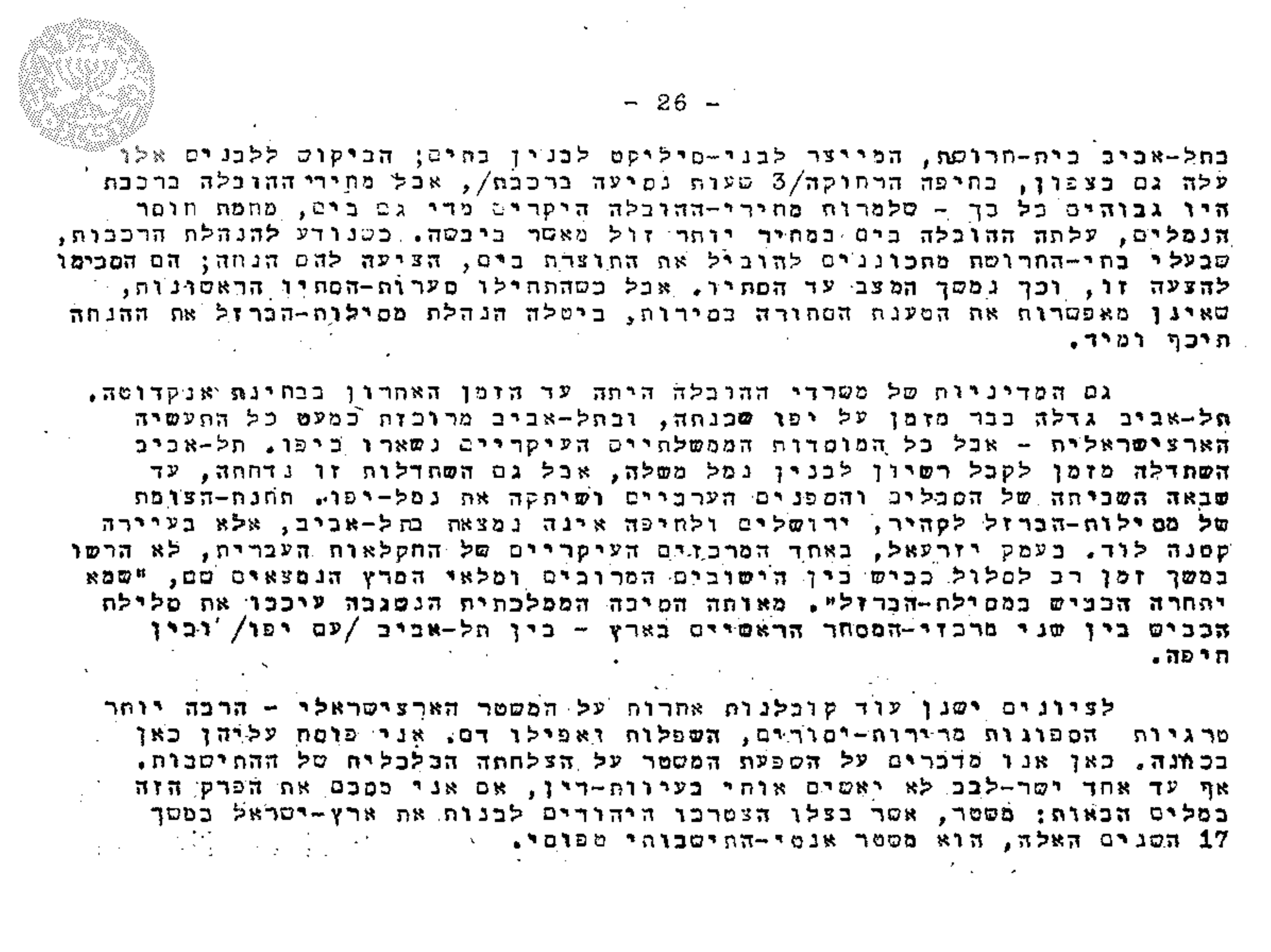
In Tel Aviv, there was a silicate brick factory, and the demand for these bricks also rose in the north. A period of a 3/4-year retreat was recorded. However, the railway transport prices were so high that—despite the already expensive transport prices rising daily—the management, due to the lack of ports, sent the goods by sea at a much cheaper price than by land. When the railway management learned that the factory owners were preparing to ship their products by sea, it offered them a discount. They agreed to this offer, and this arrangement held until the autumn. But when the first autumn storms began, making it impossible to load the goods onto boats, the railway management canceled the discount immediately.
The policy of the transport offices was also something of an anecdote. Tel Aviv had long since outgrown its neighbor, Jaffa, and almost all of Eretz-Israel's industry is concentrated in Tel Aviv—but all the main government institutions remained in Jaffa. Tel Aviv had long tried to obtain a license to build its own port, but this effort was also rejected, until the Arab shipping and sailors' strike came and paralyzed the Jaffa port. The railway junction station to Cairo, Jerusalem, and Haifa is not located in Tel Aviv, but in the small town of Lod. In the Jezreel Valley, one of the main centers of Hebrew agriculture, they did not permit for a long time the paving of a road between the nearby settlements and for the farmers of the valley located there, "lest the road compete with the railway." For the same sublime state reason, the paving of the road between the two main commercial centers in the country—between Tel Aviv (with Jaffa) and Haifa—was delayed.
We could draw other conclusions about the commerce of Eretz-Israel—far more tragic than Eastern-European issues, humiliations, and even blood. I am skipping over them in this article, because here we are talking about the expropriation of economic success from the settlement enterprise.
Not a single honest soul will accuse me of a miscarriage of justice if I summarize this chapter with the following words: The regime, under whose shadow the Jews had to build the land of Israel during these 17 years, is simply a regime of forced settlement.
Show Original Hebrew Text
```markdown - 26 - בחל-אביב בית-חרושת לבנוי-סילויס בתים; הביקוש ללבוניס אלו עלה גם בצפון, בתקופה 3/4 שנות נסיגה נרשמה, אבל מחירי ההובלה ברכבת היו גבוהים כל כך - שלפרוח מחירי-הובלה היקררו מדי יום ביום, מתח תורף הנפלים, שלחה ההובלה כרם, במחיר יחור זול מאד ביכסה. כפנודע להנהלת הרכבות, להצעי כחי-החרוסת מתכוננים להובלה את החבירה בים, הציעה להם הנחה; הם הסכימו להבצה זו, וכך נפסק המצב עד הסתיו, אבל כשהתחילו סערות-הסתיו הראשונות, מאונגן מאספרוח את הסחורה הסחורה בסירות, ביטלה הנהלת מסילת-הברזל את ההנחה תיכף ומיד. גם המדיניות של משרדי ההובלה היתה עזר הדומן בבחינות אנוקדוטה. תל-אביב גדלה כבר מזמן על יפן שכונתה, ובחל-אביב מרוכז כמעט כל התעשיה הארץ-ישראלית - אבל כל המוסדות הממשלתיים העיקריים נשארו בנפו. תל-אביב השתדלה מזמן לקבל רשיון לבנין נמל משלה, אבל גם השתדלות זו נדחתה, עד שבאה השכיחה של הספנות והספנים הערביים ושיתקה את נמל-יפו. תחת-החוסמת של סלילת-הברזל לקהיר, ירושלים ולחיפה אינה נמצאת מתל-אביב, אלא בעיירה קטנה לוד, בעמק יזרעאל, באחד המרכזים העיקריים של הקהילות העברית, לא הרשו במשך זמן רב לסלול כביש בין הישובים הסמוכים ולולאי הסרן הנסעתיס שם, "המא יתחרה הכביש בסללה-הברזל". מאותה הסיבה הממלכתית הנסגבה עוכבו את סלילה הכביס בין שני מרכזי-המסחר הראשיים בארץ - בין תל-אביב /עם יפו/ ובין חיפה. לפנינו יתכן עוד קונקלזיות אחרות על המספר הארץ-ישראלי - הרבה יותר סרגרות מסוגות מזרחית-יפורית, השפלות ואפילו דס. אני קוסס עליהן כאן בכתבה, כאן אנו מדברים על הפקעת המסחר הכלכלית מן ההתיסבות. אף עד אחד ישר-לכבו לא יאסוס אוחי בעיירות-יהרד, אך אני ססכם את הפרק הזה במילים הבאות: מספר, אסר בכל הצרכו היהודים לבנות את ארץ-ישראל בטשק 17 השנים האלה, הוא מספר אנוסי-ההתיסבות ססוס. ```