The Doctrine of Beitar
Page 29 • Click to zoom
Page 29 of 155
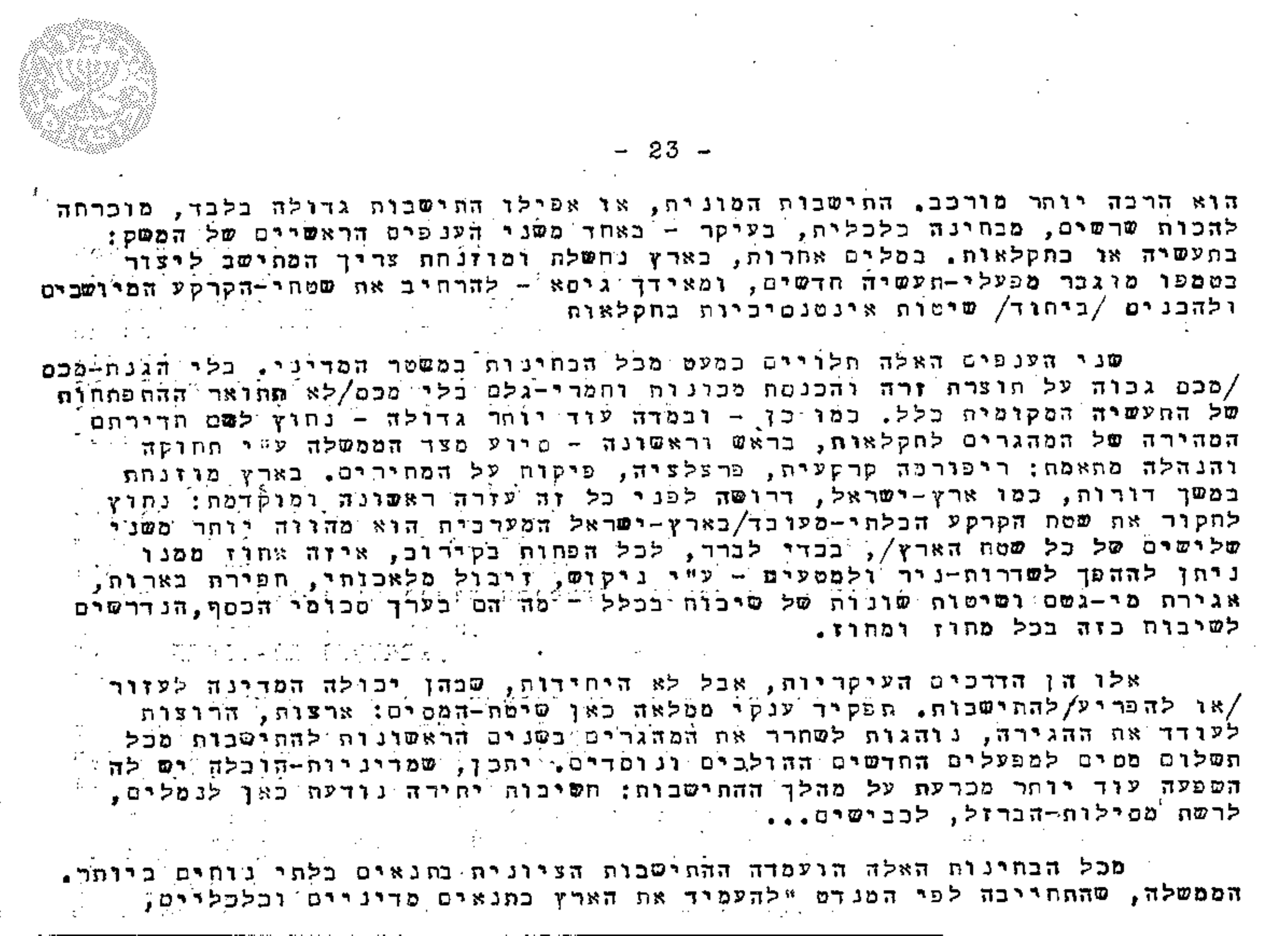
23 - It is much more complex. Mass settlement, or even just large-scale settlement, must strike roots, economically, primarily—in one of the two main sectors of the economy: in industry or in agriculture. In other words, in a backward and neglected country, the settler must create new industrial enterprises at an accelerated tempo, and on the other hand—expand the settled land areas and introduce (especially) intensive methods in agriculture.
Now, these matters depend, in almost all respects, on the political regime. Without customs protection (a proper tariff on foreign produce and the import of machinery and raw materials without customs duty), the development of local industry is inconceivable at all. Likewise—and to an even greater extent—for the purpose of the rapid absorption of immigrants into agriculture, it is necessary, first and foremost, to have assistance from the government through appropriate legislation and administration: land reform, parcellation, price controls. In a neglected country in need of loans, like the Land of Israel, all of this requires initial and preliminary aid: it is necessary to survey the area of uncultivated land (in Western Eretz-Israel this is more than two-thirds of the entire land area), in order to determine, at least approximately, what percentage of it can be turned into cultivated fields and annexed—through clearing, artificial fertilization, digging wells, rainwater collection, and various irrigation methods in general—and what are the approximate sums of money required for these works from one side and the other.
These are the main, but not the only, ways in which the state can help (or hinder) settlement. A huge role is placed here on cooperation. Countries that wish to encourage immigration tend to exempt immigrants in the first years of settlement from all tax payments for the new enterprises being established. It is possible that the governing state will take an even broader view on the course of settlement: of particular importance here are the ports, the railway network, the roads...
In all these respects, the Zionist settlement was placed in the most unfavorable conditions; the Government, which committed according to the Mandate "to place the country under such political and economic conditions..."
Show Original Hebrew Text
23 - הוא הרבה יותר מורכב. התיישבות המונית, אך אפילו התיישבות גדולה בלבד, מוכרחה להכות שרשים, מבחינה כלכלית, בעיקר - באחד משני הערפים של המשק: בתעשיה או בחקלאות, בסלפים אחרות, בארץ נחשלת ומוזנחת צריך ההישוב ליצור בטמפו מוגבר מפעלים-תעשיה חדשים, ומאידך גיסא - להרחיב את שטחי-הקרקע המיושבים ולהם / בייחוד / שיטות אינטנסיביות בחקלאות. הנה הענין האלה תלויים כמעט מכל הבחינות במשטר המדיני, בלי הגנה-מכס / מכם נכונה על תעשיה זרה והכנסת מכונות וחמרי-גלם בלי מכס/לא תתואר ההתפתחות של התעשיה המקומית כלל. כמו כן - ובמידה עוד יותר גדולה - נחוץ לשם הרירתם המהירה של המהגרים לחקלאות, בראש וראשונה - סיוע מצד הממשלה ע"י חחוקה והנהלה מתאימה: רפורמה קרקעית, פרצלציה, פיקוח על המחירים, בארץ מודנחת במתן הלוואות, כמו ארץ-ישראל, דרושה לכל כי זה עזרה ראשונה, ומקודמת: נתין לחקור את שטח הקרקע הבלתי-מפוחד/בארץ-ישראל המערבית הוא מזה יותר משני שלישים של כל שטח הארץ/, בכדי לברר, לכל הפחות בקירוב, איזה אחוז סומם ניתן להפך למדורות-נויר ולספחם - ע"י ניקון, דיבול מלאכותי, חפירת בארות, אגירות מי-גשם ושיטות שונות של סיכוה יכלל - מה הם בערך סכומי הכסף, הנדרשים לעבודת בכה מחד ומודו. אלו הן הדרכים העיקריות, אבל לא היחידות, שבהן יכולה המדינה לעזור / או להפריע / להתיישבות. תפקיד ענקי מטיל כאן שיתוף-הפעולה ארצות, הרוצות לעודד את ההגירה, נוהגות לשתחרר את המהגרים בשנים הראשונות להתיישבות מכל הסלום מסים למפעלים החדשים ההולכים ונמסרים. יתכן, שמדינת-הועלמה ית השקפה עודף מערכת על מהלך ההתיישבות: חשיבות יתירה נודעת כאן לנמלים, לרשת מסילות-הברזל, לכבישים... המטלות האלה הועמדה ההתישבות בתנאים בנתחים ביוותר. הממשלה, שהתחייבה לפי המנדט "להעמיד את הארץ כתנאים מדיניים וכלכליים;