The Doctrine of Beitar
Page 150 • Click to zoom
Page 150 of 155
— 147 —
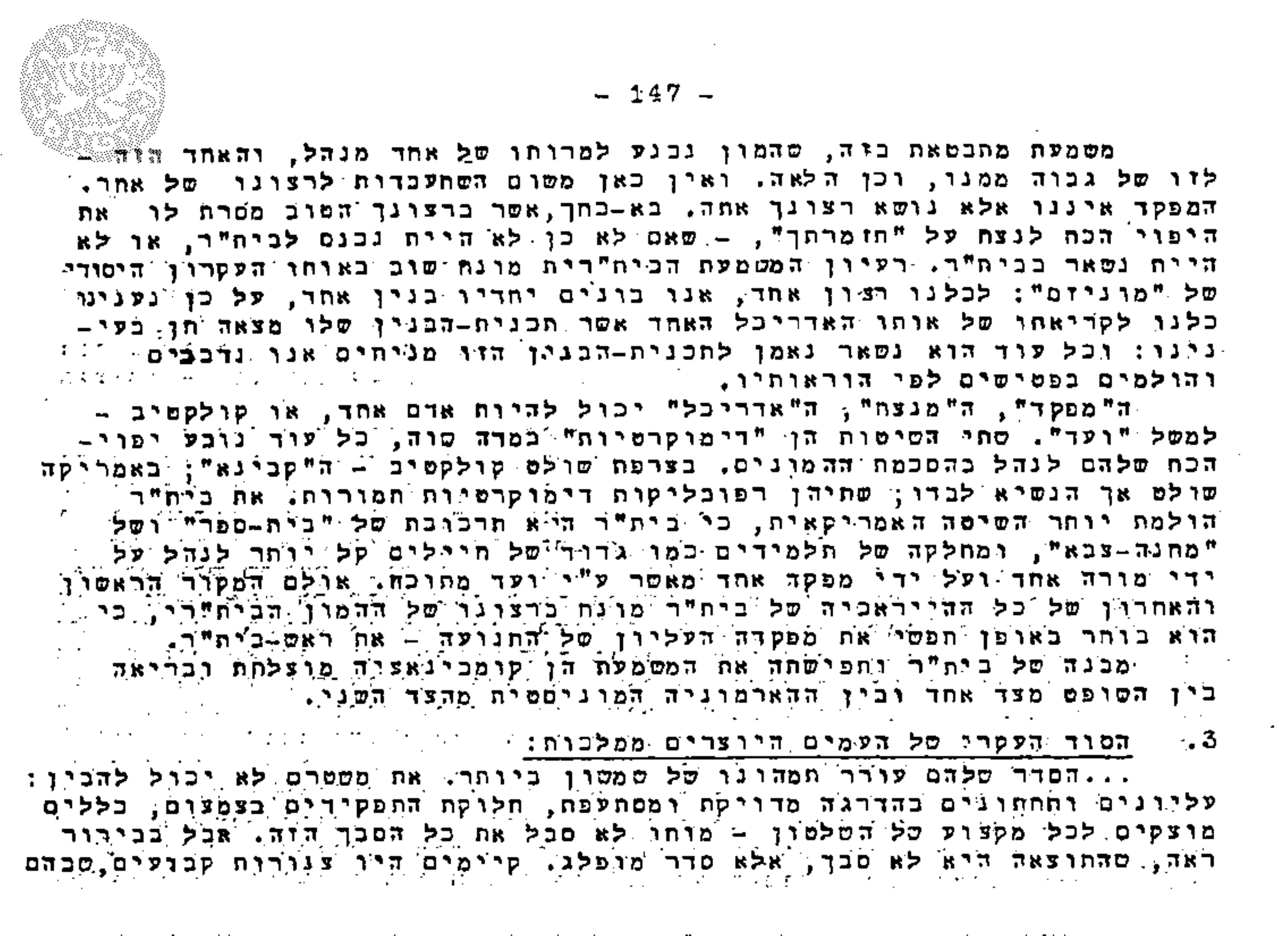
discipline of this kind, where a crowd is subject to the authority of one leader, and this one, to that of one higher than him, and so on. And this is not a matter of subjugation to the will of another. The commander is but the bearer of your own will, your representative, to whom you, of your own free will, gave the authority to conduct your “orchestra,” — for if not, you would not have joined Betar, or you would not have remained in Betar. The idea of Betari discipline is again based on that fundamental principle of “Monism”: we all have one will, we are building one building together, therefore we all answered the call of that architect whose building plan found favor in our eyes: and as long as he remains faithful to this building plan, we lay courses of bricks and wield hammers according to his instructions.
The “commander,” “conductor,” “architect” can be one person, or a collective — for example, a “committee.” Both slogans are equally “democratic,” as long as their mandate to lead stems from the consent of those who appointed them. In France, a collective rules — the “Cabinet”; in America, only the President rules alone; both are complete democratic republics: the American system is more suitable for Betar, because Betar is a combination of a “school” and a “military camp,” and a class of students, like a battalion of soldiers, is easier to manage by one teacher and by one commander than by a debating committee. However, the first and last command of the entire Betar hierarchy rests on the will of the Betari crowd, for it freely chooses the supreme commander of the movement – the Rosh Betar.
The structure of Betar and its search for government are a successful and healthy combination between the judge on the one hand and the monistic harmony on the other.
3. The main secret of the peoples who create kingdoms:
...Their order aroused astonishment of the most audacious kind. He could not understand their order; superiors and inferiors in a precise and insistent hierarchy, the division of roles in the enterprises, solid rules for every profession, all the authority – his mind could not tolerate this whole tangle. But he saw clearly that the result was not a tangle, but an extraordinary order. There existed fixed channels, in which
Show Original Hebrew Text
```markdown — 147 — ממשמעת כתב-יד זה, שהמון נכרח לסרוח של אחד מנהל, והאחד הזה. לו של גינוה ממנו, וכן הלאה. ואין כאן משום השתעבדות לרצונו של אחד. המפקד איננו אלא נושא רצונו אתה. בא-כך, אשר ברצונו הטוב מסרת לו את היפורי הזה לנצח על "חומרתך", – שאם לא כן, לא היית נכנס לבחירך, או לא היית נשאר בבחירך. רעיון הממסעת הביורוקרטית מורח טוב כאחד הקירחון היסודי של "מורנידס": לכלנו רצון אחד, אנו ברוניס יחדרו בנין אחד, על כן נענינו כללנו לקראותן של אותו האדר יכל אשר הכנית-הבניון שלו מצאה חן, בעיני נינו: וכל עוד הוא נשאר נמון לתכניות-הבניון הדו מניחים אנו נדבקים. והולכים בפטילוס לפי הוראותיו. "ה"מפקד", "מנצח", "ה"אדריכל" יכול להיות אדם אחד, או קולקטיב — למשל "ועד". שתי הסיסמאות הן "דימוקרטיות" בסרה סוה, כל עוד נובע יפורי- הכח שלהם לנהל בחכמת הממונים. בצרפה שרלטס קולקטיב – "ה"קבניא"; כאמריקה שרלס אך הנשיא לברו; שתיהן רפובליקות דימוקרטיות תמורות: אי בבחיר הולכת יותר השיטה האמריקאית, כי ביתר ה'הא תרכובת של "בתי-ספר" ושל "מחנה-צבא", ומחלקה של תלמידים יתן גדרה חרוליתם של יותר לנהל על כל ידוי מורה אחד, ושל ידי מפקד אחד מספר ע"מ יותר מתוכח. אולם הפקד הראשון והאחרון של כל ההירארכיה של ביתר מרחב כרצונו של ההמון הבחיר", כי הוא בוחר באופן חופשי את מפקדה העליון של התנועה – את ואס-ביתו"ר. מבנה של ביתר נח וחיפושוה את הממשלה הן קומבינאציה מורלחת ובריאה בין הסופס מצד אחד ובין הארמוניה המוניסיסה מהצד השני. .3 הסוד העיקרי של העמים היוצרים ממלכות: ...הסדר שלהם עורר תמהון מן הממון ביותר. את סטרם לא יכול להבין; עליונות וחתחונות כהדרגה מרוייקה ומתספח, חלוקת התפקידים במפעלים, לכלם מוצקים לכל מקלה כל הטלפון – מוחו לא סכל את כל הסבר הזה. אבל בביורור ראה, שהתוצאה היא לא סבן, אלא סדר מופלג. קיימים היו צורות קבועים, סבהם ```