The Doctrine of Beitar
Page 142 • Click to zoom
Page 142 of 155
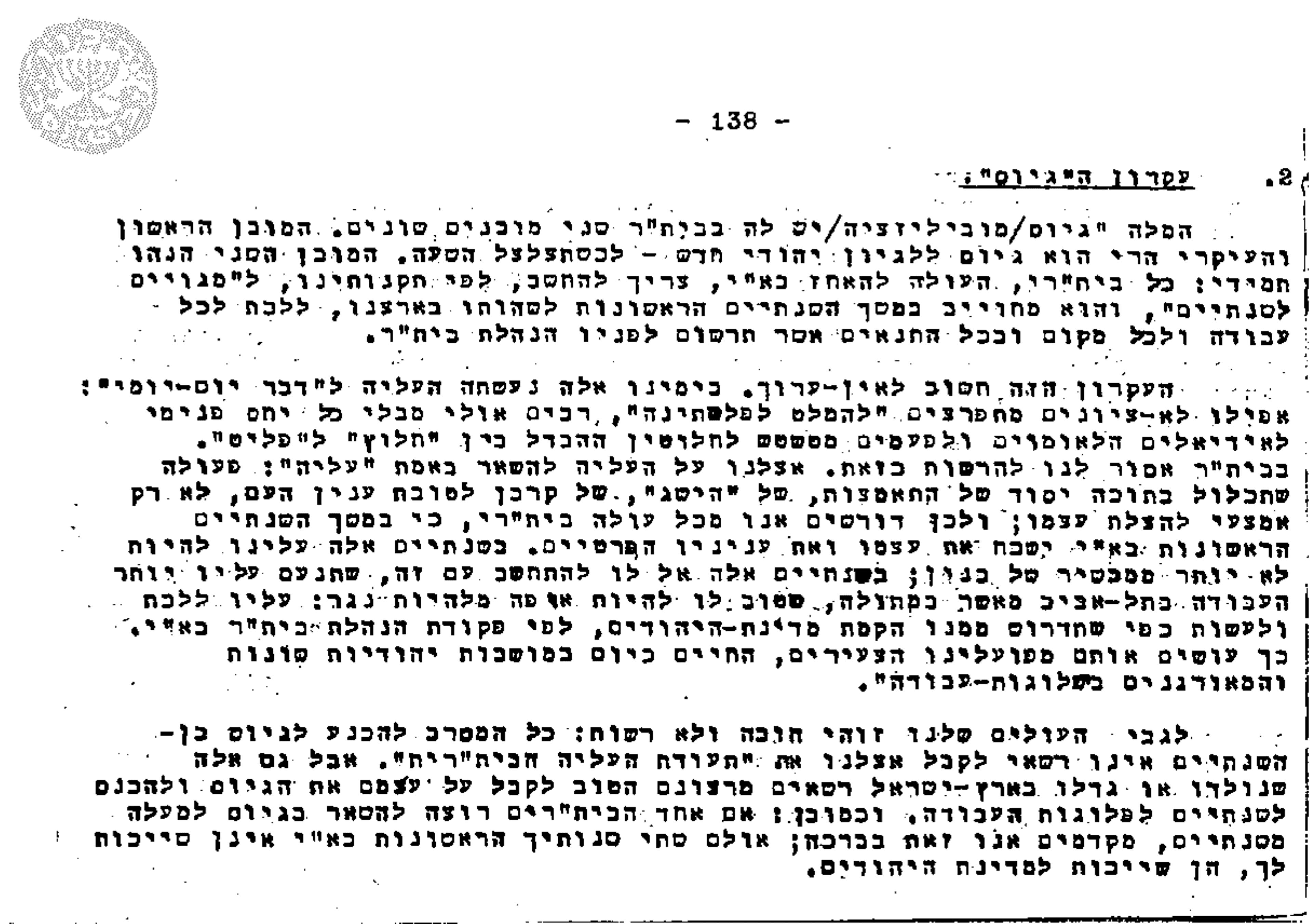
The Principle of "Giyus" (Mobilization).
The word "giyus/mobilization" has two different meanings in Betar: The first and primary meaning is mobilization for a new Jewish building—initially a mass movement, the agent of state policy: every Betari who immigrates to Eretz Israel must commit, according to our regulations, to "two years for state-building," and he is obligated during the first two years of his stay in our land, to go to any work and to any place and under any conditions that the office managing Betar will impose on him.
This principle has become a kind of "non-principle". In our days, Aliyah has become an "everyday matter": even "non-Zionists" are permitted to "attach themselves to their homeland," many perhaps without any internal connection to the national ideals and their values, and the distinction between "pioneers" and "refugees" is completely blurred.
In Betar, we are forbidden to permit this. Aliyah must truly remain "Aliyah": an act that includes within it an element of effort, of "reversal," of sacrifice for the good of the nation's cause, not just a means of saving oneself. Therefore, we demand of every Betari immigrant that during his first two years in Eretz Israel, he shall surrender himself and his private affairs. In these two years, he is to be no "more than a number." All security in Betar is contingent on him accepting that these are the conditions under which he must be. Work. In Tel Aviv, the pleasant climate is enough for him, which is good for him: to be here is what it is to be dragged along. He must go and do as the establishment of a Jewish state demands of him, according to the command of the Betar leadership in Eretz Israel. This is what our young activists do, who live today in small Jewish colonies and organize the labor platoons.
For immigrants from abroad, this is an obligation and not a choice: anyone who refuses to submit to the two-year mobilization is not entitled to receive from us the "Betar Aliyah Certificate." But even those born or raised in Eretz Israel are permitted, of their own free will, to accept the mobilization upon themselves, and to enter the labor platoons for two years. And of course: if a Betari wishes to remain in place for more than two years, we welcome this with a blessing; but his first years in Eretz Israel do not belong to him, they belong to the state policy.
Show Original Hebrew Text
- 138 - .2 # עקרון "הגיוס". הסלה "גיוס/מוביליזציה" יש לה בביה"ר סני מובנים סגורים: המובן הראשון והעיקרי הרי הוא גיוס לבניין יהודי חרס - לכתהלצל הסעה, הסוכן הנוהל המידדני כל ביה"ר, העולה להאחז בא"י, בדרך להתבסס, לפי תקנותיו, ל"בנינים לסנתייים", והוא מחייב מסק הפנתייים הסתדרות לסהות בארצנו, ללכת לכל עבודה ולכל סקוס ורכנו התנאים אסר תרסלס לפסרד הנוהלת ביה"ר. העקרון הזה תהס לסוג ל"אן-עקרך". בימינו אלה נעשתה העליה ל"דבר ויום-יומי": אסילו ל"אן-ציונים מרסעים "להתלס לטפלחתיה", רבוס אולי מבלי כל יחם סניסי לאידיאלים הלאומיים ולערכיעם מטעם לחיסלון ההבדל בין "חלןיו" ל"פליטיו". בביה"ר אסור לנו להרפות כזאת. אפללו על העליה להשאר באסת "העליה": פעולה תכלל בתוכה יסוד של התחכלת, של "היקן", של קרבן לטובת ענין העם, לא רק אמצעי להצלת עצמו; ולכן דורסים אנו מכל עולה ביה"ר, כי בטסח הסנתייים הראשונות בא"י, יפסק את עצמו ואת עניניו הפרטייים. בסנתייים אלה עלינו להיות לא "יותר ממספר" כל בבןויו בביה"ר אלה אל לו להחשב עם זה, שתנאים עליו להיות העבודה. בל-אביב מספק בסקלה, שסוב ל: להיות אן סה מלהיות נגרר: עליו ללכת ולעסות כמו שדורסים ממנו הקסת מלינות-יהודיות, לפי פקודת הנהלת ביה"ר בא"י, בך עושים אותס מפעליניו הצעירים, החיים כיום בסושבות יהודיות קפנות והמארגנים תפלוגות-עבודה. לגבי העולים מלנד זהו חובה ולא רשות: כל הסרב להכנע לגיוס כן- הסנתייים אינו זכאי לקבל אצלנו את "תעודת העליה הבית"רית". אבל גם אלה שנולדו או גדלו בארץ-ישראל רסואים מרצונם הטוב לקבל על ייעסס את הגיוס, ולהכנס לסנתייים לפלוגות העבודה, וכסוכך: אם אחד מביה"ר רוצה להסאר בנלוס לסכלה מפסחיים, מקדמים אנו זאת בברכה; אלס סתומיך הראשונות כא"י אינן סייךות לר, הן שיירכות לסהדיות.