The Antisemitic Catechism (1893)
Page 409 • Click to zoom
Page 409 of 436
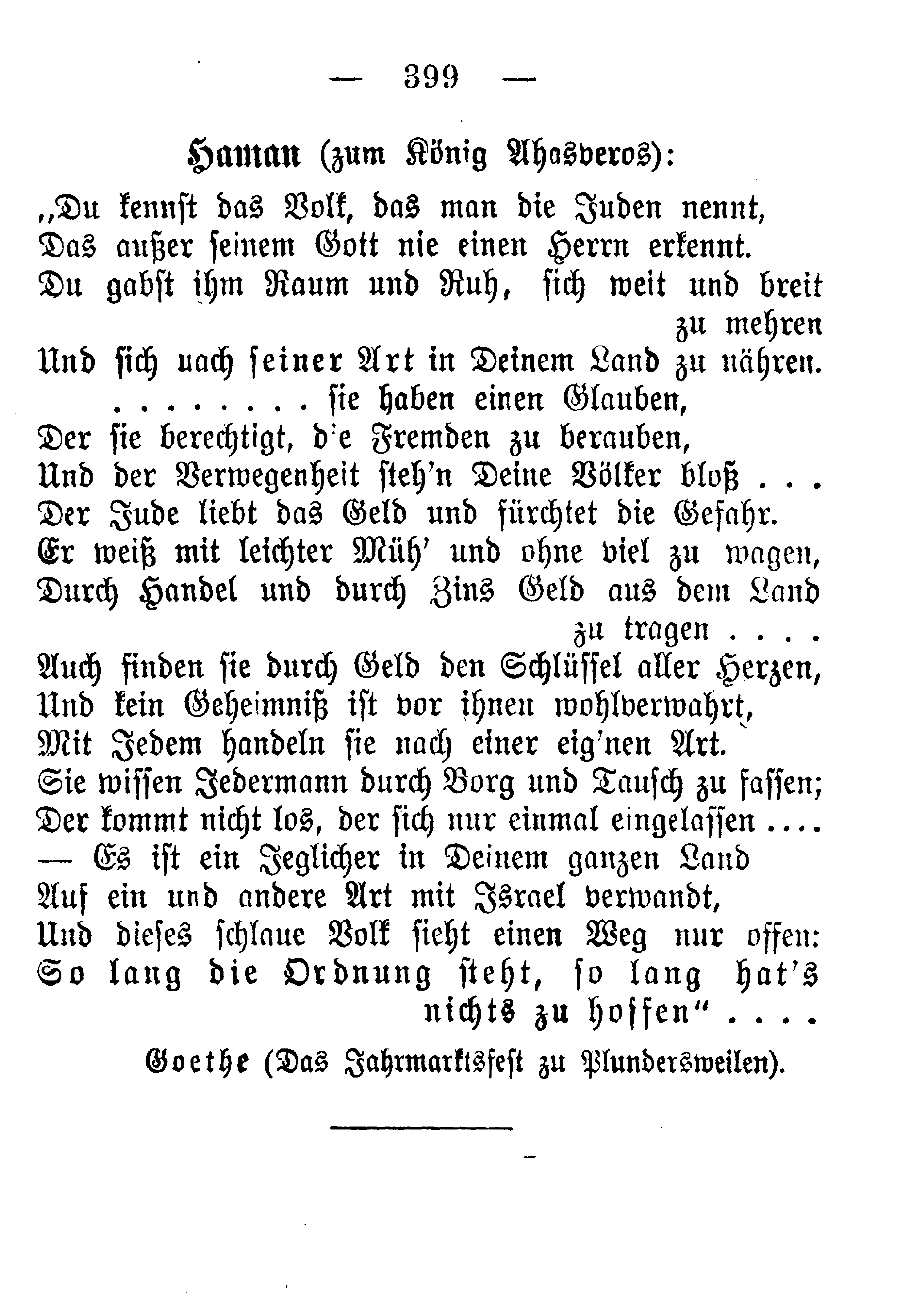
Haman (to King Ahasuerus):
"You know the people that they call the Jews, Who other than their God no master recognize. You gave them room and peace, to multiply far and wide And to sustain themselves in your land in their own way. . . . . . . . . . they have a belief, That entitles them to rob the foreigners, And to this audacity your peoples stand exposed . . . The Jew loves money and fears danger. He knows with little effort and without much risk, Through trade and through interest to carry money from the land . . . Through money they also find the key to all hearts, And no secret is well-kept from them, With everyone they deal in their own special way. They know how to ensnare everyone through loan and barter; He who once gets involved never gets free . . . — Every single one in your whole land Is in one way or another related to Israel, And this cunning people sees only one way open: As long as order stands, it has nothing to hope for" . . .
Goethe.
(The Fair at Plundersweilen).
Show Original German Text
— 399 — Haman (zum König Ahasveros): „Du kennst das Volk, das man die Juden nennt, Das außer seinem Gott nie einen Herm erkennt. Du gabst ihm Raum und Ruh, sich weit und breit zu mehren Und sich nach seiner Art in Deinem Land zu nähren. . . . . . . . . . sie haben einen Glauben, Der sie berechtigt, die Fremden zu berauben, Und der Verwegenheit steh'n Deine Völker bloß . . . Der Jude liebt das Geld und fürchtet die Gefahr. Er weiß mit leichter Müh' und ohne viel zu wagen, Durch Handel und durch Zins Geld aus dem Land zu tragen . . . Auch finden sie durch Geld den Schlüssel aller Herzen, Und kein Geheimniß ist vor ihnen wohlverwahrt, Mit Jedem handeln sie nach einer eig'nen Art. Sie wissen Jedermann durch Borg und Tausch zu fassen; Der kommt nicht los, der sich nur einmal eingelassen . . . — Es ist ein Jeglicher in Deinem ganzen Land Auf ein und andere Art mit Israel verwandt, Und dieses schlaue Volk sieht einen Weg nur offen: So lang die Ordnung steht, so lang hat's nichts zu hoffen“ . . . Goethe (Das Jahrmarktsfest zu Plundersweilen).