The Antisemitic Catechism (1893)
Page 114 • Click to zoom
Page 114 of 436
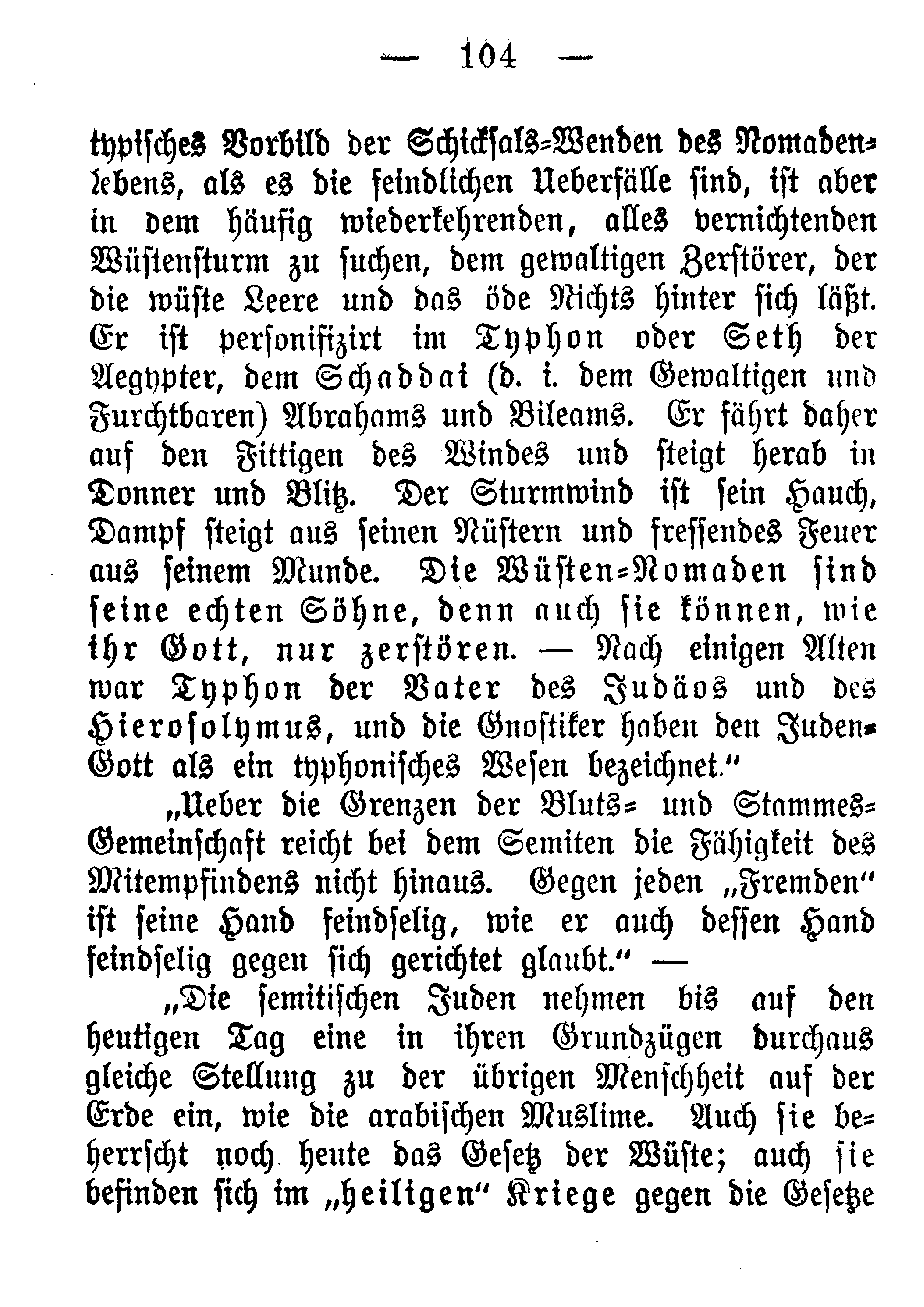
typical model for the turns of fate in nomadic life than hostile raids is to be sought in the frequently recurring, all-destroying desert storm, the mighty destroyer that leaves desolate emptiness and barren nothingness behind.
He is personified in the Typhon or Seth of the Egyptians, the Shaddai (i.e., the Mighty and Terrible One) of Abraham and Balaam. He therefore travels on the pinions of the wind and descends in thunder and lightning. The storm wind is his breath, steam rises from his nostrils and devouring fire from his mouth. The desert nomads are his true sons, for they too, like their god, can only destroy.
— According to some ancients, Typhon was the father of Judaeus and Hierosolymus, and the Gnostics have described the Jewish God as a Typhonic being.”
“The Semite’s capacity for empathy does not extend beyond the borders of blood and tribal community. Against every ‘stranger’ his hand is hostile, just as he believes the other’s hand is directed hostilely against him.”
“The Semitic Jews assume, up to the present day, a position towards the rest of humanity on earth that is in its basic features entirely the same as that of the Arab Muslims. They too are still ruled today by the law of the desert; they too find themselves in a ‘holy’ war against the laws
Show Original German Text
— 104 — typisches Vorbild der Schickſals-Wenden des Nomadenlebens, als es die feindlichen Ueberfälle ſind, ist aber in dem häufig wiederkehrenden, alles vemichtenden Wüstensturm zu ſuchen, dem gewaltigen Zerstörer, der die wüste Leere und das öde Nichts hinter ſich läßt. Er ist perſonificirt im Typhon oder Seth der Aegypter, dem Schaddai (d. i. dem Gewaltigen und Furchtbaren) Abrahams und Bileams. Er fährt daher auf den Fittigen des Windes und steigt herab in Donner und Blik. Der Sturmwind ist ſein Hauch, Dampf steigt aus ſeinen Nüstem und freſſendes Feuer aus ſeinem Munde. Die Wüsten-Nomaden ſind ſeine echten Söhne, denn auch ſie können, wie ihr Gott, nur zerstören. — Nach einigen Alten war Typhon der Vater des Judäos und des Hieroſolymus, und die Gnostiker haben den JudenGott als ein typhonisches Weſen bezeichnet.“ „Ueber die Grenzen der Bluts- und StammesGemeinschaft reicht bei dem Semiten die Fähigkeit des Mitempfindens nicht hinaus. Gegen jeden „Fremden“ ist ſeine Hand feindſelig, wie er auch deſſen Hand feindſelig gegen ſich genchtet glaubt.“ — „Die ſemitischen Juden nehmen bis auf den heutigen Tag eine in ihren Grundzügen durchaus gleiche Stellung zu der übngen Menschheit auf der Erde ein, wie die arabischen Muslime. Auch ſie beherrscht noch heute das Geſetz der Wüste; auch ſie befinden ſich im „heiligen“ Knege gegen die Geſetze