The Doctrine of Beitar
Page 91 • Click to zoom
Page 91 of 155
- 86 -
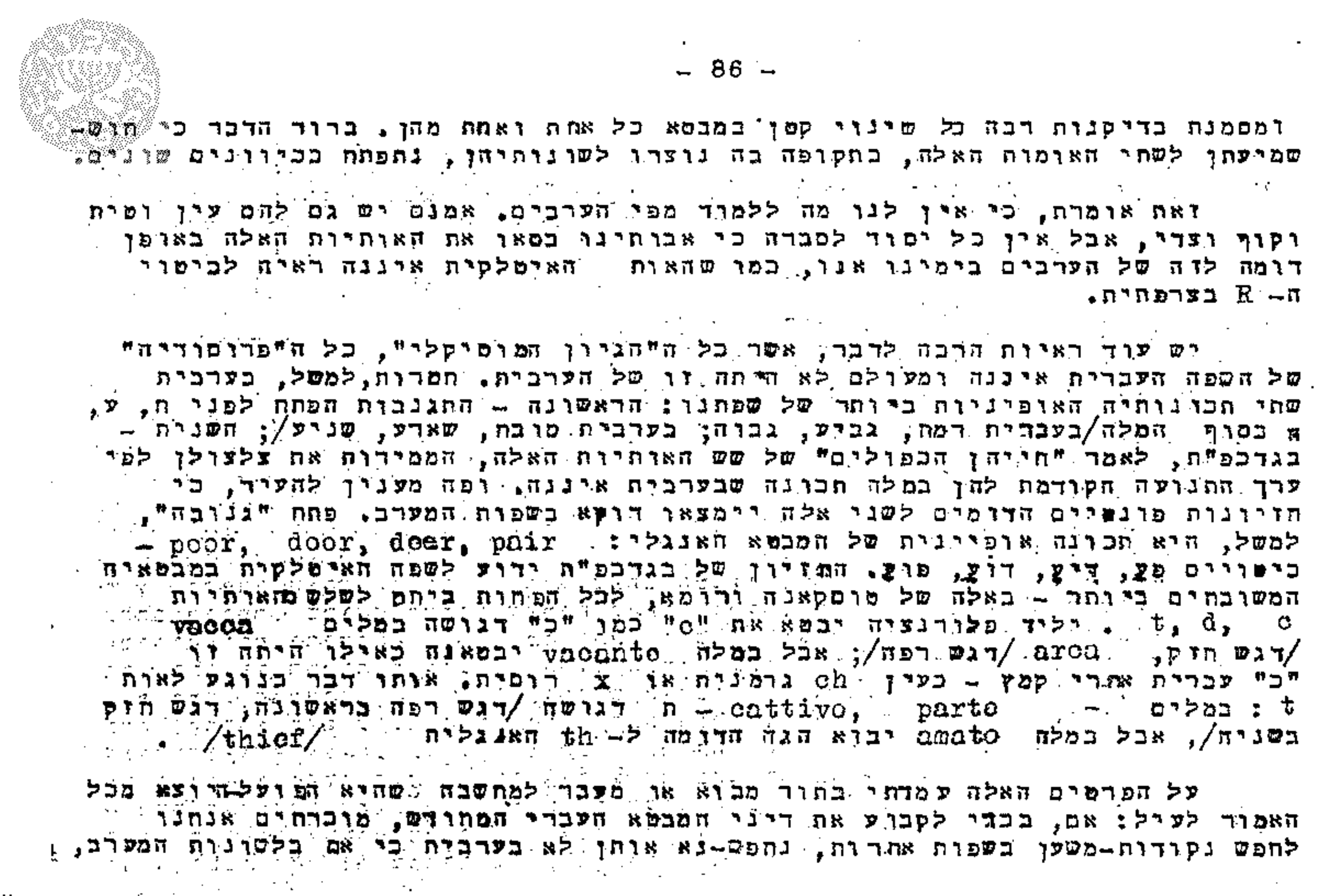
...that marks with great precision every small change in the pronunciation of each and every one of them. It is clear that the auditory faculty of these two nations, during the period when their languages were formed, developed in different directions.
That is to say, we have nothing to learn from the Arabs. Indeed, they also have an Ayin and Tet and Qof and Tsadi, but there is no basis for the assumption that our ancestors pronounced these letters in a manner similar to that of the Arabs in our own time, just as the Italian letter is not evidence to establish the R in French.
There is much more evidence for this, that the entire "musical solution," the entire "prosody" of the Hebrew language is not, and never was, like that of Arabic. Missing, for example, from its system are two of our language's most characteristic features: The first — the furtive patach before a Het, Ayin, or He at the end of a word / in Hebrew ramah, gavah, gavoah; in Arabic: tuba', shara', qati', qinyah. The second — the dagesh kal, that is, the "frication of the doubles" of these six letters, which differentiate their sound according to the value of the preceding vowel in the word, a feature that does not exist in Arabic. And how interesting to note that particular palatalizations special to these two will be found precisely in the languages of the West. The "stolen" patach, for example, is a characteristic feature of the English pronunciation: poor, door, pair.
Like the sounds of Begadkefat, known in the Italian language in its most common pronunciations — in those of Provençal and Rome, at least there they constitute t, d, c. Polish children will pronounce the "c" like a strong "k" in the words vocca /strong dagesh/, arca /soft dagesh/; but in the word vocconto they will pronounce it as if it were a Hebrew "kaf" after a kamatz — like the German ch or the Russian х. The same thing regarding the letter t: in the words — cattivo, parto /soft dagesh in the first, strong dagesh in the second/, but in the word amato a sound will appear similar to the English th /thief/.
I have presented these details as an introduction or a transition to a thought that is even more important than all of the above; if, in order to determine the rules for the detailed Hebrew pronunciation, we must search for points of support in other languages, let us search for them not in Arabic but rather in the languages of the West.
Show Original Hebrew Text
- 86 - דמסמנת בדיקנות רבה כל שינוי קטן במבטא כל אחד ואחד מהן. ברור הדבר כי מוס- שמיעתן לשתי האומות האלה, בתקופה בה נוצרו לשונותיהן, נפתחו ככיוונים שונים. זאת אומרת, כי אין לנו מה ללמוד מפי הערבים. אמנם יש גם להם עין וסיד וקוף וצדי, אבל אין כל יסוד לסברה כי אבותינו נשאו את האותיות האלה באופן דומה לזה של הערבים בימינו אנו, כמו שהאות האזטלקית איננה ראיה לבסס ה-R בצרפתית. יש עוד ראיה הרבה לדבר, אשר כל ה"פתרון המוסיקלי", כל ה"פרוזודיה" של השפה העברית איננה ומעולם לא היתה, זולת של הערבית. חסרות, למשל, במערכת שתי תכונותיה האופייניות ביותר של שפתנו: הראשונה - התנגבות הפתח לפני ח', ע', ו' בסוף המלה/בעברית חסר, גבר', בכותן' בערבית. סובה', שארע', קטיע', קנייה. בדגש קל', לאמר "חיייחון הכפולות" של שש האותיות האלה, המפרידות את צלצולן לפי ערך התנועה הקודמת להן במלה תכונה שבערבית איננה, ומה מעניין להעיר, כי הפרנציות מיוחדות לשני אלה יימצאו דוקא בשפות המערב. פתח "גנובה" למשל, היא תכונה אופיינית של המבטא האנגלי: poor, door, pair. כייצורים ,ל"ב, ל"ז, ל"מ, ל"ו, של הפריון של בגדכ"פ ידוע לשפה האזטלקית במבטאיהן המשותפים ביותר – באלה של פרופאנה ורומאו, לכל הפחות בהם לשם מהותיות t, d, c'. ילדיד פלונוזיה יבטא את "ס" כמן "כי" דגנוסה במילים vooga /דגש חזק ,/arca. /רגש רפה; אבל במלה vocoonto יבטאוה כאילו היתה וז "כ" כברית אחרי קמץ - כבין ch וגרמנית א t. רוסית: אותן דבר כנוגע לאות : t במלים - cattivo, parto amato /רגש רפה כראשונה, דגש חזק /thief/ ,בשויה/. אבל במלה amato יבטא הנה דומה ל-th האנגלית. על הפרפרים האלה עמדתי בתור מבוא או מעבר למחשבה: שהיא המה ואפילו מכל האמור לעיל; אם, בכדי לקבוע את דינו המבטא העברי המפורט, מובטחים אנחנו לחפש נקודות-משען בשפות אחרות, נחפש-נא אותן לא בערבית כי אם בלשונות המערב, א.