The Doctrine of Beitar
Page 75 • Click to zoom
Page 75 of 155
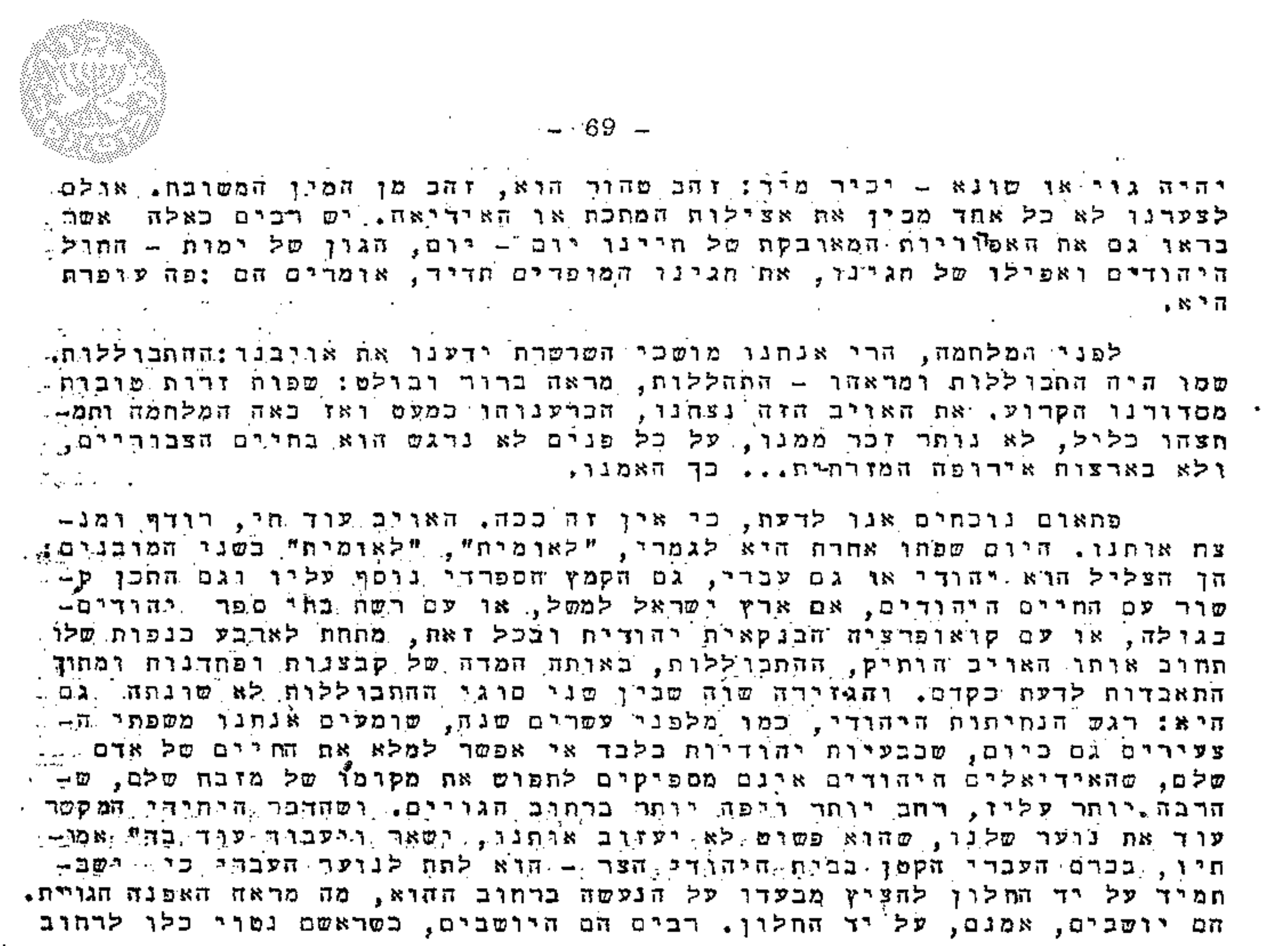
- 69 -
Be it a Gentile or a merchant—he will immediately recognize: it is pure gold, gold of the finest kind. But to our sorrow, not everyone understands the nobility of the metal or the aristocracy. There are many such people who despised also the patched-together nobility of our daily lives, the decency of the Jewish weekdays and even of our holidays, our sharply famous holidays, saying: here she stands.
Before the war, we who bear the chain knew its length: assimilation. The symbol of this rapid assimilation was a clear and prominent sight: the degradation of good generations—our torn corridor. This enemy we defeated, we almost vanquished him, and then the war came and crushed him completely. Nothing was left of him—at any rate, he was not registered in their public lives, nor in the modern countries of Europe. So we believed.
Suddenly we realize that this is not so; the enemy is still alive, pursuing and defeating us. Today his guise is completely different, "national," "national" in both senses: the "patient" is Jewish or even Hebrew, the Sephardic pronunciation is added to him, and the groom is also connected with Jewish life—whether with the Land of Israel, for example, or with a network of Jewish schools in the Diaspora, or with a Jewish banking cooperative. And yet, beneath the four corners of a costume walks the old enemy, assimilation, with the same measure of constancy and recurrence and with the same conscious suicide as before. And the measure is equal between the two types of assimilation. It has not changed. It is still the Jewish inferiority complex. Just as twenty years ago, we hear from the lips of the young even today that with Jewish problems alone it is impossible to fill the life of a whole person; that Jewish ideals are not sufficient to take the place of universal human ideals, which are, it seems, far more supreme, a broader and deeper spirit, a stronger logic. And as for the Jewish element that connects and unites our youth, which simply does not appeal to us, its weakness remains, on its true mountain, in the small Hebrew vineyard. The task latent in the Jewish structure is to let the Hebrew youth sit always by the window, to peek from his place of honor at what is happening in that wider world, at the appearance of the gentile fashion. They sit, indeed, by the window. Many are those who sit, their heads tilted towards that wide world.
Show Original Hebrew Text
- 69 - יהיה גוי או סוג יין המשובח. אולם לצערנו לא אחד מבין את אצילות המתח מן האריסטראטיה. אלו בראו גם את האצילות המארבקת מן היוזם – יום ,הגון של ימות היהודים ואפילו מן חגינו ,את חגינו המפורסם חדור, אומרים הם: פה עומדת היא. לפני המלחמה, הרי אנחנו מושכי השרשרת ידענו את אורך: ההתבוללות. ספור היה ההתבוללות המהירה, מראה ברור ובולט: שפח דורות טובות- מסדורינו הקרוע. את האויב הזה נצחנו, הכרענוהו כמעט ואז באה המלחמה ותמי- חצרו כליל, לא נותר דבר ממנו, על כל פנים לא נרשם הוא בחייהם הצבוריים, ולא בארצות אירופה המודרנית. כך האמנו. פתאום נרכשים אנו לרצח, כי אין זה ככה, האויב עוד חי, רודף ומנו- צח איתנו. היום שטחו אחרת היא לגמרי, "לאומית", "לאומית" בשתי המובנים: הן הפציל הוא יהודי או גם עברי, גם הקמץ הספרדי נוסף עליו וגם החכן קו-שר עם החיים היהודיים, אם ארץ ישראל למשל, או עם רשת בחיי ספר יהודים- בגולה, או עם קואופרציה הבנקאית יהודית ובכל זאת, מתח לארבע כנפות של מתח אתו האויב הותיק, ההתבוללות, באותה המדה של קבענות ומחזור ובתוך ההתאבדות לדעת כקדש. והמדה שוה מבין סוגי ההתבוללות. לא שונתה. גם היא: רגש הנחיתות היהודי, כמו מלפני עשרים שנה, שומרים אנחנו משפתי הו- צעירים גם כיום, שכבעיות יהודיות בלבד אי אפשר למלא את החיים של אדם שלם, מהאידיאלים היהודיים אינם מספיקים לתפוס את מקומם של מזרחיים שלט. הרבה.יותר עליון, רוח יותר רופה ויתר ברוחב, הגיונם. ומהדבר היהודי המקשר ועד את נוער שלנו, שהוא פשוט לא יערוב אתנו, נשאר רפיונו, בהר אמתו, בכרם העברי הקטן. בבנין היהודי הצפון - הוא לתת לנוער העברי כי ישב- תמיד על יד החלון לענין מכבדו על הנפשה ברוחב ההוא, מה מראה האופנה הנוינית. הם יושבים, אמנם, על יד החלון. רבים הם היושבים, בראשם נטוי כל לרוחב