The Doctrine of Beitar
Page 134 • Click to zoom
Page 134 of 155
- 130
Hadar-Betar
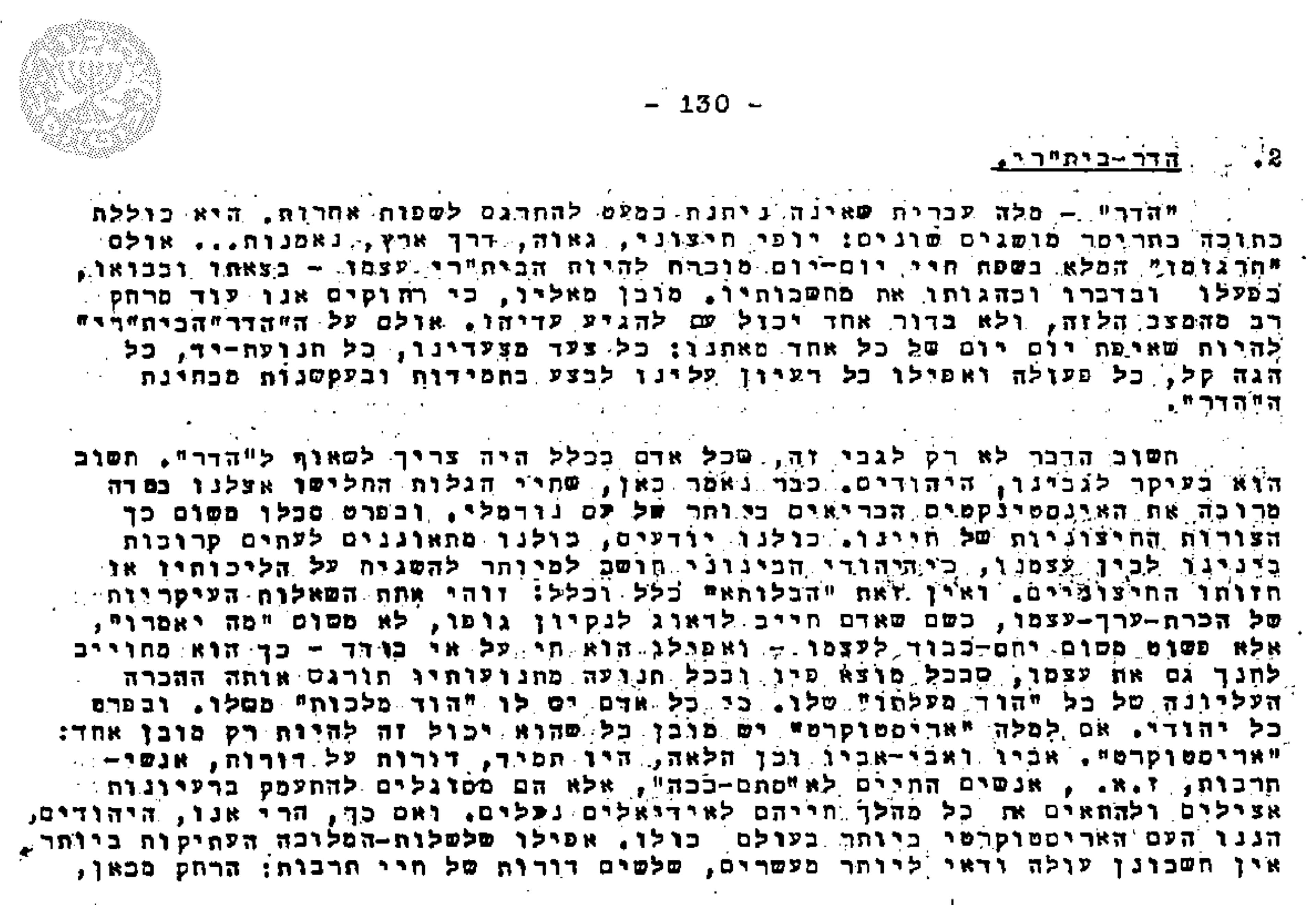
"Hadar" — a Hebrew word that is almost impossible to translate into other languages. It includes, of course, various meanings: external beauty, pride, manners, loyalty... But the full "translation" in the language of everyday life must be Hadar-itself, — in one's step and in one's appearance, in one's deeds and in one's speech and in the conduct of one's thoughts. It goes without saying that we still see a great distance from this state, and a people cannot reach it in one generation. But "Hadar-education" must be the daily aspiration of each one of us: every step we take, every movement and utterance, every light sound, every action and even every desire we must perform with devotion and persistence stamped with "Hadar".
This matter is important not only in that every person in general should strive for "Hadar." It is especially important for us, the Jews. It has already been said here that the Diaspora has greatly weakened among us the healthiest instincts of a normal people. And in particular we all suffered because of this in the external forms of our lives. We all know, we all complain often among ourselves, that the average Jew is sometimes willing to watch over his ways or his external appearance, and this is not a "success" at all: for it is one of the main virtues of self-worth, just as a person must care for the cleanliness of his body, not because of "what will they say," but out of simple self-respect — so he is obliged to educate himself as well, and in general, from all his movements and thoughts that supreme recognition of every Jew should be required: his own "kingdom."
Because, every nation has its own "His Majesty." And especially every Jew. If the word "aristocrat" has any meaning, it can only be one meaning: an "aristocrat" is one whose fathers and forefathers, and so on, have always been, for generations upon generations, people of culture, etc., whose lives and ideas were not "just so," but they are capable of delving into noble ideas and adapting the entire course of their lives to lofty ideals. And if so, then we, the Jews, are the most aristocratic people in the entire world. Even the most ancient royal dynasties do not count for more than twenty, thirty generations of cultural life; far from it,
Show Original Hebrew Text
2. - 130 "הדר-הבית" "ההדר" – מלה עברית שאינה ניתנת כמעט לתרגום לשפה אחרת. היא כוללת כתובה כהרוש מובנים יופי חיצוני, גאוה, דרך ארץ, נאמנות... אולם "התרגום" המלא במשק חיי יום-יום מוכרח להיות ההדר עצמו. – בצדד ובמראו, מעלן ובברכו ובהנהגתו את מחשבותיו. מובן מאליו, כי רואים אנו עוד מרחק רב מהמצב הלז, ולא בדור אחד יכול עם להגיע עדייהו. אולם על "ההדר-החינוך" להיות מונחת יום יום של כל אחד מאתנו: כל צעד מצדינו, כל הנעה-ודבור, כל הגה קל, כל פעולה ואפילו כל רצון לבצע בחסידות ובעקביות חתומת "ההדר". חשוב הדבר לא רק לגבי זה, שכל אדם בכלל היה צריך לשאוף ל"הדר". חשוב הוא בעיקר לגבינו, היהודים. כבר נאמר כאן, שהרי הגלות החלישה אצלנו במידה מרובה את האוטוסקפית והבריאותם ביותר של עם נורמלי. ובפרט מכלל משום כך הצורה החיצונית של חיינו, כולל לבושים, כולל מנהגים לקיים קרובים בדיננו לבין עצמנו, כי היהודי הענוותן מסוגל להשפיע על הליכותיו או הדרתו החיצונית, וזהו "ההבחנה" בכל וכלל: והרי אחת המעלות העיקריות של הכרת-ערך-עצמו, כשם שאדם חייב לראותה לתיקון גופו, לא משום "מה יאמרו" אלא משום ספון-יהל -כבוד לעצמו - ובאמת - הוא חי על פי כבודו - כך הוא מחויב לחנך גם את עצמו, ובכלל מוסר וכל הנעה מחשבותיו חייבה אותה ההכרה העליונה של כל יהודי "מפלתו שלנו". כל, כל העם יש לו "הוד מלכותו" משלו. ובפרט כל יהודי. אם לסמן "אריסטוקרט" יש מובן כל שהוא יכול זה להיות רק מובן אחד: "אריסטוקרט". אבותיו ואבי-אבותיו וכן הלאה, היו תמיד, דורות על דורות, אנשי- תרבות, וכו', אשר התייחסו לא "סתם-כהה", אלא הם מסוגלים להתעמק בכישרונות אצילים ולהעלות את כל מהלך חייהם לאידיאלים נעלים. ואם כך, הרי אנו, היהודים, הננו העם האריסטוקרטי ביותר בעולם כולו. אפילו שלשלת המלוכה העתיקה ביותר אין חשבונן עולה ולא ליותר מעשרים, שלשים דורות של חיי תרבות: הרחק מכאן,