The Antisemitic Catechism (1893)
Page 345 • Click to zoom
Page 345 of 436
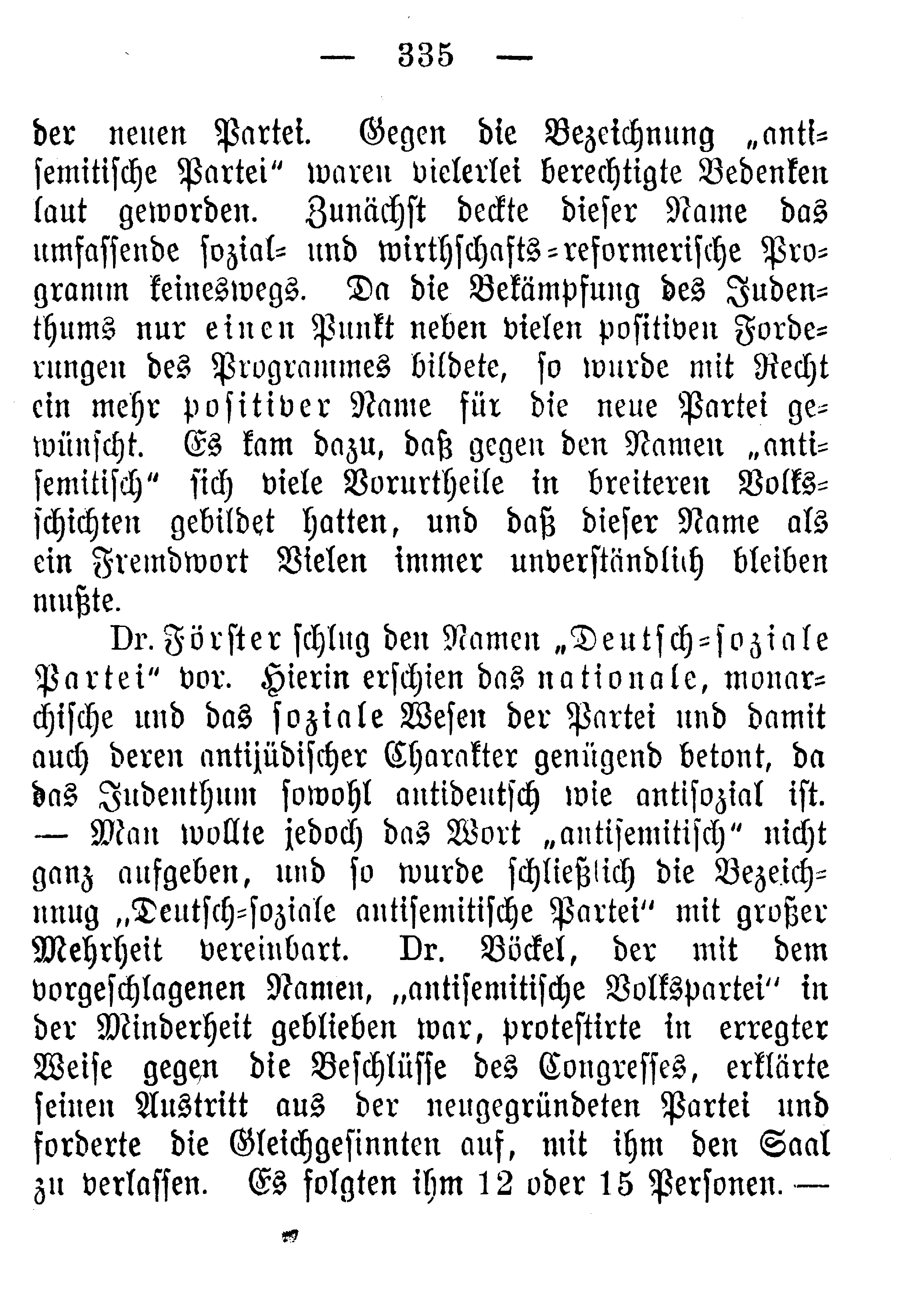
of the new party. Against the designation "anti-Semitic party," various legitimate concerns had been voiced. First, this name by no means covered the comprehensive social and economic reform program. Since the fight against Jewry was only one point alongside many positive demands of the program, a more positive name for the new party was rightly desired. Added to this was the fact that against the name "anti-Semitic," many prejudices had formed in broader strata of the population, and that this name, as a foreign word, would have to remain incomprehensible to many.
Dr. Förster proposed the name "German-Social Party". Here, the national, monarchical, and social nature of the party, and thus also its anti-Jewish character, seemed to be sufficiently emphasized, since Jewry is both anti-German and anti-social. — However, they did not want to abandon the word "anti-Semitic" entirely, and so the designation "German-Social Anti-Semitic Party" was finally agreed upon with a large majority. Dr. Böckel, who had remained in the minority with his proposed name "Anti-Semitic People's Party," protested in an agitated manner against the resolutions of the congress, declared his withdrawal from the newly founded party, and called upon like-minded individuals to leave the hall with him. 12 or 15 people followed him. —
Show Original German Text
— 335 — der neuen Partei. Gegen die Bezeichnung „antiſemitische Partei“ waren vielerlei berechtigte Bedenken laut geworden. Zunächst deckte dieſer Name das umfassende ſozial- und wirthschafts-reformensche Programm keineswegs. Da die Bekämpfung des Judenthums nur einen Punkt neben vielen poſitiven Forderungen des Programmes bildete, ſo wurde mit Recht ein mehr poſitiver Name für die neue Partei gewünscht. Es kam dazu, daß gegen den Namen „antiſemitisch“ ſich viele Vorurtheile in breiteren Volksschichten gebildet hatten, und daß dieſer Name als ein Fremdwort Vielen immer unverständlich bleiben mußte. Dr. Förster schlug den Namen „Deutsch-ſoziale Partei“ vor. Hienn erschien das nationale, monarchische und das ſoziale Weſen der Partei und damit auch deren antijüdischer Charakter genügend betont, da das Judenthum ſowohl antideutsch wie antiſozial ist. — Man wollte jedoch das Wort „antifemitisch“ nicht ganz aufgeben, und ſo wurde schließlich die Bezeichnung „Deutsch-ſoziale antiſemitische Partei“ mit großer Mehrheit vereinbart. Dr. Böckel, der mit dem vorgeschlagenen Namen „antiſemitische Volkspartei“ in der Minderheit geblieben war, protestirte in erregter Weiſe gegen die Beschlüſſe des Congreſſes, erklärte ſeinen Austntt aus der neugegründeten Partei und forderte die Gleichgeſinnten auf, mit ihm den Saal zu verlaſſen. Es folgten ihm 12 oder 15 Perſonen. —